Standard

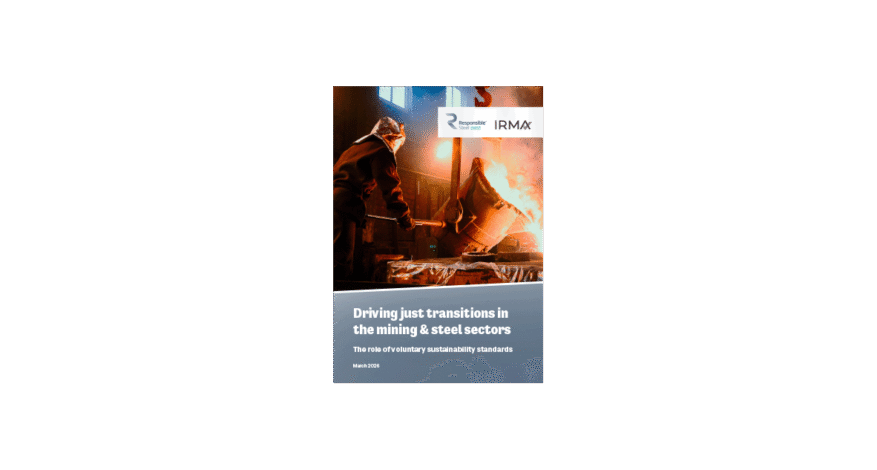
ResponsibleSteel Just Transition report coverResponsibleSteel Just Transition report coverStandard

Report outlines key considerations for a mining and steel just transition

Today, ResponsibleSteel and the Initiative for Responsible Mining Assurance (IRMA) published a landmark report, Driving just transitions in the mining & steel sectors: The role of voluntary sustainability standards, outlining how voluntary sustainability standards (VSSs) can help deliver fair and inclusive transitions as heavy industries globally move to decarbonise. It is the first report of its kind, jointly authored by VSSs from the mining and steel sectors.

Developed by ResponsibleSteel and IRMA, the report demonstrates how collaboration across the supply chain provides the necessary understanding of the challenges and opportunities faced by both sectors to achieve a truly just transition for mining and steel. ‘Driving just transitions in the mining & steel sectors: The role of voluntary sustainability standards’ introduces nine key principles and five recommendations to help VSSs integrate just transition into their frameworks.

The report also reveals a significant gap—despite commitment at both government and corporate levels to just transition principles, implementation remains slow and inconsistent. With mining responsible for up to 10% of global energy-related emissions and steel also accounting for around 10%, accelerating decarbonisation in these sectors is critical. But without deliberate action, workers and communities most affected by these transitions risk being left behind.

ResponsibleSteel CEO, Annie Heaton, commented, “Decarbonisation is one of the most pressing global issues we face today. But if we ignore its social impacts, we risk serious unintended consequences. With around six million people employed in steel and another 20 million in mining—plus millions more in supply chains and communities that depend on these industries—industry must work together with workers, communities and governments to consider how to plan the transition to benefit people as well as the planet.”

Stakeholders involved in the project—including industry leaders, supply chain actors, academia, governments, trade unions, civil society organisations, local communities, and Indigenous groups—emphasised that these transitions must not only be fast, but fair, putting justice at the heart of industrial change.

IRMA Executive Director Aimee Boulanger observed, “This research shows that for voluntary standards to succeed, they must be structured to improve justice and inclusivity as they decarbonise and protect the environment.”

Key findings from the report included:

  • Justice at the centre: Stakeholders recognised the urgent need to decarbonise but stressed that justice must guide transition planning.
  • Inclusive process: The specific definition of “Just Transition” is highly contested, with varying interpretations. Engaging stakeholders is key to effectively defining the transition scope, identifying social impacts, and shaping mitigation actions.
  • Restorative justice challenges: Addressing restorative justice remains complex, requiring deeper collaboration among governments, companies, VSSs, and historically impacted communities.
  • Flexibility: Just transitions will differ across contexts and sectors. Principles must remain adaptable to be effective.

Funded by the ISEAL Innovations Fund with support from the Swiss State Secretariat for Economic Affairs (SECO), the report draws on international principles from the International Labour Organisation (ILO) and the UN Working Group on Human Rights, academic justice theory, interviews with 35 stakeholders, and two in-person workshops held in Brussels and Johannesburg.

This work highlights the unique role VSSs can play in providing practical frameworks for implementation, accountability, and verification, setting a clear reference point for steel and mining companies to plan transitions in a way that is equitable and fair. Both ResponsibleSteel and IRMA will continue to engage with stakeholders to discuss the best way to integrate just transition principles into their respective systems.

Read the full report here.

For More Information

  • Savannah Hayes, Communications Manager, ResponsibleSteel
    communications@responsiblesteel.org│+44 7588 785909
  • Initiative for Responsible Mining Assurance (IRMA)
    info@responsiblemining.net

About ResponsibleSteel
ResponsibleSteel is a global multi-stakeholder standards and certification initiative for the steel industry, committed to being a driving force in the socially and environmentally responsible production of net-zero steel. The ResponsibleSteel International Production Standard is designed to support the responsible sourcing and production of steel through an international system of certification and classification. For more information about ResponsibleSteel, please visit: www.responsiblesteel.org/

About the Initiative for Responsible Mining Assurance (IRMA)
IRMA is a nonprofit organisation working to protect people and the environment directly affected by mining by creating financial value for industrial-scale mining operations independently assessed against IRMA’s best practice Standard for Responsible Mining. For more information, visit: www.responsiblemining.net

READ MORE
Chain of Custody Standard

From Mine to Market and Source to Store: Why IRMA’s Chain of Custody Standard Matters

Minerals power the modern world, from the batteries that drive electric vehicles to the metals in wind turbines, phones, and medical equipment. But as demand increases, so does the pressure to ensure these materials are sourced responsibly.

IRMA’s independent, community- and worker-centered mine-site audits address one part of this challenge: verifying responsible practices at the mine itself. Yet for many companies and consumers, a key question remains:

How do we know the minerals in a finished product actually came from an IRMA-assessed mine?

The answer lies in a chain of custody. IRMA’s Chain of Custody (CoC) Standard, launched in 2024, is designed to carry trust beyond the mine and into the complex networks of processors, refiners, manufacturers, and brands.

Why Chain of Custody Is Essential

Once minerals leave the mine, they often enter global systems where materials are blended, transformed, or routed through multiple facilities. A CoC standard closes this gap by enabling companies to make verifiable sourcing claims linked directly to IRMA-audited mines. As transparency becomes a regulatory expectation and a growing consumer demand, this link is more important than ever.

New EU rules, including the Critical Raw Materials Act and the 2025 mineral-supply-chain transparency platform, signal that traceability is rapidly shifting from a voluntary gesture to a regulatory requirement. Companies importing or using critical minerals will increasingly need credible systems to demonstrate where materials come from and how they manage associated risks.

Recent New York Times reporting also highlights the human cost of opaque supply chains, documenting how recycled battery lead has poisoned communities. It is a stark reminder that reliable chain-of-custody systems like IRMA’s are no longer optional but essential.

A Step Toward More Transparent Minerals

The IRMA CoC Standard outlines five models, a flexible structure that meets companies where they are while maintaining transparency and credibility:

Identity Preserved: Minerals stay physically separate and traceable from mine to final product.

Segregated: IRMA-assured materials from different mines can be mixed, but never combined with non-assured material.

Controlled Blending: Allows mixing with non-assured material while maintaining clear controls and limits.

Mass Balance: Tracks inputs and outputs over time, offering flexibility where physical separation is not possible.

Book & Claim: A credit-based model enabling support for responsible mining even when physical traceability is highly complex.

Together, these models give companies flexibility in how they track materials, and the pilots now underway are helping IRMA understand which approaches work best across different supply-chain contexts.

Next Steps for IRMA

IRMA has developed and published the Chain of Custody Standard, including guidance on assurance and on how the IRMA seal enables credible, transparent claims about responsibly sourced materials. Building on this foundation, IRMA has launched pilots across different mineral sectors and industries to test how the CoC models work in practice and what companies need for effective implementation. As these pilots progress, IRMA is now working to formalize the resulting data into a materials registry that will allow participating companies to make verified chain-of-custody claims with confidence.

Piloting the CoC Standard with mining companies, processors, and downstream buyers to test feasibility across different supply-chain contexts.

Integrating feedback from pilot participants, auditors, and technical experts to strengthen clarity and usability.

Creating tools and templates that support consistent data collection and transparent sourcing claims.

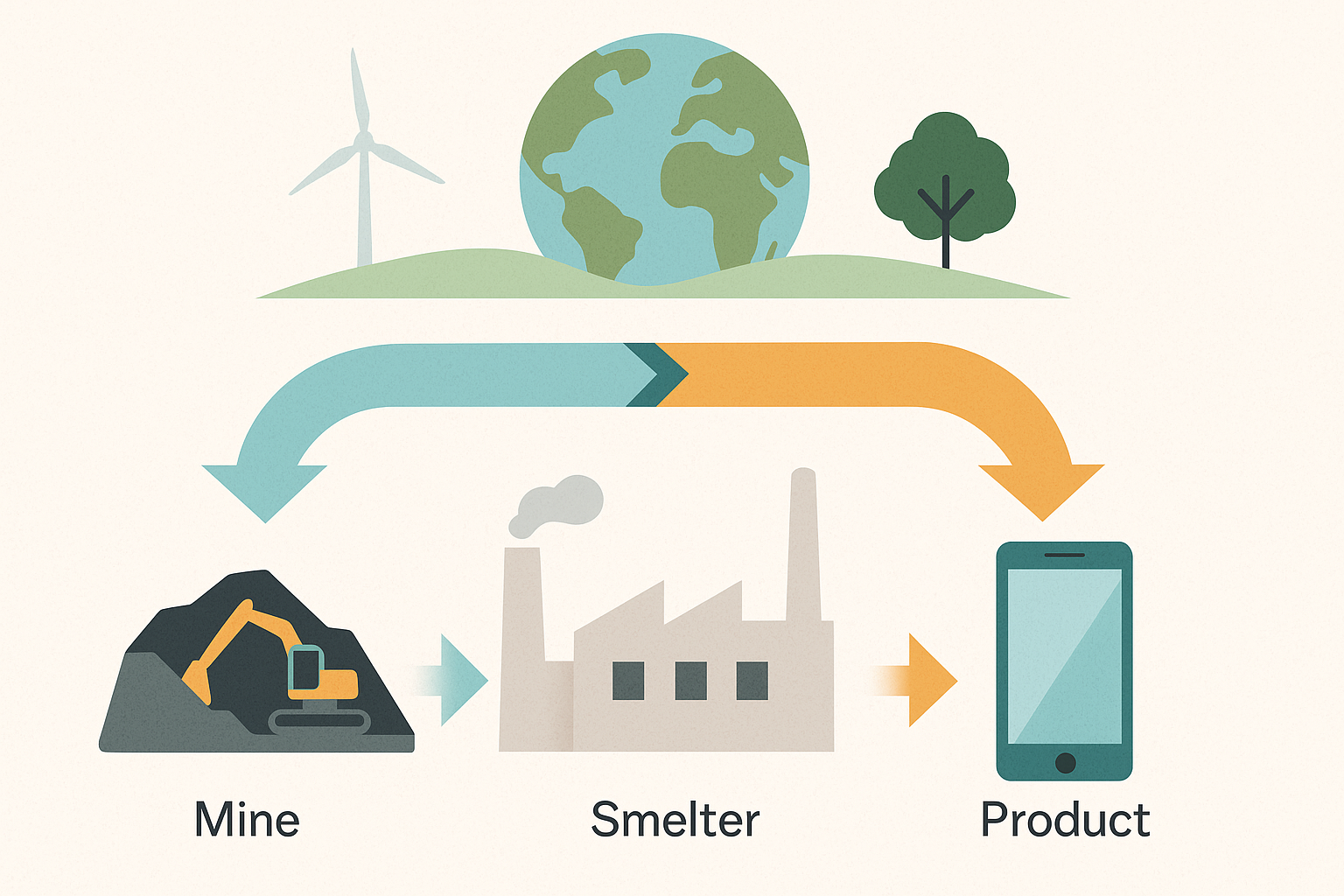
The chain of custody alone cannot solve every supply-chain challenge. But it plays a crucial role in linking responsible mining practices with the products people rely on every day. It supports stronger procurement decisions, clearer consumer communication, and more consistent accountability across the value chain. These efforts mark real progress toward knowing where your phone battery comes from—from mine to market, and source to store.

If your company would like to join the brands already piloting the IRMA CoC Standard and explore how it could work in your supply chain, I’d welcome a conversation! Feel free to reach out.


coc@responsiblemining.net

READ MORE
Blog

IRMA Standard v2.0 – November 2025 Revision Update

The second public consultation on the IRMA Standard v2.0 closed a few days ago, and IRMA wants to warmly thank all the organizations and individuals that engaged.

Here are some initial statistics showing the level and diversity of interactions:

  • 82 organizations have engaged in the revision process, covering all regions of the world (see chart below).
  • Comments have been received from all categories of stakeholders and rights-holders, offering a wide and diverse range of perspectives.
  • We note and appreciate the substantial feedback received from multiple organizations that had not contributed during the first round.
  • Several organizations that had contributed during the first round have indicated to IRMA that they had no further comment to share during this second round.

As shown in the pie chart below, IRMA received submissions from all categories of stakeholders and rights-holders:

  • 29% of the contributing organizations are NGOs
  • 23% are companies involved in mining and/or processing and/or exploration
  • 15% are downstream purchasers of mined material
  • 11% are consultancy or audit firms
  • 8% are governments or multilateral organizations
  • 5% are finance institutions or banks or investors
  • 4% are Indigenous organizations
  • Remaining 5% include standard-setters, rating agencies, organized labor, affected communities, and academia

What’s next?

We will now carefully review and process all the contributions, in order to prepare a final version of the Standard which our equally-governed multi-stakeholder Board of Directors will use to inform its discussions and standard approval process.

In the meantime, we are collecting the final answers from the 52 individual Expert Advisors who volunteered to guide us with advice regarding targeted questions on 6 topics.

And a cross-stakeholder Expert Working Group on tailings and mine waste will start soon (its composition is being finalized).

The IRMA Standard v2.0 won’t be approved until the IRMA Board has had time to review such final version, discuss the changes and the recommendations of their constituencies, and has reached consensus.


If you have any question regarding this process ,you can contact our Standards Director, Pierre Petit-De Pasquale at: pdepasquale@responsiblemining.net


You can find more information about our Standards Development Process here.


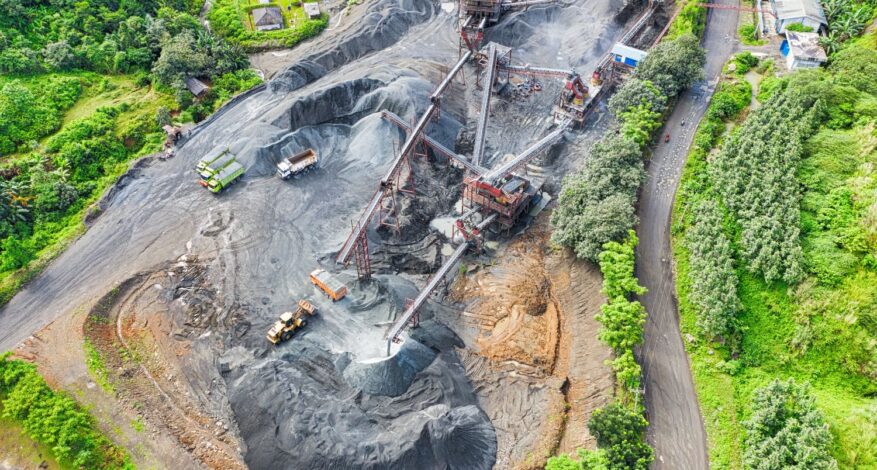
Picture: Pixabay – Creative Commons Zero (CC0) license

READ MORE
IRMA and ResponsibleGlass logosIRMA and ResponsibleGlass logosBlog

ResponsibleGlass and IRMA forge foundational partnership to drive responsibility in glass supply chains

FOR IMMEDIATE RELEASE:

Date: 21 October 2025.   ResponsibleGlass, the newly formed global multi-stakeholder not-for-profit standards and certification programme for the responsible low-carbon production of glass, today announced a landmark Memorandum of Understanding (MOU) with the Initiative for Responsible Mining Assurance (IRMA).

This MOU marks the first major collaboration for ResponsibleGlass and establishes a clear path to align the new developing glass standard with IRMA’s comprehensive best practices for the responsible extraction and processing of the materials critical to glassmaking, including sand, silicates and soda ash (trona).

Both organisations share a core belief in the value of multi-stakeholder governance – involving civil society, labour advocates, mining and processing companies, manufacturers, product end users and the finance sector – to drive positive environmental and social change.

The collaboration will focus on several significant areas:

  • Standards Alignment: ResponsibleGlass will align its requirements for the sourcing of mined materials with IRMA’s established standards to strengthen due diligence and transparency from the points of extraction.
  • Avoiding duplication: by leveraging IRMA’s existing assurance system for raw materials, the partnership aims to avoid duplication and inefficiency in developing standards for the entire glass supply chain.
  • Market Demand:  the organisations will work together to communicate with downstream glass users, building market demand for responsibly sourced glass in high growth sectors such as building, automotive, solar and technology industries.
  • Shared systems: the organisations will also explore the potential to develop joint systems for managing the chain of custody of materials through the glass supply chain, from “cradle to grave”.

Francis Sullivan, chair of ResponsibleGlass, commented on the significance of the partnership:

“This partnership with IRMA is a foundational step for ResponsibleGlass and immediately injects world-class credibility into our initiative.  Our mission is to ensure the entire glass supply chain is responsible, and that journey starts at the source. By aligning with IRMA, the global leader in responsible mining assurance, we will ensure our standard for essential inputs like sand and soda ash are robust, credible, and truly benefit the people and lands involved in extraction.  This is how we build a glass standard the world can trust.”

Aimee Boulanger, Executive Director of IRMA highlighted the strategic alignment:

“IRMA’s standards are built on a foundation of multi-stakeholder equal governance, driving value for better social and environmental practices in mining.  This collaboration with ResponsibleGlass is a logical and powerful extension of our work. It allows us to apply our expertise to key glass inputs – avoiding duplication and accelerating market demand for responsibly sourced glass in critical sectors. This partnership shows how two independent organisations can collectively create a more resilient and responsible global supply chain.”

The specific actions and joint programmes under the MOU will be developed over time, focusing on accelerating the shift toward more responsible practices across the glass industry.

FOR MORE INFO contact:
Ali Lucas, Project Director – ResponsibleGlass +44 (0) 7786 546724
Ali.lucas@responsibleglass.org

Rebecca Burton, Deputy Director – IRMA
info@responsiblemining.net

NOTES: 

  1. This MOU is nonexclusive between ResponsibleGlass and IRMA.
  2. Further information on ResponsibleGlass can be found here: www.responsibleglass.org
  3. Further information on IRMA can be found here: www.responsiblemining.net


READ MORE
Blog

Climate Action in the DRAFT IRMA Mining Standard v2.0

[This blog was co-authored by Kristi Disney Bruckner and Pierre Petit-de Pasquale]

As we return from the Africa Climate Summit 2.0 and participate in Climate Week NYC, it seems especially timely to answer the question, “What’s new on climate action in the second draft of the DRAFT IRMA Mining Standard v2.0?”

We’d like to take this opportunity to share substantial updates on coverage of this topic in the proposed Chapter 4.6: Climate Action.

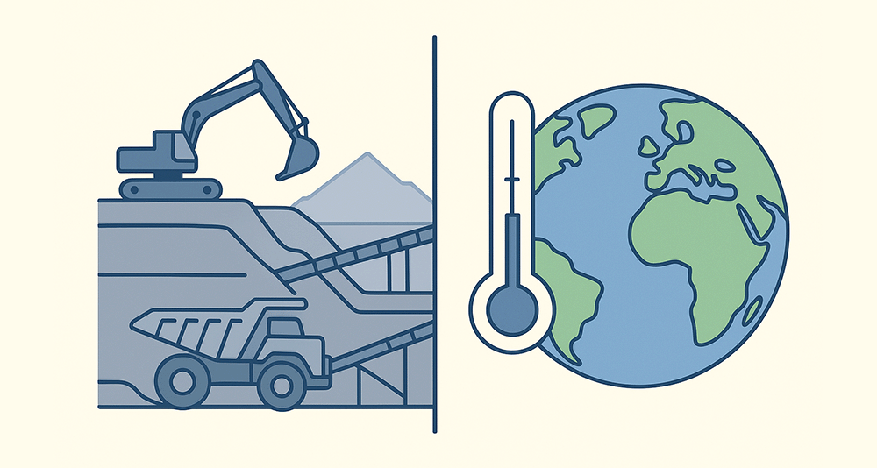
Here’s a summary of relevant changes to the IRMA Standard in 13 points that help advance UN Sustainable Development Goal 13: Climate Action!

  1. Requirements for sites to assess their own contribution to climate change, in collaboration with stakeholders.
  2. Requirements that sites consider energy efficiency and minimization of greenhouse gas emissions when selecting technology options and alternatives for energy sources, mining and processing methods, technologies and equipment, and the design of new buildings and facilities, as well as when there are opportunities to replace, upgrade, or add technology, or change processes.
  3. Including emissions from land use changes and reductions in land carbon stock arising from the site’s direct activities in the quantification of Scope 1 and 2 emissions.
    Requiring screening and calculation of Scope 3 emissions using credible methodologies, verified by a credible third-party expert.
  4. Annual measure of energy consumption from sources of Scope 1, 2 and 3 emissions.
  5. Requiring sites to undertake a scoping exercise, in accordance with the mitigation hierarchy, to identify sources of direct and/or indirect emissions that can be eliminated and/or that have the highest reduction potential, for which energy efficiency could be improved, and—as a last resort—opportunities for carbon capture and storage of any emissions that cannot be avoided.
  6. Prioritizing these options, while ensuring that any emission-reduction opportunity takes into consideration the potential adverse social and human rights impacts arising from its implementation.
  7. Requiring sites to have greenhouse gas (GHG) and energy targets that are in line with the Paris Agreement at either the level of the site or the level of the company, unless the site meets all the criteria for Green Enabling Projects and can demonstrate the environmental benefits of its production’s end-use.
  8. Requiring sites to have a GHG and energy management plan that builds on the scoping, prioritization and target-setting requirements.
  9. Integrating traditional knowledge, and especially traditional ecological knowledge, of local affected communities, and Indigenous rights-holders if applicable, into scoping, development, implementation, monitoring, and continuous improvement of the GHG and energy management plan.
  10. Requiring sites to track and document their performances on increasing the proportion of energy consumed at the site that comes from renewable sources, over successive time periods, against the targets required.
  11. Using the monitoring and evaluation results to develop and implement time-bound corrective measures to continuously improve the scoping, target-setting, management/mitigation, and monitoring processes.
  12. Requiring more information to be made publicly accessible. (See details in Section 4.6.11).

What do you think?

We’d love your input on these proposed updates to the Climate Action Chapter and on any proposed updates to the IRMA Standard. You can submit comments on our online commenting form, simply send your comments to comments@responsiblemining.net or via WhatsApp to +1-303-202-1445, or use any of the many options for submitting comments here.

Learn more about the DRAFT IRMA Mining Standard v2.0 public consultation, open to all through 22 October 2025 here.

Thank you for sharing your experience and insights to improve the IRMA Mining Standard!

READ MORE
IRMA and CCCMC panelIRMA and CCCMC panelAsia

MOU with CCCMC

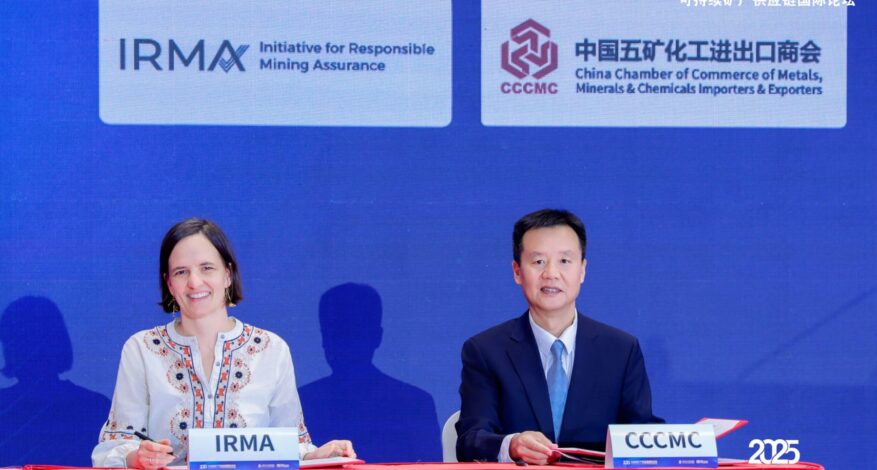
Today IRMA entered a new collaboration to advance more responsible mining.

At the International Forum on Sustainable Mineral Supply Chains in Xiamen, IRMA and the China Chamber of Commerce of Metals, Minerals & Chemicals Importers & Exporters (CCCMC) signed a Memorandum of Understanding to strengthen collaboration on responsible mineral production.

Through this agreement, IRMA and CCCMC will work together to:
✅ Align standards and reduce duplication across assurance models
✅ Pilot co-audits to streamline expectations
✅ Provide joint training and capacity-building at mine sites
✅ Exchange lessons on system-wide grievance mechanisms
✅ Maintain ongoing dialogue to respond to global trends and stakeholder needs

This marks an important step in promoting transparency, accountability, and positive outcomes across the minerals value chain.

Chinese IRMA Draft 2.0 Standard coverAs we look forward to deepening this collaboration in support of companies, stakeholders, and communities worldwide, we are thrilled to release a Chinese version of the IRMA Standard v2.0 Draft 2 for public consultation. Please submit your comments!

Our goal is to make responsible mining standards accessible to all stakeholders, everywhere. The translation was made possible thanks to the fantastic work of Landscape Consulting.

READ MORE
Thumbnail of just transition webinarThumbnail of just transition webinarBlog

Reflections on the Webinar: How Steel and Mining Standards Can Support a Just Transition

The urgency to decarbonize industries like mining and steel is stronger than ever. Around the world, governments, businesses, and investors are racing to reduce emissions and meet climate targets. But amid this urgency, there is an equally important question; how do we make sure that the communities and workers most affected by these transitions are not left behind? For workers, communities, and Indigenous Peoples, the shift to low-carbon economies can bring uncertainty as well as opportunity. Without deliberate action, there’s a real risk that many will be left behind, displaced by job losses, or burdened by the impacts of change without sharing in the benefits.

This is where Voluntary Sustainability Standards (VSSs) like IRMA’s Standard for Responsible Mining play an essential role. They help translate “just transition” into concrete action by setting clear expectations and guidance for companies, creating accountability mechanisms that allow workers and communities to raise concerns and seek remedies, and providing support to protect the rights and livelihoods of those most affected. In doing so, VSSs help ensure that transitions are not only fast but also center justice at the heart of climate targets.

Earlier this month, IRMA and ResponsibleSteel co-hosted a webinar to share the findings of our joint project on how voluntary sustainability standards (VSSs) can support just transition in the mining and steel sectors.

The project drew on an extensive literature review, more than 30 in-depth interviews, and two multi-stakeholder workshops in Johannesburg and Brussels. Perspectives came from organized labour, affected communities, Indigenous Rights Holders, mining companies, steelmakers, civil society, and supply chain actors.

Setting the stage

ResponsibleSteel CEO Annie Heaton opened the webinar with a reminder of the urgency of the moment. Decarbonisation, automation, and digitalisation are reshaping industries at speed, but workers and communities risk being left behind:

“This isn’t just about how fast we hit climate targets,” she said. “It’s about how well we protect workers, communities, and the environment along the way.”

IRMA’s Executive Director, Amy Boulanger, followed with a reminder of our shared reliance on mining:

“Every phone, car, and building depends on it,” she said. “The question is: how do we create value for responsibility, not just extraction? There is no supply chain security without community consent.”

What we heard from stakeholders

The engagement process brought a diverse range of perspectives, but several clear themes stood out:

  • Justice is the foundation, not an add-on. Justice must sit at the heart of transitions.
  • Social dialogue must be meaningful. Too often, workers and communities are consulted too late, with little influence on outcomes.
  • Reskilling must connect to real opportunities. As one labour representative put it: “Reskilling is the headline, but redeployment is the lifeline.”
  • Indigenous Peoples must be partners. Rights to self-determination and Free, Prior and Informed Consent must be respected in practice, not just principle.

We also heard about “tick-box” stakeholder engagement and training programmes that fail to lead to decent work. Indigenous Rights Holders in particular challenged the framing of just transition:

“Our way of life is already sustainable, yet we carry the heaviest burdens.”

A framework for action

To translate these insights into practice, IRMA and ResponsibleSteel developed a framework of nine principles and 52 criteria, structured around four pillars: rights and equity, procedural justice, distributive justice, and restorative justice.

Divergent views

Not all questions were resolved. There was significant debate on whether VSSs should define “just transition” and whether historical reparations should be part of the agenda. Some stakeholders argued that justice cannot be separated from history, while others cautioned that reparations could stretch standards beyond their mandate. What is clear is that these tensions cannot be ignored by VSSs, and that transparency and context-specific approaches are essential.

Recommendations for VSSs

The project also identified five priority recommendations for voluntary sustainability standards:

  1. Ensure transparent, inclusive governance.
  2. Co-develop principles and requirements with affected communities, workers, Indigenous Rights Holders, civil society, and business.
  3. Provide practical implementation support to companies.
  4. Strengthen assurance systems so that audits reflect the lived realities of workers and affected communities.
  5. Collaboration with governments, peer standards, labour, and civil society on just transition is key.

For IRMA, the next steps are clear:

Our Standard revision is currently underway, with public comment open until 22 October. As part of this process, we are engaging Expert Advisors on Climate Action to carry the just transition work forward. We will also continue strengthening the Standard in direct response to the challenges raised by workers, communities, Indigenous Rights Holders, and other stakeholders. In addition, new auditor training is being developed to ensure that the lived realities of workers and communities are fully reflected in assurance.

For ResponsibleSteel, the focus is on integrating just transition into its standard revision through a multi-stakeholder working group and a 60-day public consultation later this year.

Final reflections

The project showed both the urgency and complexity of just transition. Voluntary standards cannot solve every challenge, but they can provide the frameworks, accountability, and assurance needed to guide transitions responsibly.

This project was made possible thanks to a grant from the ISEAL Innovations Fund, which is supported by the Swiss State Secretariat for Economic Affairs SECO.

READ MORE
Credit: ResponsibleSteelCredit: ResponsibleSteelBlog

Standards’ Role in a Responsible Transition: An IRMA-ResponsibleSteel Collaboration

[This is post also lives on the ResponsibleSteel website]

Exploring the role of standards in driving a responsible transition in steel and mining: A collaborative journey between IRMA and ResponsibleSteel

As the global shift toward decarbonisation gains momentum, so too do the questions around how the transition will affect people and communities. While emerging technologies bring a cleaner future, they also bring with them significant disruption, particularly in heavy industries like steel and mining. New technologies, shifting production geographies, and economic restructuring can create unintended social consequences such as job losses, community displacement, and weakened local economies.

In response to this, two Voluntary Sustainability Standards, the Initiative for Responsible Mining Assurance (IRMA) and ResponsibleSteel have come together to explore what a just transition looks like for these sectors, and to explore the role of standards in steel and mining to drive a responsible transition. This joint project, supported by the ISEAL Innovations Fund and the Swiss State Secretariat for Economic Affairs (SECO), seeks to understand the social impacts of transitions and how voluntary sustainability standards can help ensure that this transformation is fair, inclusive, and responsible.

This collaboration reflects a growing recognition of the value in shared learning between the steel and mining sectors. By working together, IRMA and ResponsibleSteel are exchanging insights, comparing approaches, and learning from each other’s experiences to strengthen how just transition principles are understood and applied.

A shared vision rooted in multi-stakeholder governance

IRMA and ResponsibleSteel were both founded on the principle of multi-stakeholder governance. Their boards include labour unions, civil society, and industry (Purchasers, Indigenous Rights Holders, Investors-IRMA), as well as affected communities in IRMA’s case, ensuring that decisions are not only transparent but also equitable. This approach forms the foundation of our collaboration on the just transition. Together, we bring complementary strengths: IRMA’s standard addresses upstream mining operations at the site level, while ResponsibleSteel covers the downstream steel production process.

The two initiatives are jointly exploring how standards can help mitigate adverse social impacts of decarbonisation, such as the economic consequences of site closures or workforce displacement. Our goal is to provide a common foundation that recognises diverse regional realities and reflects the voices of workers, Indigenous Rights Holders, communities, and industry actors alike in our voluntary sustainability systems.

Laying the groundwork: Research and stakeholder engagement

The first phase of the project centred on an in-depth literature review of over 200 sources, including international standards, academic and practitioner literature, case studies, and online materials, with a focus on content relevant to the steel and mining sectors. This review explored how voluntary sustainability standards, global frameworks, and national policies approach just transition issues, highlighting areas of alignment as well as gaps. Insights were drawn from 11 standards and frameworks relevant to the steel and mining sectors, along with case examples from seven additional countries. Building on this foundation, the team conducted over 30 stakeholder in-depth interviews with voices across industry, labour, Indigenous rights holders, supply chains, policymakers, academia, and civil society. These conversations were then complemented by two multi-stakeholder workshops in Johannesburg and Brussels, which brought together workers, unions, companies, NGOs, Indigenous representatives, and decision-makers. Each phase has contributed valuable, grounded perspectives that continue to shape the direction and priorities of the project.

Key insights from the project so far

What has become clear and consistent throughout both the literature review and the stakeholders’ engagement so far is the contested nature of the term ‘Just Transition’. As we all live in different worlds with different contexts of reality, everyone brings their own understanding and priorities when thinking about a just transition. As voluntary sustainability standards, we must be thoughtful in how we define and interpret this term. We need a flexible framework where local context can be well reflected, and the context and priorities are defined by local stakeholders.

Another key insight that emerged from all activities was the critical importance of an inclusive governance and management system that accommodates a meaningful stakeholders’ engagement process and inclusive decision making at every step of the way to achieve a just transition. This also presents a challenge – inherent tension between the urgency of just transition issues and the often time-consuming nature of stakeholders’ engagement. It is not just about having a process itself, but it is about recognising and addressing the existing power imbalance between stakeholders, and ensuring that the process facilitates meaningful consultation, which, in essence, means providing equitable access to consultation and decision-making processes.

Moving forward

Drawing on their sectoral expertise, multi-stakeholder governance models, and shared commitment to transparency and accountability, IRMA and ResponsibleSteel are exploring how standards can support a just transition in practice. This project marks an initial step toward building a stronger foundation for future efforts, recognising that meaningful progress will depend on continued collaboration and engagement.

Join the conversation

As this joint project progresses, ResponsibleSteel and IRMA would like to continue the conversation with stakeholders. An important milestone in this journey is an upcoming webinar, which will provide an opportunity to share key findings, share what we heard from those who contributed to the project, and explore how voluntary sustainability standards can play a meaningful role in supporting a responsible transition in the steel and mining sectors.

We invite you to join us for a webinar hosted by IRMA and ResponsibleSteel :

Date: Thursday, 4 September

To make it easier for participants in different time zones to join, the same session will be offered at two different times.

Session 1:
10:00–11:30 CEST / 10:00–11:30 SAST (South Africa)
9:00–10:30 BST (UK)
3:00–4:30 PM Southeast Asia (Jakarta Time)

Click here to register for session 1.

Session 2:
16:00–17:30 CEST / 16:00–17:30 SAST (South Africa))
15:00–16:30 BST (UK)
10:00–11:30 AM US Eastern Time (EDT)

Click here to register for session 2.

Find out more about ResponsibleSteel here.

READ MORE
Blog

IRMA Standard v2.0: Second DRAFT out for public consultation until October 22

Today, IRMA releases a 2nd DRAFT of the IRMA Standard v2.0 (for Responsible Exploration, Extraction, and Processing of Minerals) for a new round of worldwide public consultation – open until October 22, 2025.


This new draft builds on the 1st DRAFT version published in October 2023, and invites a global conversation to improve and update the 2018 IRMA Standard for Responsible Mining V1.0. This 2nd DRAFT is intended to provide as final of a look-and-feel as possible, although input from this consultation will result in final edits, and consolidation to reduce overall number of requirements, for a version that will be presented to IRMA’s unique equally-governed multi-stakeholder Board of Directors for adoption and implementation.

The 2nd DRAFT does not represent content that has yet been formally endorsed by the IRMA Board. IRMA’s Board leaders seek the wisdom and guidance of all readers to inform this through an inclusive revision process one more time, to improve the Standard.

This 2nd DRAFT has been prepared and updated by the IRMA Secretariat based on:

  • learnings from the implementation of the current IRMA Standard (V1.0)
  • experience from the first mines independently audited (as of July 2025, 24 sites have completed audits or are in the process of being audited)
  • evolving expectations for best practices in mining to reduce harm
  • comments and recommendations received from stakeholders and Indigenous rights-holders
  • the input of subject-specific Expert Working Groups convened by IRMA between 2022 and 2024
  • all comments and contributions received during the public-comment period of the 1st DRAFT version (October 2023-March 2024)

Please note: The IRMA Standard v2.0 is new in its approach (compared to v1.0, currently in use) in that it now covers more phases of the mining and mineral supply chain, from exploration and development, through mining, closure, and mineral processing. IRMA also, separately, oversees a Chain of Custody Standard for tracking materials through the supply chain from mine-to-market end use products.


Summary of the first public consultation

Cover of the Report on the 2023-2024 1st Public Consultation

IRMA held a 90-day public consultation on the Draft IRMA Standard v2.0 which ran from October 26, 2023, to January 26, 2024. The consultation aimed to receive feedback from a wide range of members and partners of IRMA, and the diverse categories of rights-holders and stakeholders that IRMA serves and that would be affected by the changes to the IRMA Standard requirements. IRMA worked to ensure that all comments could be received in a wide range of languages and channels for communications, and we informed stakeholders that all comments would be considered carefully, objectively and equally. Comments could be sent using a diverse set of communication channels (emails, online platform, live webinars, letters, text messages via phones). Respondents could contribute in a confidential and/or anonymous manner.

During this first round, we received more than 2,500 points of comments from 82 organizations. Feedback came primarily from NGOs and the private sector with additional comments from Indigenous organizations, governments and multilaterals, organized labor and other standards systems. We were encouraged to see more than 10% of the organizations commenting were Indigenous organizations. In addition, more than 20% of the organizations were from the Global South.

A public summary report of this first public consultation and changes made is available here.
It provides the following:

  1. Context on the review of the IRMA Standard V1.0 to consider a revision.
  2. The components of IRMA’s preparation for releasing a 1st DRAFT v2.0 for consultation.
  3. A summary of the first public consultation that took place over 2023-2024.
  4. An overview of key changes captured in the first public consultation.
  5. A summary of the remaining and arising issues that are included in the second public consultation.
  6. Plans for the second consultation and how to engage.
  7. Links to online resources that are relevant to both the 1st and 2nd public consultations.

What is included in this 2nd DRAFT and how to engage?

The IRMA Board, supported by the IRMA Secretariat, has approved the release of this 2nd DRAFT IRMA Standard v2.0 for a second 90-day consultation period, from July 22 to October 22, 2025.

The second consultation will support rights-holders and stakeholders to engage and submit feedback by offering these resources, among others (see ‘Resources’ section below):

  • The public summary report on the first consultation period (see above).
  • A detailed log of all the comments that were submitted (confidential contributions have been redacted), and the individual responses from IRMA.
  • The full 2nd DRAFT Mining Standard v2.0 (the new consolidated draft developed based on the first consultation period), in English, that includes:
    1. For each chapter: summary of the changes since the 2023 first draft; details on feedback received and decision made for every consultation question.
    2. Applicability to respective development stages (exploration to permitting to operations) integrated within the design of the chapters.
    3. Updated charts, tables, annexes and glossary.
  • At-a-glance tables to easily compare the IRMA Standard V1.0 (2018) and this new consolidated 2nd DRAFT, highlighting substantial differences.
  • Comparative mapping of the relevant sections of the 2nd DRAFT against the OECD Guidance For Responsible Supply Chains, the UN Guiding Principles on Business and Human Rights, and the EU CSDDD Directive (ET) 2024/1760.
How to engage?

Our dedicated consultation page lists all the ways to comment, including:

      • An online commenting form, allowing for anonymous and/or confidential submissions.
      • Email (at comments@responsiblemining.net) and postal options; including confidential options;
      • WhatsApp (+1 301 202 1445) for text or voice comments; including confidential and encrypted options.
      • Webinars and live consultations, to be announced in the coming weeks.

IRMA Expert Advisors and Expert Working Group

Building on the positive experience of Expert Working Groups, IRMA welcomes the contribution of individual experts as follows:

Expert Advisors

Pools of Expert Advisors will be created for the year 2025, seeking their individual perspective and suggestions on the following topics:
—        Conflict-Affected and High-Risk Area Due Diligence
—        Upstream and Downstream Sustainability Due Diligence
—        Indigenous Peoples and Free, Prior, and Informed Consent (FPIC)
—        Climate Action
—        Applicability of the Standard to Mineral Exploration and Development
—        Applicability of the Standard to Mineral Processing Projects and Operations

The Terms of Reference applicable to these Expert Advisors, including instructions on how to apply, are available at (click on this link): ToR for Expert Advisors 2025.

If you are interested in participating in joining the 2025 pools of IRMA Expert Advisors on one or more of these topics, please contact IRMA’s Standards Director, as explained in the Terms of Reference

Expert Working Group

Additionally, and acknowledging that several issues and challenges related to the management of tailings storage and mine waste facilities could not be resolved during the development of this 2nd DRAFT, IRMA proposes to discuss and explore potential approaches within an IRMA Expert Working Group dedicated to Tailings Storage and Mine Waste Facility Management.

The Terms of Reference applicable to this Expert Working Group, including instructions on how to apply, are available at (click on this link): ToR for Expert Working Group 2025.

If you are interested in participating in the IRMA Expert Working Group on Tailings and Mine Waste Storage Management, please contact IRMA’s Standards Director, as explained in the Terms of Reference.


Resources

2nd DRAFT for public consultation
To access the 2nd DRAFT of the IRMA Standard v2.0, open for public consultation until October 17, 2025, click here for a pdf version, and here for a tabular version (Excel).

Individual chapters are available here too.

➭ Public summary report of the first public consultation
To access the public summary report, click here for a pdf version.

Summary of changes made in the 2nd DRAFT
To view the summary of the changes by Chapter that were completed during the first public consultation and resulted in the new 2nd DRAFT that is open for the second public consultation until October 17, 2025, click here for a pdf version.

Comparative tables (2018-2025)
To access the comparative tables between the IRMA Standard v1.0 (2018) and this new 2nd DRAFT, highlighting all substantial differences, click here for a pdf version (excel versions are available here)

All comments received during the 1st public consultation and IRMA responses
To view the full comments log for the first public consultation of the DRAFT IRMA Standard v2.0, click here for a pdf version, and here for a csv version (machine-readable).

Summary of feedback received on consultation questions and decisions made
To view a summary of the feedback received for each consultation together with decisions made by IRMA, click here for a pdf version.

Mapping of the 2nd DRAFT against the OECD Guidance
To view a mapping of the relevant section of the 2nd DRAFT against the OECD Guidance For Responsible Supply Chains, click here for an excel version.

Mapping of the 2nd DRAFT against the UN Guiding Principles on Business and Human Rights
To view a mapping of the relevant section of the 2nd DRAFT against the OECD Guidance For Responsible Supply Chains, click here for an excel version.

Mapping of the 2nd DRAFT against the EU CSDDD DIRECTIVE (EU) 2024/1760
To view a mapping of the relevant section of the 2nd DRAFT against the EU CSDDD DIRECTIVE (EU) 2024/1760, click here for an excel version.

Additional resources

  • Individual Chapters can be downloaded from our Resources page: click here
  • Key External References Used in IRMA Standards (July 2025 update): click here
  • Log of the main documents and publications considered for the IRMA Standard review and revision (until 2023): Log of main documents and publications
  • IRMA Standard for Responsible Mining v1.0 (2018) – EN | ES | FR | PT | ZH
  • IRMA Standard (for Responsible Mining and Mineral Processing) v2.0 – 1st DRAFT for public consultation – used for the first public consultation held October 2023 to January 2024) – EN | ES

Note: If you wish to discuss your previously submitted comments you can write to IRMA’s Standards Director Pierre Petit-De Pasquale: pdepasquale@responsiblemining.net

READ MORE
Credit: Suki Lee via Pexels.com (free use license)Credit: Suki Lee via Pexels.com (free use license)Chain of Custody Standard

Without a Trace: What’s Missing in Discussions about Supply Chain Traceability

Blockchain is the solution to supply chain traceability, right?

Well, perhaps it might help, one day. But while technology – including blockchain – promises to help amass and process the enormous volume of complex supply chain data, there remains a key, unresolved barrier to progress: people.

Likely every piece of data already exists today for brands to be able to figure out the provenance of the materials in their products. Existence of data is not the problem. Rather, it is its availability and accessibility. Whether intentionally or not, it is people within supply chains that are effectively acting as gatekeepers to critical supply chain information. Creating value for people to share data – even conditionally – is the key to ultimately unlocking the supply chain visibility that downstream brands are increasingly expecting.

An electronics brand recently managed to trace a critical mineral in its device through every step of the supply chain all the way to the specific mine from which the raw material was dug out of the ground. Yet you will not hear that brand make any claim as to this achievement. Why? Because the mine was unwilling to provide the necessary documentation to verify the data. Without that critical validation, the end-to-end tracing of that material – an astonishing feat given the complexity of today’s supply chains – was left unconfirmed.

There are a variety of reasons why suppliers might refuse to share data with customers, particularly those with whom they have an indirect relationship, multiple supply chain tiers apart. For some, perhaps it is yet another customer request for which they are consuming bandwidth and resources to fulfill with no clear benefit or reward. For others, perhaps it is a concern that giving customers information about their own business relationships might provide customers all they need to know to cut that supplier out and go straight to their sub-tier suppliers. For others still, perhaps there is a fear that the information could somehow be triangulated to determine the supplier’s ‘special sauce’ of material composition or manufacturing process. In other words, a trust problem. Whatever the reason, the result is the same: efforts toward supply chain visibility are starved of the data they need.

But does it matter? Brands are increasingly under legal, regulatory, market, investor, and activist pressure to be able to demonstrate the integrity of their supply chains, to prove that they are sourcing their materials and components responsibly and ethically. But even more than that, supply chain traceability is also what makes responsible mining real.

The experience of the Initiative for Responsible Mining Assurance (IRMA) demonstrates that the overwhelming primary motivator for mines to meet IRMA’s Responsible Mining Standard and to undergo independent third-party audit is customer request. But such requests are most powerful if a customer knows – and can demonstrate – who their suppliers are, by tracing the provenance of the materials in their products to the source. After all, it is important for us not to lose sight as to what traceability ultimately delivers to society. Traceability builds connection between everyday products like cars and phones to the source of their raw materials, providing the opportunity to positively influence the supply chain to reduce harm to real people and their lands from where those raw materials are sourced.

It is an irony therefore that upstream suppliers, including some mining companies, may claim that they do not hear customer demand for responsibly mined materials since, at the same time, upstream suppliers may be denying access to the very information that would allow customers to connect the dots and make those demands known. It is difficult for a customer to make demands to a supplier if they do not know who their supplier is, after all.

So how to fix this? Certainly, technology can help. There are service providers in the market who analyze vast quantities of customs and shipping records, for example, to seek to triangulate data and identify links in the supply chain. But easily the most direct route is to just get it from the source: incentivize upstream suppliers to provide the data necessary for supply chain traceability.

On the one hand, compulsion – either regulatory, contractual, or market – will drive conformance. It is unlikely, perhaps in the short term, that governments the world over will be scrambling to create a regulatory mandate for higher tier suppliers to provide data to their customers. More likely is that customers will require data sharing in their procurement specifications and contracts and in so doing also create a market incentive where data sharing and transparency becomes the price of entry to sell into a market, regardless of customer.

On the other hand, could we assuage the concerns of suppliers who do not trust how their data will be used? Is there context for conditional data sharing, where a limited amount of ‘just enough’ data is shared such that confidentiality is maintained? Or the opportunity to provide for data to be shared with independent third parties (such as auditors)? Or scrubbing and anonymizing data to protect elements of it that may be proprietary in nature while still providing customers with the information they need to meet their requirements? IRMA and some of its members will be exploring these possibilities in the year ahead as we trial the implementation of our own Chain of Custody Standard with a series of pilot initiatives. It may be that complete transparency may not be necessary and perhaps the quest for 100% openness may be impeding greater progress, and that there may be some forms of limited disclosure still worthy of public confidence.

Though the vast amounts of supply chain data and the flashy solutions on offer, (like blockchain) may lead us to believe that the answer is technological, in reality the impediment to meaningful supply chain traceability and transparency is very human. It will only be through meeting suppliers where they’re at – through requirements, incentives, workarounds, and trust building – that we can ever hope to solve the problem and enable those tech solutions to be able to crunch all that data that will hopefully one day magically become available. And in so doing make responsible supply chains more of a reality.

READ MORE