Monthly Archives: April 2026

Other

IRMA at the 2026 International Bar Association ESG Conference

I was honored to be invited to speak at the International Bar Association IBA’s annual ESG conference in Paris in late March. I am grateful  to conference chair John Vellone for the invitation, and his colleagues from the IBA for the organization and coordination.

I spoke on the panel organized by the Energy, Environment, Natural Resources and Infrastructure Law Section (SEERIL) of the IBA; this year it was dedicated to Responsibility in Mining. I was joined on the panel by  Laura Rich (Marlow Global), and Lachlan Poustie (A&O Shearman); moderated by John Vellone of Borden Ladner Gervais LLP (BLG) and J. Michael Showalter of ArentFox Schiff. It was a great panel, with a real exchange and counter opinions. 

On the panel, I emphasized that, regardless of the ethical and moral considerations of mining operators and their partners, responsible mining is an imperative for anyone who wants to establish predictability in the socio-environmental –and therefore economic and legal– performance of a site. Unless you bluntly operate outside the law, the long-term viability of your asset will be conditioned by how responsible you are towards rightsholders and stakeholders.

After all, if the local/central authority determines that there is something wrong with a mine, or identifies regulatory noncompliances, in most jurisdictions there will be procedures to challenge the decision, with written rules that are supposed to be predictable. You can send your lawyers in. But if there is social unrest because you have exhausted the water table and there is no potable water left for people, road blockade because local content promises are not fulfilled, workers on strike because their wages are low or the rate of fatalities is too high… lawyers will be less useful, and so will engineers.

We panelists discussed other challenging topics, such as: 

  • What are linkages between legally-binding licenses granted by governments and social acceptance (often framed as an informal ‘social licence to operate’, although there seems to be gradually more community-benefit agreements, good-neighbor agreements, or other forms of binding agreements being signed between operators and local populations), what are the legal and commercial consequences of losing them? 
  • Governments are under pressure to fast-track critical mineral projects in the name of energy and national security, what are the legal and non-legal risks of fast-tracking? 
  • How good can deregulation be when the minerals sector seems to suffer from a lack of economic and industrial predictability? What does this mean for access to capital? 
  • And what about anti-corruption, that may have been overlooked in both regulatory regimes and voluntary standards (as pointed out recently by NRGI)?

Conference chair Vellone summarized later

“We convened at a moment when ESG has become a political flashpoint. But our two days together show that lawyers around the world continue to follow a body of legal obligation despite political weather. The topics we discussed are hard law, and they are our clients’ and colleagues’ reality right now.”


READ MORE
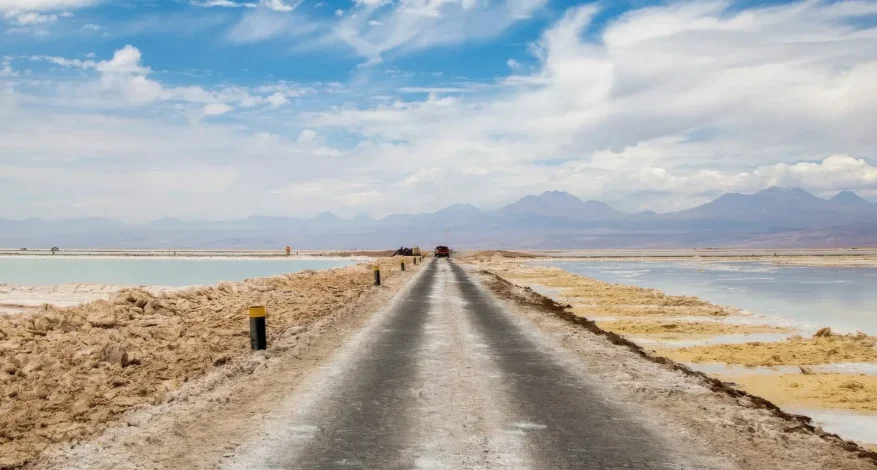
An Atacama road between brine waters. Credit: AlbemarleAn Atacama road between brine waters. Credit: AlbemarleAudits

La mina de litio Planta Salar de Atacama de Albemarle completa la auditoría de vigilancia IRMA

El 17 de abril de 2026, la Iniciativa para el Aseguramiento de la Minería Responsable (IRMA) publicó el informe de auditoría de vigilancia de la mina de litio Planta Salar de Atacama de Albemarle, ubicada en el Salar de Atacama, en Chile. La empresa auditora ERM CVS, aprobada por IRMA, llevó a cabo la auditoría y evaluó los avances realizados en el plan de medidas correctivas que la operación se comprometió a cumplir en el informe de auditoría inicial.

El ciclo de evaluación independiente de IRMA ocurre en tres etapas: (1) auditoría inicial, (2) auditoría de vigilancia y (3) auditoría de reevaluación. Las minas en el sistema IRMA deben someterse a una auditoría de vigilancia durante cada ciclo de auditoría de tres años, y esta auditoría debe realizarse entre 12 y 18 meses después de que se haya publicado el informe de la auditoría inicial. Las auditorías de vigilancia no son auditorías completas, lo que significa que no es necesario volver a establecer el cumplimiento de todos los requisitos revisados en la auditoría inicial. Por lo general, durante una auditoría de vigilancia, el equipo auditor verifica que los sistemas y controles de la mina siguen vigentes y funcionan de manera eficaz, y que no se han producido cambios importantes desde la auditoría inicial que afecten negativamente al rendimiento de la mina. La auditoría de vigilancia incluye entrevistas confidenciales con los trabajadores y la participación de los titulares de derechos indígenas y las partes interesadas de la comunidad. Los informes de auditoría inicial y de vigilancia de IRMA para la operación están disponibles en la página de auditoría de la mina Planta Salar de Atacama en la página web de IRMA.

A medida que el Estándar IRMA es reconocido y adoptado alrededor del mundo, estas auditorías son pasos importantes en la profundización del diálogo entre las empresas mineras y las personas afectadas por sus operaciones. Debido a que el proceso IRMA siempre está mejorando a partir de la experiencia de la auditoría más reciente, los resultados de la auditoría deben revisarse e interpretarse en consecuencia.

El sistema independiente IRMA es el único estándar minero global que otorga el mismo poder al sector público (comunidades y titulares de derechos indígenas, trabajadores mineros y defensores del medio ambiente y los derechos humanos) que al sector privado (empresas mineras, compradores de materiales extraídos e inversionistas).

Para más información:

READ MORE
An Atacama road between brine waters. Credit: AlbemarleAn Atacama road between brine waters. Credit: AlbemarleAudits

Albemarle’s Planta Salar de Atacama Lithium Mine Completes IRMA Surveillance Audit

On 17 April 2026 – the Initiative for Responsible Mining Assurance (IRMA) released the surveillance audit report of Albemarle’s Planta Salar de Atacama Lithium mine, located in Chile’s Salar de Atacama. IRMA-approved audit firm ERM CVS conducted the audit and assessed the progress made on the corrective action plan that the operation committed to in the initial audit report.

IRMA’s independent assessment cycle occurs in 3 stages: (1) initial audit, (2) surveillance audit, and (3) reassessment audit. Mines in the IRMA system must undergo a surveillance audit during each 3-year audit cycle, and this audit must occur between 12 and 18 months after an initial audit report has been publicly released. Surveillance audits are not full audits, meaning that conformance with all requirements reviewed in the initial audit does not need to be re-established. Typically, during a surveillance audit the audit team verifies that the mine’s systems and controls are still in place and are functioning effectively, that no major changes have occurred since the initial audit that negatively affect the mine’s performance. The surveillance audit includes confidential interviews with workers and engagement with Indigenous rightsholders and community stakeholders. The initial and surveillance IRMA audit reports for the operation are available on the Planta Salar de Atacama Mine audit page on the IRMA website.

As the IRMA Standard is recognized and adopted around the globe, these audits are important steps in a deepening dialogue between mining companies and those affected by their operations. Because the IRMA process is always improving from the experience of the most recent audit, audit results should be reviewed and interpreted accordingly.

The independent IRMA system is the only global mining standard that provides equal power to the public sector (communities and Indigenous rights holders, mine workers, and environmental and human rights advocates) alongside the private sector (mining companies, mined materials purchasers and investors).

For More Information:

READ MORE