Monthly Archives: March 2026

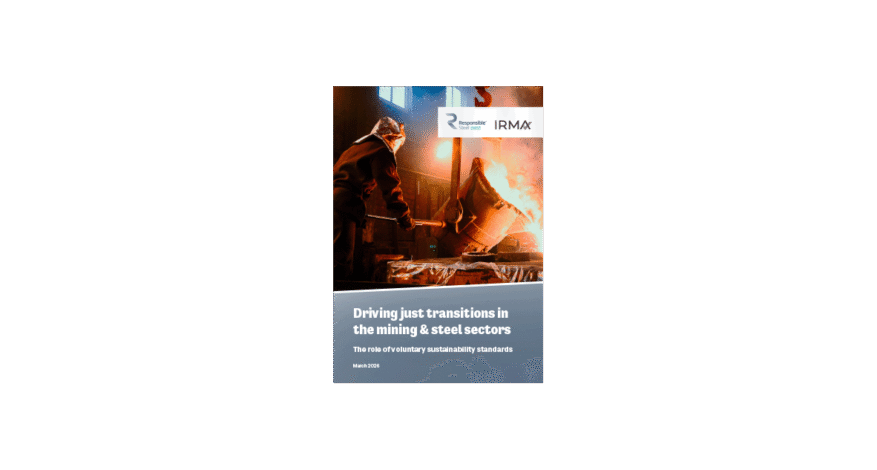
ResponsibleSteel Just Transition report coverResponsibleSteel Just Transition report coverStandard

Going beyond decarbonization: Key insights into delivering a just transition for steel and mining sectors

Joint effort to understand and promote just transitions in the mining and steel industries

As the global decarbonization effort has advanced, actors in the mining and steel sectors are under pressure to transform production processes, supply chains, and energy systems to meet climate goals. But alongside these changes lies an essential question: how do we ensure that the transition to a low-carbon economy is fair for the workers, communities, and regions that depend on these industries?

Earlier in March IRMA and ResponsibleSteel published a landmark report: Driving just transitions in the mining & steel sectors: The role of voluntary sustainability standards that tackles this question. From that work we developed insights and key learnings from stakeholders:

Put People at the Center of the Transition Process

One of the strongest and most consistent key messages from the project and stakeholder engagement was the need to keep people at the centre of transition processes. Decarbonization is often discussed in terms of technology, emissions targets, and industrial transformation. Yet transitions also reshape livelihoods, local economies, and social structures.

The report underscores that strong and inclusive planning is essential to avoid leaving workers and affected communities behind. Throughout the project, stakeholders repeatedly highlighted the importance of ensuring that transitions must not only be fast, but fair. Workers, Indigenous peoples, and affected communities must have a meaningful voice in decisions that shape their futures.

This reinforced an important insight: “just transition is not only about managing economic change. It is also about justice, rights, and participation.”

The Power of Social Dialogue

Another key learning from the project was the central role of social dialogue. Across interviews and workshops, participants emphasized the need for ongoing engagement between workers, communities, companies, governments, and other stakeholders.

Early and inclusive dialogue is particularly critical when major changes are being planned, such as mine closures, technological shifts, or new supply chains. As one stakeholder reflected during the project,

Social dialogue is therefore not simply a consultation exercise. It involves sharing information, building capacity among stakeholders, and creating spaces where different perspectives can meaningfully shape decisions.

Voluntary sustainability standards can play an important role by creating frameworks that encourage transparency, accountability, and structured engagement.

One of the central questions of the project was how standards systems such as ResponsibleSteel and IRMA can contribute to just transitions in practice.

The Just Transition Framework for Voluntary Sustainability Standards

The focus of this project was the question of how VSSs such as ResponsibleSteel and IRMA can best contribute to driving just transitions in practice.

The project confirmed that many elements of existing standards already address issues relevant to just transition, including human rights due diligence, occupational health and safety, grievance mechanisms, and environmental management. At the same time, the project highlighted areas where further development may be needed. These include supporting worker retraining and skills development, strengthening value-chain-wide due diligence, and ensuring equitable access to the benefits of the low-carbon transition.

To help understand and identify the key elements for a just transition, the project undertook a literature review, mapping exercises of existing standards, key informant interviews, and two in-person workshops. Each activity provided valuable insights and information, which together formed the foundation of a framework that defines principles related to human rights, social equity, inclusive governance, and protections for workers and communities.

Significantly, the framework is not intended to be prescriptive or define minimum requirements. Instead, it serves as a reference point to help VSSs integrate just transition considerations in a way that reflects and is shaped by the realities of each region, industry, and community.

The Value of Collaboration

Transitions in mining and steel do not happen in isolation. They unfold across interconnected supply chains, regulatory systems, and communities. As a result, no single actor can drive meaningful progress alone.

Achieving a just transition requires coordination between many different actors, including companies, workers and unions, governments, civil society, investors, and standards systems. Collaboration between standards organisations themselves can also play an important role by aligning approaches, sharing knowledge, and creating stronger incentives for responsible practices across industries.

The concept of just transition continues to evolve. While there is growing recognition of its importance across governments, industries, and civil society, there is still uncertainty about what implementation looks like in practice and what responsibilities different actors should carry.

This project represents a strong joint effort with key stakeholders and an important step toward understanding how voluntary sustainability standards can contribute to that conversation.

Achieving just transitions will require sustained commitment, continuous learning, and inclusive engagement. Standards alone cannot deliver just transitions, but they can provide practical tools and shared frameworks that help stakeholders navigate complex transitions.

For ResponsibleSteel and IRMA, this work reaffirms our shared commitment to ensuring that the transformation of heavy industries supports not only climate goals, but also fairness, dignity, and opportunity for the workers and communities most affected by change.

This project was made possible thanks to a grant from the ISEAL Innovations Fund, which is supported by the Federal Department of Economic Affairs, Education and Research EAER State Secretariat for Economic Affairs SECO and UK International Development.

READ MORE
Credit: UNclimatechange, CC BY 2.0Credit: UNclimatechange, CC BY 2.0Government

Why IRMA Prioritizes Government Engagement and Robust Legal Frameworks

IRMA’s Commitment to Rule of Law Since Our Inception

Since IRMA’s inception, key stakeholders and rights holders, particularly those in governing houses led by NGOs, labor unions, and affected communities, have emphasized that strong laws are needed to govern the mining sector, particularly to protect human rights, Indigenous rights, labor rights, and the environment at mine sites.

Voluntary initiatives can complement laws and their implementation, creating market incentives for mine sites to go beyond legal compliance, but they can never replace the critical role of governments to establish rules for all operators to follow, monitor implementation of those rules, and enforce compliance through appropriate incentives and penalties.

IRMA has affirmed this recognition of the primary role of government and rule of law throughout our development. We have learned a lot through the experience of other sectors, such as forestry, fisheries, and agriculture, to inform our practices, recognizing that where government bodies and voluntary standards work in partnership, this can create increased public engagement in oversight of business practices, incentives to go beyond legal compliance, and recognition of leading practices and innovation. Governments also have a key role setting expectations for imports and are powerful purchasers who can communicate standards that drive their commitment to responsible sourcing.

Chapter 1.1 of the IRMA Standard for Responsible Mining is a reflection of IRMA’s commitment to rule of law. The first requirement in this chapter is for the operating company to comply with all applicable host country laws in relation to the mining project. Sites undergo independent third-party assessment and reporting against this and all other applicable requirements in the IRMA Standard, providing added market support to protect environmental and social values alongside economic value.

Subsequent requirements in the IRMA Standard for Responsible Mining call on mine sites to go beyond domestic legal requirements, aiming to speed up practical implementation of best practices at the mine site level. These best practices can inform further improvements to legal frameworks and the value of meeting best practice expectations.

IRMA’s Approach to Engagement

IRMA tracks key emerging policies and changes to existing policies, with a focus on jurisdictions with IRMA third-party audits complete or underway. We share information about these and developments of global and regional importance in meetings of the IRMA Law and Policy Forum, available for IRMA Members, and in sector-specific meetings within and across IRMA Member sectors.

IRMA also hosts a Government Task Force where government leaders in their individual capacity–not as formal representatives of a State–participate in cross-jurisdictional discussions on topics relevant to responsible mineral value chains and inform IRMA Standards development to ensure relevance across jurisdictions.

IRMA is engaged in multiple United Nations-level bodies, including through an MOU with the UN Environment Programme (UNEP) and as an accredited Observer to the UN Environment Assembly (UNEA) and the UN Framework Convention on Climate Change (UNFCCC) Conference of the Parties. While not an accredited Observer, we have also participated in the Convention on Biodiversity Conference of the Parties. IRMA collaborates in multiple UN-led efforts, including recently engaging as an expert in the UN Secretary-General’s Panel on Critical Energy Transition Minerals and collaborating in pilots with the UN Transparency Protocol.

IRMA is a Tool for Governments, Policymakers, and Advocates

Governments, policymakers, and advocates use the IRMA Standard for Responsible Mining, based on over a decade of global multi-stakeholder dialogue, as a benchmark for internationally recognized best practices and the IRMA system as an avenue to provide market recognition for responsible actors. Governments and policymakers increasingly work with IRMA to incentivize responsible supply chains and enhance trade competitiveness.

IRMA’s use as a best practice reference is supported by independent assessments as well as our incorporation of over 65 international frameworks in the IRMA Standard, identifying practical requirements for implementation at the mine site level.

IRMA uses the ISEAL Code of Good Practice for Sustainability Systems, a globally recognized framework, as a reference for the development, review, and revision of our Standards. IRMA is ISEAL Code Compliant, which means that IRMA’s adherence to the ISEAL Code has been independently verified.

IRMA has also been independently assessed as fully aligned with the WTO Principles for the Development of International Standards, Guides and Recommendations, including the principles of transparency, openness, impartiality and consensus, effectiveness and relevance, coherence, and development dimension, which requires taking into consideration and responding to constraints on engagement in developing countries. We also seek to align with the UN Economic Commission for Europe (UNECE) Guidelines on Developing Gender-Responsive Standards across our governance structure, documentation, and operational practices.

Learn more about IRMA’s engagement with governments through this fact sheet on How IRMA Benefits Governments and Policymakers and by following updates in the IRMA blog and newsletter. If you are interested in further discussing now best practices in IRMA can be used to improve the legal framework in your jurisdiction, please reach out to us at info@responsiblemining.net.

READ MORE
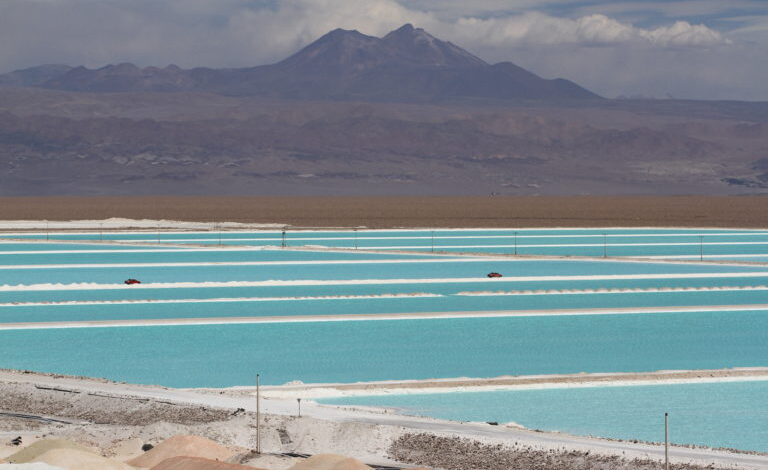
SQM's Salar de Atacama lithium operation. Credit: SQMSQM's Salar de Atacama lithium operation. Credit: SQMAudits

SQM’s Salar de Atacama Lithium Mine Completes IRMA Surveillance Audit

On 17 March 2026 – the Initiative for Responsible Mining Assurance (IRMA) released the surveillance audit report of SQM’s Salar de Atacama Lithium mine, located in Chile’s Salar de Atacama. IRMA-approved audit firm ERM CVS conducted the audit and assessed the progress made on the corrective action plan that the operation committed to in the initial audit report.

IRMA’s independent assessment cycle occurs in 3 stages: (1) initial audit, (2) surveillance audit, and (3) reassessment audit. Mines in the IRMA system must undergo a surveillance audit during each 3-year audit cycle, and this audit must occur between 12 and 18 months after an initial audit report has been publicly released. Surveillance audits are not full audits, meaning that conformance with all requirements reviewed in the initial audit does not need to be re-established. Typically, during a surveillance audit the audit team verifies that the mine’s systems and controls are still in place and are functioning effectively, that no major changes have occurred since the initial audit that negatively affect the mine’s performance. The surveillance audit includes confidential interviews with workers and engagement with Indigenous rightsholders and community stakeholders. The initial and surveillance IRMA audit reports for the operation are available on the SQM Salar de Atacama Mine audit page on the IRMA website.

As the IRMA Standard is recognized and adopted around the globe, these audits are important steps in a deepening dialogue between mining companies and those affected by their operations. Because the IRMA process is always improving from the experience of the most recent audit, audit results should be reviewed and interpreted accordingly.

The independent IRMA system is the only global mining standard that provides equal power to the public sector (communities and Indigenous rights holders, mine workers, and environmental and human rights advocates) alongside the private sector (mining companies, mined materials purchasers and investors).

For More Information:

READ MORE
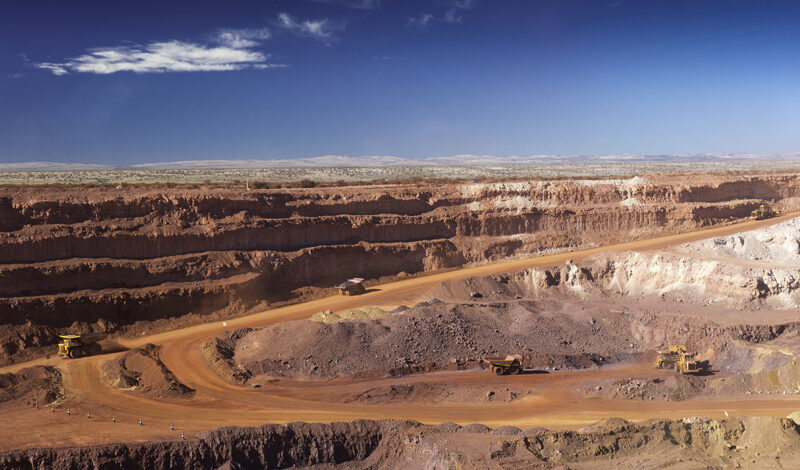
Leeufontein pit at Kolomela Iron Ore Mine. Credit: Anglo American KumbaLeeufontein pit at Kolomela Iron Ore Mine. Credit: Anglo American KumbaAudits

Anglo American’s Kolomela Iron Mine Completes IRMA Surveillance Audit

On 13 March 2026 the Initiative for Responsible Mining (IRMA) released the surveillance audit report of Anglo American’s Kolomela iron ore mine, located near Kathu in South Africa’s Northern Cape province. IRMA-approved audit firm ERM CVS conducted the audit and assessed the progress made on the corrective action plan that the operation committed to in the initial audit report.

IRMA’s independent assessment cycle occurs in 3 stages: (1) initial audit, (2) surveillance audit, and (3) reassessment audit. Mines in the IRMA system must undergo a surveillance audit during each 3-year audit cycle, and this audit must occur between 12 and 18 months after an initial audit report has been publicly released. Surveillance audits are not full audits, meaning that conformance with all requirements reviewed in the initial audit does not need to be re-established. Typically, during a surveillance audit the audit team verifies that the mine’s systems and controls are still in place and are functioning effectively, that no major changes have occurred since the initial audit that negatively affect the mine’s performance. The surveillance audit includes confidential interviews with workers and engagement with Indigenous rightsholders and community stakeholders. The initial and surveillance IRMA audit reports for the operation are available on the Kolomela audit page on the IRMA website.

IRMA audits are important steps in deepening dialogue between mining companies and those affected by their operations. The independent IRMA system is the only global mining standard that provides equal power to the public sector (communities and Indigenous rights holders, mine workers, and environmental and human rights advocates) alongside the private sector (mining companies, mined materials purchasers and investors).

For More Information:

READ MORE
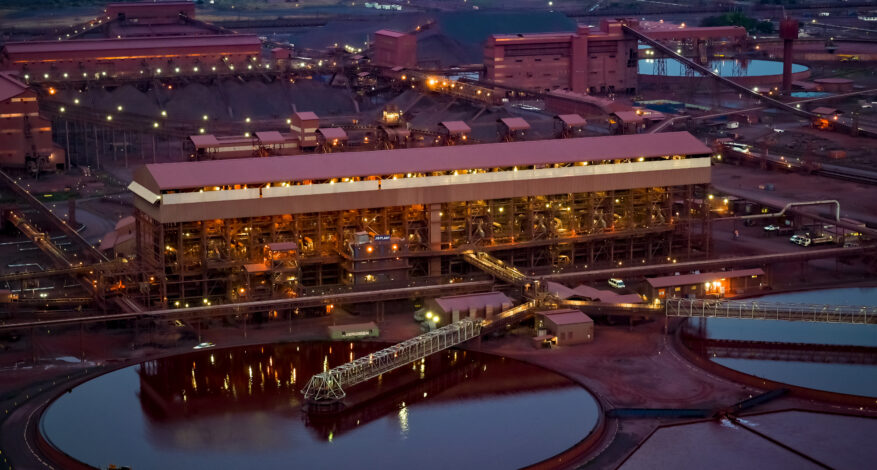
Sishen Mine. Credit: Anglo American KumbaSishen Mine. Credit: Anglo American KumbaAudits

Anglo American’s Sishen Iron Mine Completes IRMA Surveillance Audit

On 12 March 2026 the Initiative for Responsible Mining (IRMA) released the surveillance audit report of Anglo American’s Sishen iron ore mine, located near Kathu in South Africa’s Northern Cape province. IRMA-approved audit firm ERM CVS conducted the audit and assessed the progress made on the corrective action plan that the operation committed to in the initial audit report.

IRMA’s independent assessment cycle occurs in 3 stages: (1) initial audit, (2) surveillance audit, and (3) reassessment audit. Mines in the IRMA system must undergo a surveillance audit during each 3-year audit cycle, and this audit must occur between 12 and 18 months after an initial audit report has been publicly released. Surveillance audits are not full audits, meaning that conformance with all requirements reviewed in the initial audit does not need to be re-established. Typically, during a surveillance audit the audit team verifies that the mine’s systems and controls are still in place and are functioning effectively, that no major changes have occurred since the initial audit that negatively affect the mine’s performance. The surveillance audit includes confidential interviews with workers and engagement with Indigenous rightsholders and community stakeholders. The initial and surveillance IRMA audit reports for the operation are available on the Sishen audit page on the IRMA website.

IRMA audits are important steps in deepening dialogue between mining companies and those affected by their operations. The independent IRMA system is the only global mining standard that provides equal power to the public sector (communities and Indigenous rights holders, mine workers, and environmental and human rights advocates) alongside the private sector (mining companies, mined materials purchasers and investors).

For More Information:

READ MORE
ResponsibleSteel Just Transition report coverResponsibleSteel Just Transition report coverStandard

Report outlines key considerations for a mining and steel just transition

Today, ResponsibleSteel and the Initiative for Responsible Mining Assurance (IRMA) published a landmark report, Driving just transitions in the mining & steel sectors: The role of voluntary sustainability standards, outlining how voluntary sustainability standards (VSSs) can help deliver fair and inclusive transitions as heavy industries globally move to decarbonise. It is the first report of its kind, jointly authored by VSSs from the mining and steel sectors.

Developed by ResponsibleSteel and IRMA, the report demonstrates how collaboration across the supply chain provides the necessary understanding of the challenges and opportunities faced by both sectors to achieve a truly just transition for mining and steel. ‘Driving just transitions in the mining & steel sectors: The role of voluntary sustainability standards’ introduces nine key principles and five recommendations to help VSSs integrate just transition into their frameworks.

The report also reveals a significant gap—despite commitment at both government and corporate levels to just transition principles, implementation remains slow and inconsistent. With mining responsible for up to 10% of global energy-related emissions and steel also accounting for around 10%, accelerating decarbonisation in these sectors is critical. But without deliberate action, workers and communities most affected by these transitions risk being left behind.

ResponsibleSteel CEO, Annie Heaton, commented, “Decarbonisation is one of the most pressing global issues we face today. But if we ignore its social impacts, we risk serious unintended consequences. With around six million people employed in steel and another 20 million in mining—plus millions more in supply chains and communities that depend on these industries—industry must work together with workers, communities and governments to consider how to plan the transition to benefit people as well as the planet.”

Stakeholders involved in the project—including industry leaders, supply chain actors, academia, governments, trade unions, civil society organisations, local communities, and Indigenous groups—emphasised that these transitions must not only be fast, but fair, putting justice at the heart of industrial change.

IRMA Executive Director Aimee Boulanger observed, “This research shows that for voluntary standards to succeed, they must be structured to improve justice and inclusivity as they decarbonise and protect the environment.”

Key findings from the report included:

  • Justice at the centre: Stakeholders recognised the urgent need to decarbonise but stressed that justice must guide transition planning.
  • Inclusive process: The specific definition of “Just Transition” is highly contested, with varying interpretations. Engaging stakeholders is key to effectively defining the transition scope, identifying social impacts, and shaping mitigation actions.
  • Restorative justice challenges: Addressing restorative justice remains complex, requiring deeper collaboration among governments, companies, VSSs, and historically impacted communities.
  • Flexibility: Just transitions will differ across contexts and sectors. Principles must remain adaptable to be effective.

Funded by the ISEAL Innovations Fund with support from the Swiss State Secretariat for Economic Affairs (SECO), the report draws on international principles from the International Labour Organisation (ILO) and the UN Working Group on Human Rights, academic justice theory, interviews with 35 stakeholders, and two in-person workshops held in Brussels and Johannesburg.

This work highlights the unique role VSSs can play in providing practical frameworks for implementation, accountability, and verification, setting a clear reference point for steel and mining companies to plan transitions in a way that is equitable and fair. Both ResponsibleSteel and IRMA will continue to engage with stakeholders to discuss the best way to integrate just transition principles into their respective systems.

Read the full report here.

For More Information

  • Savannah Hayes, Communications Manager, ResponsibleSteel
    communications@responsiblesteel.org│+44 7588 785909
  • Initiative for Responsible Mining Assurance (IRMA)
    info@responsiblemining.net

About ResponsibleSteel
ResponsibleSteel is a global multi-stakeholder standards and certification initiative for the steel industry, committed to being a driving force in the socially and environmentally responsible production of net-zero steel. The ResponsibleSteel International Production Standard is designed to support the responsible sourcing and production of steel through an international system of certification and classification. For more information about ResponsibleSteel, please visit: www.responsiblesteel.org/

About the Initiative for Responsible Mining Assurance (IRMA)
IRMA is a nonprofit organisation working to protect people and the environment directly affected by mining by creating financial value for industrial-scale mining operations independently assessed against IRMA’s best practice Standard for Responsible Mining. For more information, visit: www.responsiblemining.net

READ MORE