Standard 2.0

Blog

IRMA Standard v2.0 – November 2025 Revision Update

The second public consultation on the IRMA Standard v2.0 closed a few days ago, and IRMA wants to warmly thank all the organizations and individuals that engaged.

Here are some initial statistics showing the level and diversity of interactions:

  • 82 organizations have engaged in the revision process, covering all regions of the world (see chart below).
  • Comments have been received from all categories of stakeholders and rights-holders, offering a wide and diverse range of perspectives.
  • We note and appreciate the substantial feedback received from multiple organizations that had not contributed during the first round.
  • Several organizations that had contributed during the first round have indicated to IRMA that they had no further comment to share during this second round.

As shown in the pie chart below, IRMA received submissions from all categories of stakeholders and rights-holders:

  • 29% of the contributing organizations are NGOs
  • 23% are companies involved in mining and/or processing and/or exploration
  • 15% are downstream purchasers of mined material
  • 11% are consultancy or audit firms
  • 8% are governments or multilateral organizations
  • 5% are finance institutions or banks or investors
  • 4% are Indigenous organizations
  • Remaining 5% include standard-setters, rating agencies, organized labor, affected communities, and academia

What’s next?

We will now carefully review and process all the contributions, in order to prepare a final version of the Standard which our equally-governed multi-stakeholder Board of Directors will use to inform its discussions and standard approval process.

In the meantime, we are collecting the final answers from the 52 individual Expert Advisors who volunteered to guide us with advice regarding targeted questions on 6 topics.

And a cross-stakeholder Expert Working Group on tailings and mine waste will start soon (its composition is being finalized).

The IRMA Standard v2.0 won’t be approved until the IRMA Board has had time to review such final version, discuss the changes and the recommendations of their constituencies, and has reached consensus.


If you have any question regarding this process ,you can contact our Standards Director, Pierre Petit-De Pasquale at: pdepasquale@responsiblemining.net


You can find more information about our Standards Development Process here.


Picture: Pixabay – Creative Commons Zero (CC0) license

READ MORE
Blog

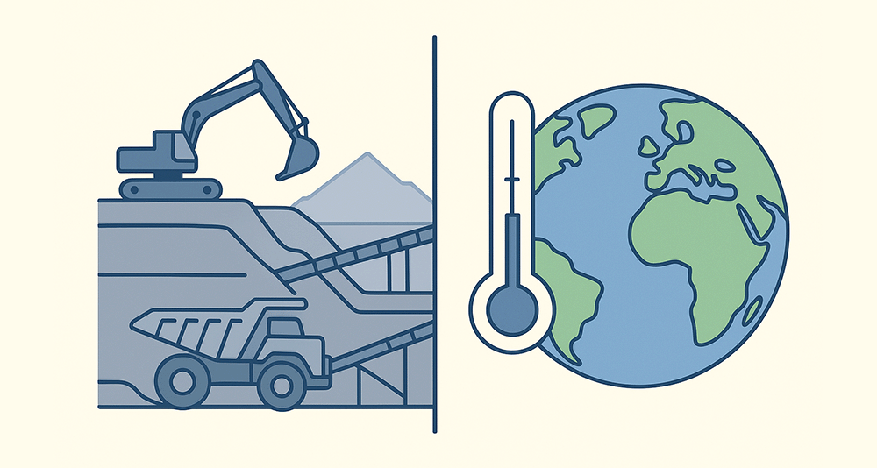
Climate Action in the DRAFT IRMA Mining Standard v2.0

[This blog was co-authored by Kristi Disney Bruckner and Pierre Petit-de Pasquale]

As we return from the Africa Climate Summit 2.0 and participate in Climate Week NYC, it seems especially timely to answer the question, “What’s new on climate action in the second draft of the DRAFT IRMA Mining Standard v2.0?”

We’d like to take this opportunity to share substantial updates on coverage of this topic in the proposed Chapter 4.6: Climate Action.

Here’s a summary of relevant changes to the IRMA Standard in 13 points that help advance UN Sustainable Development Goal 13: Climate Action!

  1. Requirements for sites to assess their own contribution to climate change, in collaboration with stakeholders.
  2. Requirements that sites consider energy efficiency and minimization of greenhouse gas emissions when selecting technology options and alternatives for energy sources, mining and processing methods, technologies and equipment, and the design of new buildings and facilities, as well as when there are opportunities to replace, upgrade, or add technology, or change processes.
  3. Including emissions from land use changes and reductions in land carbon stock arising from the site’s direct activities in the quantification of Scope 1 and 2 emissions.
    Requiring screening and calculation of Scope 3 emissions using credible methodologies, verified by a credible third-party expert.
  4. Annual measure of energy consumption from sources of Scope 1, 2 and 3 emissions.
  5. Requiring sites to undertake a scoping exercise, in accordance with the mitigation hierarchy, to identify sources of direct and/or indirect emissions that can be eliminated and/or that have the highest reduction potential, for which energy efficiency could be improved, and—as a last resort—opportunities for carbon capture and storage of any emissions that cannot be avoided.
  6. Prioritizing these options, while ensuring that any emission-reduction opportunity takes into consideration the potential adverse social and human rights impacts arising from its implementation.
  7. Requiring sites to have greenhouse gas (GHG) and energy targets that are in line with the Paris Agreement at either the level of the site or the level of the company, unless the site meets all the criteria for Green Enabling Projects and can demonstrate the environmental benefits of its production’s end-use.
  8. Requiring sites to have a GHG and energy management plan that builds on the scoping, prioritization and target-setting requirements.
  9. Integrating traditional knowledge, and especially traditional ecological knowledge, of local affected communities, and Indigenous rights-holders if applicable, into scoping, development, implementation, monitoring, and continuous improvement of the GHG and energy management plan.
  10. Requiring sites to track and document their performances on increasing the proportion of energy consumed at the site that comes from renewable sources, over successive time periods, against the targets required.
  11. Using the monitoring and evaluation results to develop and implement time-bound corrective measures to continuously improve the scoping, target-setting, management/mitigation, and monitoring processes.
  12. Requiring more information to be made publicly accessible. (See details in Section 4.6.11).

What do you think?

We’d love your input on these proposed updates to the Climate Action Chapter and on any proposed updates to the IRMA Standard. You can submit comments on our online commenting form, simply send your comments to comments@responsiblemining.net or via WhatsApp to +1-303-202-1445, or use any of the many options for submitting comments here.

Learn more about the DRAFT IRMA Mining Standard v2.0 public consultation, open to all through 22 October 2025 here.

Thank you for sharing your experience and insights to improve the IRMA Mining Standard!

READ MORE
Standard 2.0 updated timelineStandard 2.0 updated timelineBlog

Update on the IRMA Mining Standard 2.0 revision

NOTE: This post is superseded by the linked 3 June 2025 update.

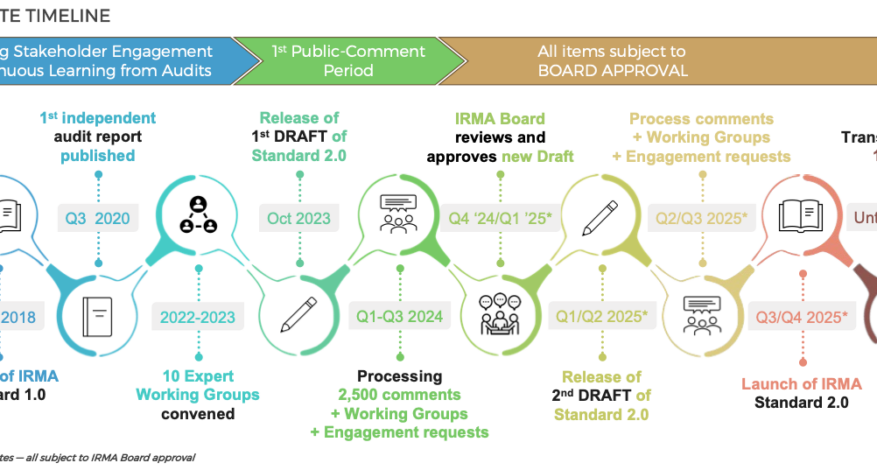
Following the release of a first draft of Standard 2.0 in October 2023 for a 90-day public consultation, the IRMA Secretariat received more than 2,500 points of comments from 82 organizations (see previous update).

Although we had first anticipated the release of a second draft as early as Q3 2024 for a 60-day public consultation, such release is now expected for March 2025; and subject to approval by the IRMA multi-stakeholder equally-governed Board of Directors.

Standard 2.0 updated timeline
Click to enlarge.
Why is the process taking longer than planned?
  1. IRMA granted extensions to organizations that asked for more time during the first public consultation up to March 2024) to ensure all could contribute.
  2. The quality and length of most contributions required a longer processing time from our team of subject matter experts.
  3. During and after the first public consultation, IRMA received requests for additional engagement, including calls and in-person meetings, from a number of organizations (across NGOs, Indigenous rights’ organizations, mining companies, government agencies, and other industry actors). IRMA responded by engaging in all requests; this engagement occurred mainly April-July 2024, but also continued through November 2024.
  4. This lengthened process delayed our ability to prepare updated material and questions for our Expert Working Groups (see note below).
  5. A new consolidated draft was then submitted to the IRMA Board of Directors on 1st November 2024 for a 6-week review period, aiming for their approval before the end of 2024.
  6. Board members from the mining and the NGO sectors requested additional discussions about, and work on, the following topics:
    • Rationale for, and listing of, critical requirements;
    • Upstream and downstream sustainability due diligence;
    • Free, Prior, and Informed Consent of Indigenous Peoples;
    • Tailings management, especially with regard to the GISTM standard;
    • Water management;
    • Biodiversity offsets;
    • Carbon offsets;
    • Air quality and dust management.
  7. Finally, the fact that IRMA finalized and launched the first official version of the IRMA Chain of Custody Standard (with its associated Assurance Manual, and Claims Procedure and Communications Policy) over the course of the three first quarters of 2024 consumed attention, discussion, and refining time from both the IRMA Secretariat and the IRMA Board.
What’s next?

The second round of public consultation is coming up soon!

The IRMA Board, supported by the IRMA Secretariat, is working to finalize the new draft for a 60-day consultation period. This is now expected for March-April (NOTE: the Board agreeing to release the Standard for consultation doesn’t constitute endorsement of everything in the Standard It’s an invitation to the world to help further improve the new draft.)

Materials we will release in support of  this second consultation:

  1. A public report on the first consultation period;
  2. A fully detailed log of all the comments that were submitted (confidential contributions will be redacted), and the response from IRMA;
  3. The full draft Standard, that includes:
    • For each chapter: summary of the changes since the 2023 first draft; details on feedback received and proposed decision for every consultation question;
    • Applicability to respective development stages (exploration to permitting to operations) will be integrated within the design of the chapters;
    • An updated Glossary;
    • Updated annexes (including environmental quality tables);
  4. Comparative tables between IRMA Standard V1.0 and this second draft, highlighting substantial differences.

IRMA is committed to again offer opportunities for feedback from all stakeholders and Indigenous rightsholders.

We aspire to process all the comments, convene expert working groups, and meet requests for specific engagement, during Q2 and Q3 2025, so that a final Standard may be adopted as final by the IRMA Board  before the end of 2025.

We thank you all for your patience; we remain committed to working transparently on this updated IRMA Mining Standard that many are eager to use and implement.

Expert Working Groups: 2023-2024 update

Some of the Expert Working Groups that were convened in 2022 have been solicited again, while a new one was created (Mineral Supply Chain). Note that no group calls took place, and members were only asked to provide individual feedback. Details are provided in the table below:

IRMA Working Groups Status
Conflict-Affected and High-Risk Areas (CAHRAs) Asked for additional contribution in August 2024 on the new draft Chapter on “Conflict-Affected and High-Risk Area Due Diligence“.

It is anticipated that this working group will need to be reconvened during the second public consultation.

Land Acquisition, Displacement, and Resettlement Asked for additional contribution in April 2024 on the new draft Chapter.
Mineral Supply Chain Asked for additional contribution in August 2024 on the new draft Chapter on “Upstream and Downstream Sustainability Due Diligence“.

It is anticipated that this working group will need to be reconvened during the second public consultation.

Planning and Financing for Mine Closure Asked for additional contribution in August 2024 on the new draft Chapter on “Concurrent Reclamation, Closure, and Post-Closure“.
Waste and Materials Management Asked for additional contribution in August 2024 on the new draft Chapter on “Tailings Storage Facilities and Physical Stability Management“.

It is anticipated that this working group will need to be reconvened during the second public consultation.

Water Management Asked for additional contribution in August 2024 on the new draft Chapter on “Water Management“.

It is anticipated that this working group will need to be reconvened during the second public consultation.

Circularity Solicited feedback in October 2023 when 1st Draft was released.

No particular challenge identified since.

Gender Equality and Gender Protections Solicited feedback in October 2023 when 1st Draft was released.

No particular challenge identified since.

Greenhouse Gas Emissions (GHG) Solicited feedback in October 2023 when 1st Draft was released.

No particular challenge identified at that time.

Former “Greenhouse Gas Emissions” chapter has been expanded, renamed “Climate Action” and peer-reviewed by an external consultancy firm, AGS Carbon, specializing in Climate Action, Standard setting, and audits. It is anticipated that this working group will need to be reconvened during the second public consultation.

Indigenous Peoples and FPIC Solicited feedback in October 2023 when 1st Draft was released.

No particular challenge identified at that time.

Following specific request for engagement, the new draft chapter was sent to 15 Indigenous leaders from across all 7 socio-cultural regions (most of them were not previously part of the Expert Working Group). An in-person closed-door meeting was also organized in November 2024, following a request from Indigenous rights’ organizations and Indigenous leaders to do so.

It is anticipated that this working group will need to be reconvened during the second public consultation.

Occupational Health and Safety (OHS) Solicited feedback in in October 2023 when 1st Draft was released.

No particular challenge identified since.

Expert Working Group Demographics

Total number of Working Groups: 11
Total number of Experts: 159 (87 male, 72 female)
Countries represented: 26

Expert Working Group 2023-2024 Gender Pie Chart

IRMA Expert Working Groups 2023-2024 Geographic Diversity

READ MORE
Standard 2.0

Update on Standard for Responsible Mining 2.0

NOTE: This post is superseded by the linked 3 June 2025 update.

As we announced back in October, IRMA is comprehensively revising the 2018 IRMA Standard for Responsible Mining (1.0). This revision process allows IRMA to:

  • Remain accountable to all sectors
  • Remain up-to-date with best practice
  • Add clarity and strengthen auditability
  • Add consistency, and
  • Fill in gaps

Using ISEAL’s Code of Good Practice for Sustainability Systems as a reference, this revision process is informed by:

  • 5 years of ongoing stakeholder engagement
  • Experiences from the initial IRMA third-party audits
  • Review of other standards and initiatives
  • Increased public awareness and evolving expectations of best practice
  • Review of emerging issues garnering international discussions
  • Changes to relevant legislation across the full scope of the standard
  • Comments on previous drafts (IRMA-Ready, Mineral Processing, Chain of Custody)
  • Targeted engagement activities on specific topics
  • IRMA Expert working groups, and
  • Public consultation

Unlike the Standard 1.0 which only covers mineral extraction operations, the  IRMA Standard 2.0 is expected to also cover development, exploration, and mineral processing: the IRMA Standard for Responsible Mining and Mineral Processing. Separately we will launch a Chain of Custody Standard.

Public Comments Received for the 1st Draft of IRMA Standard 2.0

The 90 day public consultation lasted from October 26 through January 26. During that time we:

  • Hosted 2 introductory webinars attended by 150 participants
  • Hosted 20 live topic consultation webinars — across multiple time zones — attended by 180 unique participants
  • Received 2,500+ discrete comments from 82 organizations, and
  • Allowed for additional engagement and feedback outside the formal process

The sector and geographic distributions of these 82 commenting organizations are shown below:

Regions from which Standard 2.0 public comments were submitted


Sectors from which IRMA received public comments on Standard 2.0 draft

Of the 28 chapters in first draft Standard 2.0, the most-commented upon were (in alphabetical order):

  • Biodiversity, Ecosystem Services and Protected Areas
  • Community and Stakeholder Engagement
  • ESIA (Environmental and Social Impact Assessment and Management)
  • Fair Labor and Terms of Work
  • Gender Equality and Gender Protections (new)
  • GHG and Energy Consumption
  • Human Rights Due Diligence
  • Indigenous Peoples and FPIC
  • Occupational Health and Safety
  • Waste and Materials Management
  • Water Management

Public Comments Received for the second draft of the Chain of Custody Standard

A first draft was released for public comment in 2021. The 90 day public consultation for the second draft lasted from October 26 through January 26. During that time we:

Timeline

As included in the graphic below, the IRMA Secretariat is currently processing all the public comments received. Although subject to the approval of the IRMA Board of Directors, it is envisaged to release a 2nd draft for public comment in the second half of 2024. We hope to launch the actual Standard 2.0 – once approved by the IRMA Board of Directors – towards the end of 2024, thus triggering a transition period (duration to be decided and approved by the Board) between versions 1.0 and the 2.0 for all the entities and sites engaged (and seeking to engage) in the IRMA System.

Standard 2.0 revision timeline

READ MORE
Credit: Picryl.com under the Creative Commons licenseCredit: Picryl.com under the Creative Commons licenseAssurance

Why IRMA doesn’t use the word ‘certified’

You may have noticed that IRMA no longer uses* the words certification or certified in its programs and materials.  Instead, we refer to independent assessment and IRMA achievement (e.g. IRMA 75).

This is intentional.

In our view, “certification” conveys the certifying institution’s approval of the audited company, site or product. Many view certification labels as intended to assure the buyer or end-consumer that they’re buying something which has been approved.

While this approach is simple to understand, widely used, and has a long history in the marketplace, we believe it’s not an appropriate approach for the complexity of mining operations and the scale of industrial mining’s impacts. Certification, in the sense that it signifies approval, often means vastly different things to those impacted by mining—whether mine management, mine workers, customers of mines, or communities living near mines.

Instead, we use a scoring tool to:

  • measure performance against a shared definition of best practices in mining;
  • create incentive for more transparent accounting of impacts and achievements;
  • welcome any operation, at any stage of their journey, to feel they can use the IRMA system to guide changes;
  • build value for continuing improvement; and
  • allow each stakeholder to make their own judgement about what the mine’s independently assessed performance against the IRMA Standard (its scoring as revealed in an IRMA audit report) means, instead of providing a proverbial stamp of approval.

An IRMA audit report offers readers not only an overall achievement level (IRMA Transparency, IRMA 50, IRMA 75, or IRMA 100; explained below) , but also provides scores for hundreds of requirements including the auditor’s rationale for assigning that score. This level of detail is key to:

  • ensure the audit reports can be used as a centerpiece for meaningful conversations, whether between communities and the mine, a mine’s customer and mine management, or any other constellation of interested parties; and
  • guide the mine on specific actions they can take to meet practice in the weeks, months and years ahead.

Because we know that some readers won’t study performance on each requirement and instead want a quick summary of performance we offer an overall achievement score.

  • IRMA Transparency is given to a mine site that is audited against the IRMA Standard, releases the subsequent audit report publicly, and doesn’t reach a higher achievement level.
  • IRMA 50 and IRMA 75 are achieved when a mine meets at least 50% or 75% average of the possible scores in each of the four main principles of the IRMA Standard (environmental, social, business integrity, and leaving positive legacies). In other words, a mine can’t score 100% in social chapters and 0% in environmental chapters and be IRMA 50; they need to achieve at least 50% average in each of the four principles.
  • Mines achieving IRMA 50 and above must also at least substantially meet 40 of the IRMA Standards requirements that are designated as critical. This helps to ensure that as we share these milestones of achievement in working toward best practices, sites with achievement levels don’t have significant issues like child labor or human rights abuses.
  • An IRMA 100 mine follows all aspects of the IRMA Standard. Even at this level, IRMA doesn’t say the mine is “certified”, but provides the information stakeholders need to draw their own conclusions about the mine’s performance and impacts.

It is important to note that IRMA 100 originally signaled “IRMA certification” – and was written directly into specific points of the 2018 IRMA Standard for Responsible Mining. For example

2.2.2.2. “New mines shall not be certified [achieve IRMA 100] by IRMA unless they have obtained the free, prior and informed consent (FPIC) of potentially affected indigenous peoples.”

The 2024 update to the Standard will remove these “certification” references. It is further important to note that “certification” is this example is not equated with “assessed.” A mine can be assessed in IRMA, even if it has not obtained FPIC. The resulting scores will simply relay the details around this important aspect of a mine’s operations.

We continue to look for ways to evolve IRMA’s scoring system to provide clear and meaningful data on performance without oversimplifying the important details or risks.


* Although references to “certification” have been removed from IRMA website text (e.g. the Assessment page used to be the Certification page), the process is still underway for PDF documents.

READ MORE
Credit: Nick Youngson CC BY-SA 3.0 Pix4freeCredit: Nick Youngson CC BY-SA 3.0 Pix4freeStandard 2.0

The IRMA Standards revision — an update

IRMA would like to warmly thank all the people who have participated in the public-comment period that ended on 26 January to inform the revision of our Standards.

Through our live consultation webinars, our online platform, and direct engagement, we have collected about 2,000 individual lines of comments, submitted by more than 80 organizations spread across all continents (Asia, Africa, North America, South America, Europe, and Australia).

Building upon 5 years of implementation, learning, and continuous stakeholder engagement on the Standard, the IRMA Secretariat is now consolidating and processing all these comments and recommendations. Additional Expert Working Groups are being convened where necessary.

Subject to the approval of IRMA’s equally-governed multi-stakeholder Board, we hope to launch the IRMA Standard for Responsible Mining and Mineral Processing V2.0  before the end of the year, together with a public report on the comment period and the rationale for the final changes made and approved. We hope to also launch the IRMA Chain of Custody Standard this year, also subject to Board’s approval.

READ MORE
Cover of IRMA Draft Standard 2.0 Proposed Normative Requirements for Exploration, Development and Mineral ProcessingCover of IRMA Draft Standard 2.0 Proposed Normative Requirements for Exploration, Development and Mineral ProcessingStandard 2.0

Std 2.0 and Exploration, Development & Processing

The IRMA Draft Standard for Responsible Mining and Mineral Processing 2.0 incorporates the draft IRMA Standard for Responsible Mineral Development and Exploration (the ‘IRMA-Ready’ Standard – Draft v1.0 December 2021), the draft IRMA Standard for Responsible Minerals Processing (Draft v1.0 June 2021), and the IRMA Standard for Responsible Mining 1.0 (2018) into one integrated standard that covers all phases and types of mineral development activities.

The 2023 proposed revisions for version 2.0 are meant to apply at any phase of the mineral development life cycle (e.g., exploration, project development, permitting, construction, mining and processing operations, reclamation and closure, post-closure).

To highlight and clarify those additions, we have released a summary of the draft Normative Requirements for those phases — where IRMA requirements are modified to govern stages of exploration, development or mineral processing.  The IRMA Draft Standard 2.0 Normative Requirements for each chapter are provided and discussed in Appendix A.

In the context of this guidance document, a normative requirement modifies a given IRMA requirement from the IRMA DRAFT Standard 2.0 for a specific phase, by either replacing or  supplementing the original text of this requirement. We use the terminology “normative requirements” here since they modify the elements that would actually be required and that auditors would measure against, not just guidance that helps to enrich or guide understanding of those requirements.

These Normative Requirements are part of the Draft Standard 2.0, so just as with the rest of the draft Standard, they are proposed and open for public comment until January 26, 2024.

READ MORE

Topic consultations for draft Standard 2.0

Over the next two months IRMA is hosting live, virtual consultations to discuss and comment on different topics covered by the Draft Standard for Responsible Mining and Mineral Processing 2.0. Facilitated by the IRMA Secretariat, these virtual meetings share what you need to know about the proposed changes and/or new areas in a specific topic inside the Standard (download or view specific chapters here). They will ask some guided questions where IRMA especially seeks feedback. And we encourage all comments — these Zoom sessions are meant to be inclusive and collaborative spaces for such discussion.

All consultations will be in English and last for 60 minutes. Registration is required, all times are UTC-0. Please register through the links provided below for any topics you might be interested in. NOTE: all consultations below are for the Standard for Responsible Mining and Mineral Processing. Visit the Chain of Custody Standard page for those webinars.

2023 2024
07 December 14:00-15:00
Water Management
Watch the recording
🔗 Presentation
10 January 09:00-10:00
Sector-specific: Mineral Processing
Watch the recording
🔗 Presentation
08 December 14:00-15:00
Gender Equality & Gender Protections
Watch the recording
🔗 Presentation
10 January 17:00-18:00
Sector-specific: Exploration and Development
Watch the recording
🔗 Presentation
11 December 14:00-15:00
Occupational Health & Safety
Watch the recording
🔗 Presentation
11 January 16:00-17:00
Sector-specific: Mining Companies
Watch the recording
🔗 Presentation
11 December 16:00-17:00
Waste & Materials Management (incl. tailings)
Watch the recording
🔗 Presentation
12 January 07:00-08:00
Water Management

🔗 Presentation
12 December 14:00-15:00
GHG Emissions & Energy Consumption
Watch the recording
🔗 Presentation
12 January 14:00-15:00
Land & Soil Management
Watch the recording
🔗 Presentation
12 December 16:00-17:00
Indigenous Peoples & FPIC
Watch the recording
🔗 Presentation
15 January 07:00-08:00
Occupational Health & Safety
Watch the recording
🔗 Presentation
13 December 14:00-15:00
Management of Physical Stability (incl. tailings)
Watch the recording
🔗 Presentation
16 January 07:00-08:00
Waste and Materials Management (including tailings)
Watch the recording
🔗 Presentation
14 December 14:00-15:00
Planning, Financing Reclamation and Closure
Watch the recording
🔗 Presentation
18 January 07:00-08:00
Management of Physical Stability (including tailings)
Watch the recording
🔗 Presentation
18 December 14:00-15:00
Land Acquisition, Displacement, and Resettlement
Watch the recording
🔗 Presentation
19 January 07:00-08:00
GHG Emissions & Energy Consumption
Watch the recording
🔗 Presentation
READ MORE
earth at nightearth at nightStandard 2.0

Public Consultation Begins for Draft Standards

Click here to register for webinarsToday we began public consultation for the Draft Standard for Responsible Mining and Mineral Processing, and the Draft Chain of Custody Standard. Public consultation runs through 26 January 2024. For more information on how to comment, please click through to each standard.

The Draft Standard for Responsible Mining and Mineral Processing is an update of the 2018 IRMA Standard for Responsible Mining – the strongest voluntary mining standard in the world, and the only one equally governed by a multistakeholder coalition. The updated draft:

  • Addresses the entire mining process: Mineral Exploration & Development, and Processing in addition to Mining.
  • Adds new chapters on Gender Equality / Gender Protections; Physical Stability; Land and Soil
  • Improves chapters on Financial Transparency and Anti-Corruption; Free, Prior, and Informed Consent (FPIC); and Indigenous Peoples
  • Improves how the standard addresses specific topics including greenhouse gas emissions and energy; recycling materials and circularity; operational health & safety; responsible sourcing; human rights; cultural heritage

The new Chain of Custody Standard Draft is designed to provide baseline requirements for tracing material coming from any IRMA-audited mine through the downstream processing of minerals into products, all the way to the end consumer.

Transparently reviewing and updating IRMA Standards ensures they are accountable to all sectors, stakeholders and Indigenous rights holders, and allows for the incorporation of changes in best practice to provide a global responsible mining benchmark. We review every 5 years using the ISEAL Standard Setting Code of Good Practice as a reference.

To provide comment, IRMA is reaching out to a wide and diverse set of stakeholders and Indigenous rights holders, including affected local communities, workers and their unions, nonprofit organizations, mining and minerals processing companies, purchasing and investment companies, governments and international organizations, scientists and researchers. Anyone can provide input. Comments will be confidential on request. All comments will be considered carefully – a summary of comments and IRMA’s responses will be provided after the consultation period ends.

READ MORE