ISEAL

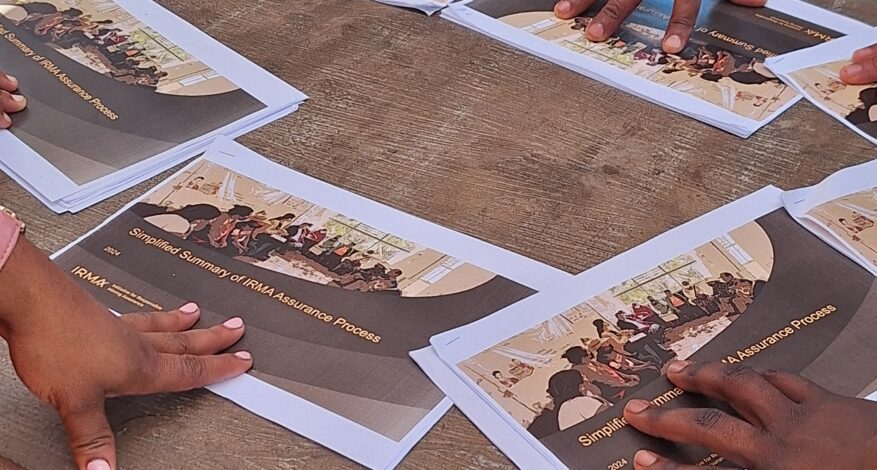
Hands together at the Mototolo workshopHands together at the Mototolo workshopBlog

Standards’ role in a responsible transition for steel and mining

ResponsibleSteel and the Initiative for Responsible Mining Assurance (IRMA) are collaborating on a joint project supported by a grant from the ISEAL Innovations Fund, which is supported by the Swiss State Secretariat for Economic Affairs SECO, to better understand the social impacts of the net-zero transition for the steel and mining sectors and how standards can help guide good practice.

Two project leads, Haruko Horii, Standards Manager at ResponsibleSteel, and Davidzo Muchawaya, Africa Regional Lead at IRMA, provide a short Q&A for readers to better understand the project.

Q: Haruko, what is the vision for the project?

With this project, we want to understand the social impacts of the transition to net zero and what role standards can play in guiding good practice.

The term ‘just transition’ is used by different people in different ways. We need to determine what this looks like for the mining and steel sectors. What exactly is a just transition? Whose transition are we discussing? Workers, local communities or supply chains? What is the scope of transition? These are some of the questions we need to consider.

Decarbonisation could have adverse social impacts such as job losses or displacement and significant effects on weakening the economic viability of affected communities. Initial research has shown that communities are facing significant social impacts caused by the transition to low-carbon practices. For instance, thousands of people have lost their jobs as a result of shifting from blast furnace technology to electric arc furnaces. These job losses have in turn impacted the wider community’s economic stability, community identity, and overall well-being.

These are the types of issues we aim to identify through this project, assessing how voluntary sustainability standards (VSS) can address them, identifying gaps, and outlining steps for future, more detailed work that could lead to larger-scale initiatives. We’ll test our findings by engaging with workers, unions, business leaders, community organisations, and other relevant stakeholders to identify an agreed approach and create practical guidance for players in the mining and steel industry.

Q: Davidzo, what do ResponsibleSteel and IRMA have in common, and why are they collaborating on a just transition?

We believe in the power of collaboration and mutual recognition. This project is just one of many examples of how different VSSs can complement and leverage each other’s work. Specifically, ResponsibleSteel leverages the assurance system of standards such as IRMA’s at mine site level, while focusing on the steel production aspects. Importantly, both ResponsibleSteel and IRMA were founded on a multi-stakeholder governance system, which has been recognised as a leading practice both by industry and NGOs. This model is recognised as best practice to ensure transparency, accountability, and inclusivity.

The collaboration specific to a just transition is born out of the necessity to ensure two hard-to-abate sectors, steel and mining, address the realities workers and communities are facing in our changing world as many existing mine and steelmaking sites face adaptation or closure. Given the varying impacts of decarbonisation across regions, IRMA and ResponsibleSteel are uniquely positioned to provide frameworks that apply across these different contexts since they are both standard-setting organisations operating globally. What is more, they are able to consider both decarbonisation and the potential social impacts of the transition at the same time.

Q: How do each of you respectively integrate just transition into your standards?

Haruko: Standards are going to play a critical role in promoting accountability during the transition, ensuring they are fair and equitable. Although there is no explicit reference to a just transition in the current ResponsibleSteel International Production Standard, there are some elements to address the transition under Principle 4: Decommissioning and Closure of sites, which requires consultation with key stakeholders to minimise any adverse impacts. In future, the scope of this principle could be expanded to address issues related to site closures, or the Production Standard could adopt a different approach by providing a Just Transition Framework giving steel producers guidelines and tools to navigate an equitable transition with workers and affected communities. We plan to discuss these approaches with stakeholders in the next phases of the project. Integrating practices into the Production Standard will help ensure the industry’s transition is both environmentally and socially just.

Davidzo: As for the IRMA Standard for Responsible Mining, multiple chapters and requirements articulate what best practices could and should be for mining operations wishing to ensure a just transition for workers and affected communities. A prominent example is the requirement to involve affected communities and stakeholders in the development, design, and implementation of the mine rehabilitation and closure plan. Going beyond minimum transparency, the IRMA Standard outlines a series of requirements dedicated to the adequate estimation and financing of mine closure and post-closure. Research shows that the mining operations often leave behind environmental and social liabilities, without taking charge of costs associated with the rehabilitation or appropriate closure of the sites thereby foregoing an adequate transition.

Crucially, the role played by both ResponsibleSteel and IRMA would not be the same without their multi-stakeholder governance systems. Thanks to the decision making process that takes into account private sector players as well as rights holders and labour unions, they can ensure that the voices of all parties are heard and taken into account in an equal way – hopefully adding the “just” element to “transition”.

Q: Davidzo, who is the main audience for this project?

The main audience for this project is workers and labour unions, as workers are most directly affected by the transition. Operators, from mining companies to steelmakers, are also key since, as employers, their actions and decisions will be critical to the social impacts of the transition, alongside national and subnational governments. Local communities impacted by the transition, NGOs that aim to act in their interests and standard-setting organisations are also key stakeholders.

Q: Haruko, is there a specific geographic focus for the project?

While just transition challenges and opportunities vary from country to country and even from site to site, the project is truly global as it strives to bring the complexities of these different realities to light. We aim to engage with stakeholders across different regions during the project to hear from different stakeholders the realities of the transition in different contexts. More information on this to come!

Find out more about Responsible Steel at responsiblesteel.org. Find out more about IRMA at responsiblemining.net.

Find out more about the project background, visit the project page on the ISEAL website.

READ MORE
earth at nightearth at nightStandard 2.0

Public Consultation Begins for Draft Standards

Click here to register for webinarsToday we began public consultation for the Draft Standard for Responsible Mining and Mineral Processing, and the Draft Chain of Custody Standard. Public consultation runs through 26 January 2024. For more information on how to comment, please click through to each standard.

The Draft Standard for Responsible Mining and Mineral Processing is an update of the 2018 IRMA Standard for Responsible Mining – the strongest voluntary mining standard in the world, and the only one equally governed by a multistakeholder coalition. The updated draft:

  • Addresses the entire mining process: Mineral Exploration & Development, and Processing in addition to Mining.
  • Adds new chapters on Gender Equality / Gender Protections; Physical Stability; Land and Soil
  • Improves chapters on Financial Transparency and Anti-Corruption; Free, Prior, and Informed Consent (FPIC); and Indigenous Peoples
  • Improves how the standard addresses specific topics including greenhouse gas emissions and energy; recycling materials and circularity; operational health & safety; responsible sourcing; human rights; cultural heritage

The new Chain of Custody Standard Draft is designed to provide baseline requirements for tracing material coming from any IRMA-audited mine through the downstream processing of minerals into products, all the way to the end consumer.

Transparently reviewing and updating IRMA Standards ensures they are accountable to all sectors, stakeholders and Indigenous rights holders, and allows for the incorporation of changes in best practice to provide a global responsible mining benchmark. We review every 5 years using the ISEAL Standard Setting Code of Good Practice as a reference.

To provide comment, IRMA is reaching out to a wide and diverse set of stakeholders and Indigenous rights holders, including affected local communities, workers and their unions, nonprofit organizations, mining and minerals processing companies, purchasing and investment companies, governments and international organizations, scientists and researchers. Anyone can provide input. Comments will be confidential on request. All comments will be considered carefully – a summary of comments and IRMA’s responses will be provided after the consultation period ends.

READ MORE