

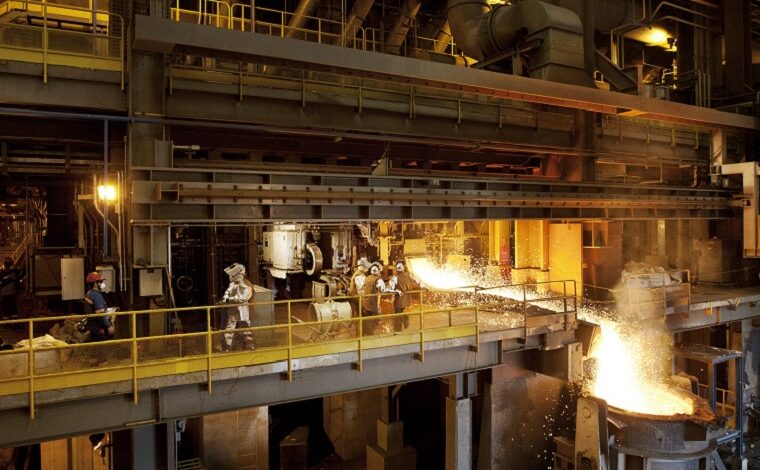
 Nickel being poured at the new Barro Alto plant, which produced its first metal in March 2011.Audits
Surveillance Audit Revision Published for Anglo American’s Barro Alto Nickel Mine
On 22 October 2026 the Initiative for Responsible Mining Assurance (IRMA) released a revision of the surveillance audit report of Anglo American’s Barro Alto nickel mine. Barro Alto is located in Brazil’s state of Goiás.
IRMA-approved audit firm ERM CVS conducted the supplemental review regarding IRMA Standard Chapter 2.2, Free, Prior and Informed Consent (FPIC). Revisions to the 2025 surveillance report include updates to the Chapter 2.2 summary in Section 4.2; revision to Table 5-1 for critical requirement 2.2.2.2; a new paragraph in Section 6.3 regarding focus areas for the next audit; and updates to document dates.
IRMA’s independent assessment cycle usually occurs in 3 stages: (1) initial audit, (2) surveillance audit, and (3) renewal audit. Mines in the IRMA system must undergo a surveillance audit during each 3-year audit cycle, and this audit must occur between 12 and 18 months after an initial audit report has been publicly released.
Surveillance audits are not full audits, meaning that conformance with all requirements reviewed in the initial audit does not need to be re-established. Typically, during a surveillance audit the audit team verifies that the mine’s systems and controls are still in place and are functioning effectively, that no major changes have occurred since the initial audit that negatively affect the mine’s performance. The surveillance audit includes confidential interviews with workers and engagement with Indigenous rightsholders and community stakeholders.
The initial audit, the 2025 surveillance audit, and the 2026 surveillance audit revision reports are available on the Barro Alto Mine audit page on the IRMA website.
The independent IRMA system is the only global mining standard that provides equal power to the public sector (communities and Indigenous rights holders, mine workers, and environmental and human rights advocates) alongside the private sector (mining companies, mined materials purchasers and investors).
For More Information:
- Adan Olivares Castro, Regional Lead, Americas and the Caribbean
contact@responsiblemining.net +1.360.217.9080 (WhatsApp)
- Barro Alto Mine audit surveillance audit revision: https://responsiblemining.net/barro-alto-surveillance-report-irma-00050-std01-0-01-srvr1
- Barro Alto Mine IRMA audit page: https://responsiblemining.net/barroalto
