Standard

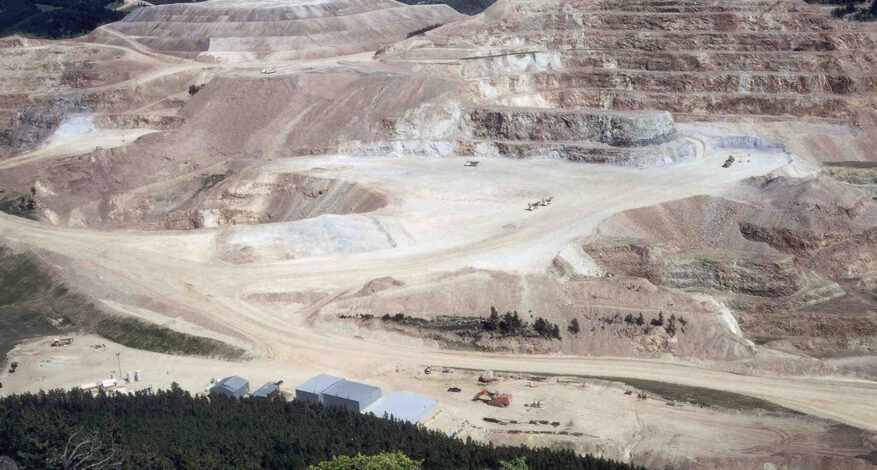
Credit: Dick Thomas Johnson-CCBY2.0Credit: Dick Thomas Johnson-CCBY2.0Government

ISO, responsible mining, and multi-stakeholder engagement

As the ISO takes on important work on responsible mining, IRMA restates the importance of inclusive and meaningful multi-stakeholder engagement

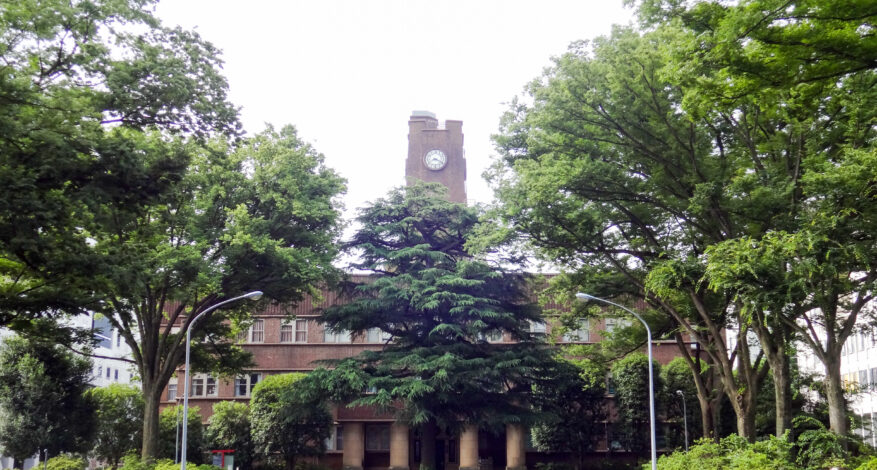
On 15-16 February 2024 in Tokyo, Japan, IRMA participated in the first working session of the ISO IWA 45, an international working agreement on “sustainable critical mineral supply chains.” This project is led by Standards Australia (Australia’s national standardization body) under the auspices of the International Organization for Standardization (ISO) and is tasked to “understand the range of sustainability tools/guides/frameworks available which will assist in improving an organization’s sustainability outcomes.” ISO is a quasi-governmental organization dedicated to standard development, headquartered in Switzerland and composed of the national standards bodies of its member countries.

This workshop was an in-person-only event which, while providing constructive opportunity for people to connect directly, dramatically reduced the number and diversity of stakeholders affected by mining and mineral value chains to participate. There were about 45 participants, with a majority from industry (mining and mineral processing) and consultants to the private sector, followed by government delegations (including national standardization bodies and state agencies or research institutions). The most represented countries were the United States, Canada, China, and Japan.

Articulating the perspectives of our members from six houses—affected communities, downstream purchasers, investment and finance, mining industry, NGOs, and organized labor—IRMA worked actively in the session to integrate the perspectives of civil society and organized labor, as those groups were not in attendance. We are concerned about how their absence might leave a significant gap in this process and encourage the event organizers to increase this outreach.

The working session opened with a summary of the results obtained from a preliminary survey circulated by Standards Australia in January 2024. Of the 115 full responses received, two-thirds came from the mining and mineral processing industry, 7% from NGOs, and 7% from academia. Most of the responses originated from China and Canada (over 10%), followed by the U.S., the United Kingdom, Australia, Japan, Germany, South Africa, and Sweden; other countries were all under 3%.

Given the survey feedback was foremost from industry, the main insights shared by the workshop organizer reflected the positions of industry representatives who engaged in the survey, including the “proliferation,” “overlap,” and “inefficiency” of sustainability standards, the “confusion” they would create, and the “burden” created by assurance mechanisms that would be “significant, costly, and time-consuming”.

It is worth noting that IRMA has never heard civil society or mine workers complain that “assurance processes are too expensive,” but rather that they see need for increased investment in transparent sharing of information on performance and for improved practices. We hope that Standards Australia will be able to soon provide a breakdown of the responses by stakeholder groups and increase outreach to civil society, Indigenous rights holders, and labor leaders.

IRMA emphasized throughout the workshop the importance of inclusive and meaningful multi-stakeholder engagement for ISO to ensure robustness and credibility in its processes and its efforts to standardize responsible business practice. A number of other participants similarly asked for more proactive and targeted outreach to all stakeholder groups. The issue of inclusive and meaningful multi-stakeholder engagement was then selected by the organizer as the final topic for plenary discussion.

As currently designed, IWA and ISO processes, including IWA 45, are not inclusive for affected communities, NGOs, and organized labor, and do not allow for meaningful multi-stakeholder engagement. We ask that this fundamental gap be identified as the top priority in the final report that will be produced by Standards Australia this year, including as a key recommendation to inform the other ongoing ISO committees and workstreams on responsible mining and sustainable mineral value chains.


Photo credit: Dick Thomas Johnson CCBY2.0
READ MORE
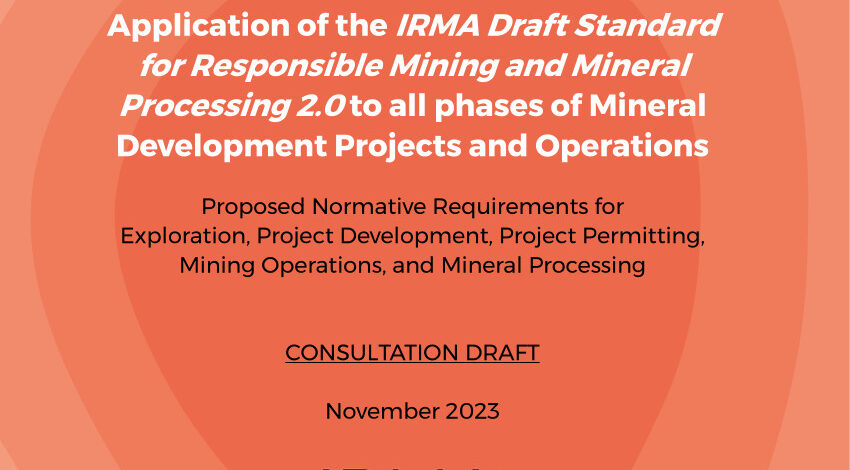
Cover of IRMA Draft Standard 2.0 Proposed Normative Requirements for Exploration, Development and Mineral ProcessingCover of IRMA Draft Standard 2.0 Proposed Normative Requirements for Exploration, Development and Mineral ProcessingStandard 2.0

Std 2.0 and Exploration, Development & Processing

The IRMA Draft Standard for Responsible Mining and Mineral Processing 2.0 incorporates the draft IRMA Standard for Responsible Mineral Development and Exploration (the ‘IRMA-Ready’ Standard – Draft v1.0 December 2021), the draft IRMA Standard for Responsible Minerals Processing (Draft v1.0 June 2021), and the IRMA Standard for Responsible Mining 1.0 (2018) into one integrated standard that covers all phases and types of mineral development activities.

The 2023 proposed revisions for version 2.0 are meant to apply at any phase of the mineral development life cycle (e.g., exploration, project development, permitting, construction, mining and processing operations, reclamation and closure, post-closure).

To highlight and clarify those additions, we have released a summary of the draft Normative Requirements for those phases — where IRMA requirements are modified to govern stages of exploration, development or mineral processing.  The IRMA Draft Standard 2.0 Normative Requirements for each chapter are provided and discussed in Appendix A.

In the context of this guidance document, a normative requirement modifies a given IRMA requirement from the IRMA DRAFT Standard 2.0 for a specific phase, by either replacing or  supplementing the original text of this requirement. We use the terminology “normative requirements” here since they modify the elements that would actually be required and that auditors would measure against, not just guidance that helps to enrich or guide understanding of those requirements.

These Normative Requirements are part of the Draft Standard 2.0, so just as with the rest of the draft Standard, they are proposed and open for public comment until January 26, 2024.

READ MORE

Topic consultations for draft Standard 2.0

Over the next two months IRMA is hosting live, virtual consultations to discuss and comment on different topics covered by the Draft Standard for Responsible Mining and Mineral Processing 2.0. Facilitated by the IRMA Secretariat, these virtual meetings share what you need to know about the proposed changes and/or new areas in a specific topic inside the Standard (download or view specific chapters here). They will ask some guided questions where IRMA especially seeks feedback. And we encourage all comments — these Zoom sessions are meant to be inclusive and collaborative spaces for such discussion.

All consultations will be in English and last for 60 minutes. Registration is required, all times are UTC-0. Please register through the links provided below for any topics you might be interested in. NOTE: all consultations below are for the Standard for Responsible Mining and Mineral Processing. Visit the Chain of Custody Standard page for those webinars.

2023 2024
07 December 14:00-15:00
Water Management
Watch the recording
🔗 Presentation
10 January 09:00-10:00
Sector-specific: Mineral Processing
Watch the recording
🔗 Presentation
08 December 14:00-15:00
Gender Equality & Gender Protections
Watch the recording
🔗 Presentation
10 January 17:00-18:00
Sector-specific: Exploration and Development
Watch the recording
🔗 Presentation
11 December 14:00-15:00
Occupational Health & Safety
Watch the recording
🔗 Presentation
11 January 16:00-17:00
Sector-specific: Mining Companies
Watch the recording
🔗 Presentation
11 December 16:00-17:00
Waste & Materials Management (incl. tailings)
Watch the recording
🔗 Presentation
12 January 07:00-08:00
Water Management

🔗 Presentation
12 December 14:00-15:00
GHG Emissions & Energy Consumption
Watch the recording
🔗 Presentation
12 January 14:00-15:00
Land & Soil Management
Watch the recording
🔗 Presentation
12 December 16:00-17:00
Indigenous Peoples & FPIC
Watch the recording
🔗 Presentation
15 January 07:00-08:00
Occupational Health & Safety
Watch the recording
🔗 Presentation
13 December 14:00-15:00
Management of Physical Stability (incl. tailings)
Watch the recording
🔗 Presentation
16 January 07:00-08:00
Waste and Materials Management (including tailings)
Watch the recording
🔗 Presentation
14 December 14:00-15:00
Planning, Financing Reclamation and Closure
Watch the recording
🔗 Presentation
18 January 07:00-08:00
Management of Physical Stability (including tailings)
Watch the recording
🔗 Presentation
18 December 14:00-15:00
Land Acquisition, Displacement, and Resettlement
Watch the recording
🔗 Presentation
19 January 07:00-08:00
GHG Emissions & Energy Consumption
Watch the recording
🔗 Presentation
READ MORE
earth at nightearth at nightStandard 2.0

Public Consultation Begins for Draft Standards

Click here to register for webinarsToday we began public consultation for the Draft Standard for Responsible Mining and Mineral Processing, and the Draft Chain of Custody Standard. Public consultation runs through 26 January 2024. For more information on how to comment, please click through to each standard.

The Draft Standard for Responsible Mining and Mineral Processing is an update of the 2018 IRMA Standard for Responsible Mining – the strongest voluntary mining standard in the world, and the only one equally governed by a multistakeholder coalition. The updated draft:

  • Addresses the entire mining process: Mineral Exploration & Development, and Processing in addition to Mining.
  • Adds new chapters on Gender Equality / Gender Protections; Physical Stability; Land and Soil
  • Improves chapters on Financial Transparency and Anti-Corruption; Free, Prior, and Informed Consent (FPIC); and Indigenous Peoples
  • Improves how the standard addresses specific topics including greenhouse gas emissions and energy; recycling materials and circularity; operational health & safety; responsible sourcing; human rights; cultural heritage

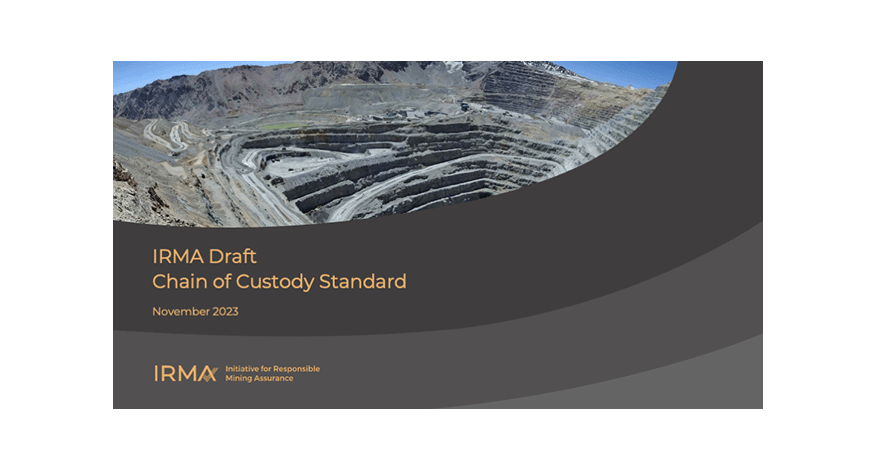
The new Chain of Custody Standard Draft is designed to provide baseline requirements for tracing material coming from any IRMA-audited mine through the downstream processing of minerals into products, all the way to the end consumer.

Transparently reviewing and updating IRMA Standards ensures they are accountable to all sectors, stakeholders and Indigenous rights holders, and allows for the incorporation of changes in best practice to provide a global responsible mining benchmark. We review every 5 years using the ISEAL Standard Setting Code of Good Practice as a reference.

To provide comment, IRMA is reaching out to a wide and diverse set of stakeholders and Indigenous rights holders, including affected local communities, workers and their unions, nonprofit organizations, mining and minerals processing companies, purchasing and investment companies, governments and international organizations, scientists and researchers. Anyone can provide input. Comments will be confidential on request. All comments will be considered carefully – a summary of comments and IRMA’s responses will be provided after the consultation period ends.

READ MORE
Blog

IRMA’s Work to Advance Circular Economy Approaches

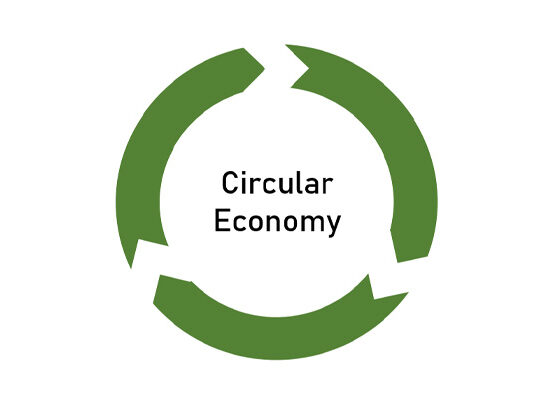
IRMA is working across sectors and initiatives to clarify and advance circular economy approaches to responsible production and use of minerals. Circular economy approaches utilize integrated strategies to address a range of climate, environmental, and social issues associated with primary and secondary materials, reducing waste while capturing greater value from materials and processes throughout the life cycle of the mineral.

Circular economy approaches involve a systems approach throughout the materials life cycle, including:

  • designing products and services for material recovery and reuse;
  • establishing better technology, infrastructure, and policies for the extraction of metals and minerals including from consumer products and existing mine waste; and
  • adopting regenerative approaches to ecosystem impacts.

Demands for minerals associated with the energy transition will require expansion of both primary and secondary production of mined materials for decades to come. At the same time, expectations are increasing throughout supply chains regarding low carbon production methods, broader responsible sourcing requirements, and integration of circular economy strategies ranging from production and sourcing of durable goods, enhancing material reuse and recycling, integrating responsibly sourced recycled and scrap material at the mineral processing level, and beyond.

IRMA formed an Expert Working Group on Mining and Circularity in 2022 to inform integration of circular economy approaches into the IRMA Standard for Responsible Mining and IRMA system. We will continue to work to clarify, incorporate, and encourage best practice circular economy approaches throughout all stages of extraction, processing, reuse, and recycling of minerals.

Over the past year, IRMA served as a member of the Expert Working Group on the OECD Handbook on Environmental Due Diligence in Mineral Supply Chains, published in September 2023 and including coverage of circularity and enhanced use of secondary sources.

This year IRMA became a member of the Roundtable on the Responsible Recycling of Metals (RRRM) Non-Ferrous Working Group, collaborating in RRRM efforts to advance understanding of appropriate standards, systems, and tools for the responsible production and sourcing of recycled metals.

IRMA will participate in the United Nations Framework Convention on Climate Change 28th Conference of the Parties (COP 28) this year in Dubai, engaging in roundtables and events focused on improving environmental and social responsibility in mineral supply chains for the energy transition and opportunities to advance circularity.

If you have recommendations for ways IRMA can advance circular economy approaches or wish to share case studies of successful strategies, please contact us at info@responsiblemining.net.

READ MORE
Mining Standard

Gender equality, gender protections and IRMA

The IRMA Standard for Responsible Mining contains requirements integrating gender equality and gender protections in Chapters 1, 2 and 3. Today we posted a Spanish language fact sheet explaining them.

READ MORE

Updated financial assurance guidance

In response to practical difficulties obtaining financial surety for mine closure and post closure as defined by the IRMA Standard, IRMA has modified 2.6.4.1 which is a critical requirement in the IRMA standard and must be substantially or fully met in order to achieve IRMA 50 or higher.

With this modification, the requirement for “financial surety instruments” — which by definition exclude corporate guarantees and self-bonding — is replaced with “financial assurance mechanisms.” This allows a broader range of acceptable means to guarantee the costs associated with third-part mine closure and post-closure.

The IRMA Secretariat made this change with the concurrence of the IRMA Board and external expert feedback. This is a temporary adaptation that will be reconsidered in the planned revision of the IRMA Standard expected in late 2023.

The background and challenges for this temporary modification and our plan going forward are presented in this guidance document, along with specific details on how this modification is to be interpreted by mine sites, independent auditors, and other interested stakeholders.

READ MORE
Zortman-Landusky mine complexZortman-Landusky mine complexGovernment

The IRMA Standard – A Tool For U.S. Mining Law Reform

IRMA a Tool for U.S. Mining Law Reform_Examples of Gaps in U.S. Framework - coverOn Tuesday August 30, the IRMA Secretariat submitted a letter to the Biden Administration’s Interagency Working Group (IWG) on mining reform.

The letter provides examples of areas where there are gaps between the good practices in the IRMA Mining Standard and the U.S. legal framework governing the mining sector. Although not comprehensive, the examples identify areas where gaps can be addressed to ensure conformity with good international practice.

These examples are based on a preliminary review of the U.S. legal framework. A requirement-by-requirement comparison between the IRMA Standard and the U.S. legal framework would be necessary to identify all the gaps, and could guide the work of the IWG and support recommendations for improvements to the U.S. legal framework. We recommend that such a study be funded and completed to inform IWG efforts.

READ MORE
Mineral Processing Standard

Comment period open: IRMA draft Mineral Processing Standard

Today the Initiative for Responsible Mining Assurance (IRMA) is pleased to release its draft Standard for Responsible Mineral Processing (Mineral Processing Standard) for a 60-day global public comment period. Download the draft standard (as a Word document or in pdf format).

The draft Mineral Processing Standard is IRMA’s response to stakeholder requests for a global set of best practices that go beyond ensuring responsible practice at the mine site by clarifying expectations at other key points in minerals and metals supply chains.

IRMA’s Mineral Processing Standard will serve as the basis of a global, voluntary system offering independent third-party review and certification of environmental and social performance measures at smelters, refineries and other operations involved in the processing and extraction of minerals and metals from ores, concentrates and scrap materials. It was developed through multi-stakeholder collaboration and the innovation that comes from working across diverse sectors, disciplines, and geographic locations.

The Mineral Processing Standard is incomplete without your valuable feedback. The public comment period begins today and remains open through 16 August 2021.

Learn more

IRMA is hosting two webinars to introduce the draft Mineral Processing Standard and highlight some questions that we have for stakeholders. Please join us for one of the following sessions:

How to comment

Next steps

The 60-day public comment period ends 16 August 2021.  Based on the comments and direct feedback from one or more pilot projects, we will revise the Mineral Processing Standard. We aim to release the final Standard in late 2021. We will make the final Mineral Processing Standard available on the IRMA website as well as via the IRMA e-newsletter (sign up here).


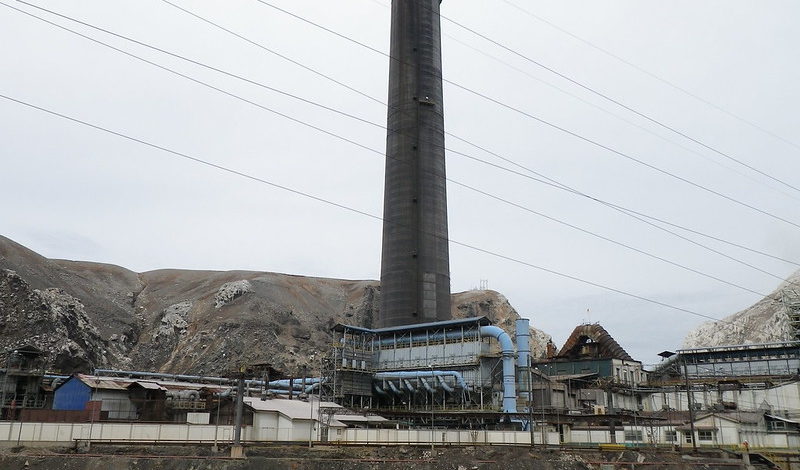
Photo information: Mineral processing operation (lead, zinc, copper and other metals), La Oroya, Peru.
Photo credit: Earthworks/Scott Cardiff.

READ MORE