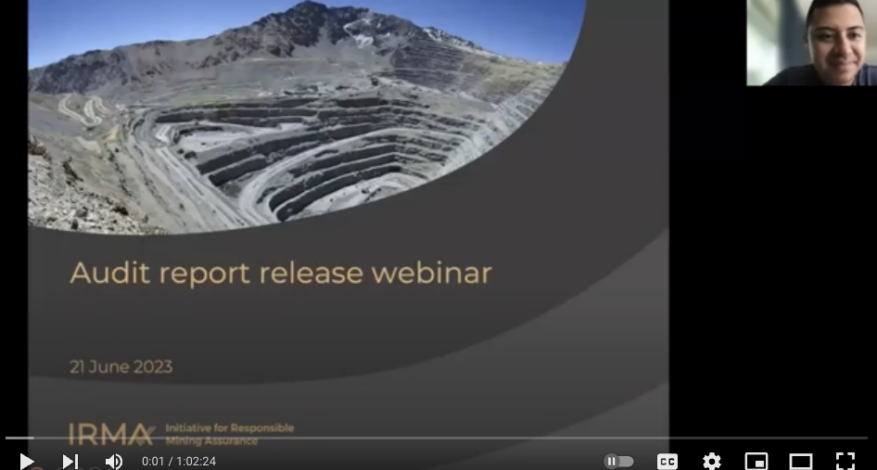
On 21 June, the day after the release the audit report of Albemarle’s Planta Salar de Atacama lithium operation, IRMA hosted a webinar to discuss the significance of the report, and the IRMA Standard and process through which the operation was independently assessed. In volunteering its operation for assessment and scoring IRMA 50, Albemarle submitted its practices to unprecedented public transparency, providing information that all stakeholders can use to decide what’s going well, and what may require more attention, at the mine.
The 1 hour webinar, which is about 1/2 presentation and 1/2 Q&A, is available below in English and Español.
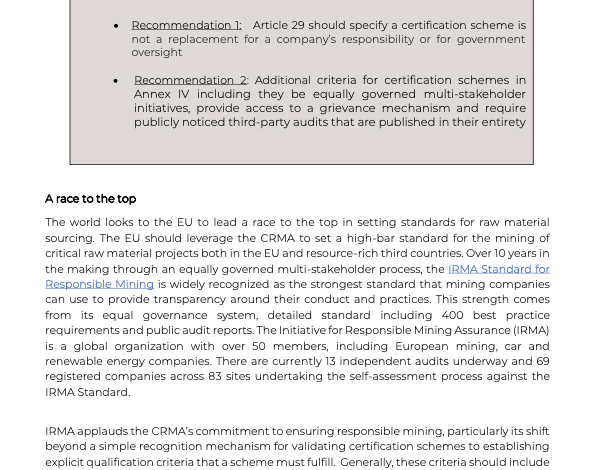
Article 29 should specify a certification scheme is not a replacement for a company’s responsibility or for government oversight
Additional criteria for certification schemes in Annex IV including they be equally governed multi-stakeholder initiatives, provide access to a grievance mechanism and require publicly noticed third-party audits that are published in their entirety
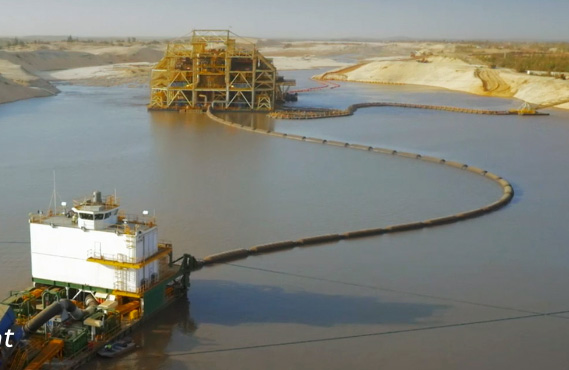
The Initiative for Responsible Mining Assurance (IRMA) is pleased to announce that the French miner Eramet has committed to a third-party independent assessment of its Grande Côte Opérations (GCO) site against the IRMA Standard for Responsible Mining. GCO is a Senegalese subsidiary of the Eramet Group that specializes in the recovery of ilmenite, leucoxene, rutile, and zircon. The mine and its two processing plants have been in service since 2014.
In making its own announcement, Eramet declared “After this first external audit in Senegal, Eramet aims to engage all its mining sites in this independent verification process by 2027.”
SCS Global Services, an IRMA-approved certification body, will be carrying out the assessment, which includes a desk review (stage 1) followed by an onsite audit (stage 2). After SCS’s draft audit report is reviewed by IRMA and GCO, GCO may release the report or has the option to take up to twelve months to implement a Corrective Action Plan before the audit firm assigns a Performance Level.
Stakeholder Engagement in the Assessment
Interested stakeholders and members of the public can sign up to receive updates about the GCO independent assessment (e.g., the timing of the stage 2 onsite visit, link to public summary of audit results). The Mines Under Assessment page of IRMA’s website will also provide up-to-date information on all assessments.
Mine site stakeholders are invited to submit comments to SCS Global Services regarding the social and environmental performance of the GCO mine (in particular, how the performance of the mine site measures against the IRMA Standard for Responsible Mining).
Stakeholders of the GCO mine may also contact SCS Global Services if they are interested in being interviewed as part of the assessment process.
Stakeholder comments and expressions of interest in being interviewed as part of the audit process can also be submitted by email or mail to:
SCS Global Services
2000 Powell St. #600 Emeryville, California, USA 94608
feedback@scsglobalservices.com
Please share this announcement, and feel free to contact SCS Global directly to provide names and contact information for other GCO stakeholders who may be interested in knowing about and participating in the mine site assessment process.
For more information
On the GCO Mine Site Assessment, contact IRMA’s Director of Assurance: msmith@responsiblemining.net
For general information on the IRMA mine site assessment and certification process, visit the IRMA website.
Public Information, Rm. 6808
Bureau of Public Affairs
U.S. Department of State
Washington, D.C. 20520-6810 AskPublicAffairs@state.gov
Re: The U.S. and Minerals Security Partnership Should Require IRMA when Selecting a Standard for Critical Minerals Projects
Dear Colleagues,
On January 23rd Jose Fernandez announced that the U.S. and other members of the Minerals Security Partnership (MSP) are carefully selecting a set of critical minerals projects to support and are identifying a set of standards companies and countries will need to meet to receive related assistance.
The U.S. and the MSP should require the Initiative for Responsible Mining Assurance (IRMA) because it is a standard and system equally governed by private and public sectors, unique from industry trade association standards.
IRMA is a multi-stakeholder coalition that brought leaders from diverse sectors together in 2006 to craft the world’s first shared definition of what it means to mine responsibly: the IRMA Standard for Responsible Mining. The IRMA Standard is the result of a comprehensive process spanning more than ten years, including a public consultation process incorporating 1,400 comments from more than 100 different individuals and organizations.
IRMA members include six major automakers, leading jewelers, a wind energy company, mining companies, the world’s two largest global trade unions, leading human rights and environmental advocates, indigenous leaders, leaders of mine-affected communities, and increasing engagement from the investor and finance sector.
Not all standards for the mining sector are equal. Various sets of principles and standards are promulgated by industry trade associations and may identify as multi-stakeholder but do not provide an equal seat at the table for NGOs, affected communities, and labor alongside the private sector. The level of detail in the standards varies widely, as does the quality of assessment and reporting—ranging from company self-reporting with no public reports to independent third-party audits resulting in transparent public reports. Local stakeholders and rights holders may or may not know in advance that an assessment will occur or even be provided with an opportunity to share their experience and opinions.
IRMA stands out from industry trade association standards because it is recognized across stakeholder sectors and has already been recognized by multiple MSP members. The United Kingdom’s 2022 Critical Minerals Strategy references IRMA as a globally recognized framework for responsible mining.[1] In 2021, the White House referenced IRMA in its 100-Day Review on Building Resilient Supply Chains, noting that IRMA is a possible “method for U.S. companies and the Federal Government to ensure that minerals are being sourced from mines with robust environmental, social, and financial responsibility practices.”[2] The European Parliament referenced the IRMA Standard in its 2021 strategy for critical raw materials.[3] The Government of Australia called IRMA a “no regrets approach” in its 2020 study of certifications and strategies to increase competitiveness of Australian battery materials for use in the EV sector in Europe.[4]
IRMA is the only standard for the mining sector that fully embodies the Biden Administration’s environmental justice goals. This is because IRMA is the only standard for the mining sector that:
is equally governed by directly affected communities, NGOs, labor unions, mining companies, purchasing companies, and the investor and finance sector;
requires public notice in advance of an audit so that local stakeholders and rights holders can prepare to engage in the audit;
is applicable globally and covers all mined materials (apart from thermal coal, uranium, and deep seabed mining projects);
includes the full range of environmental and social issues related to industrial-scale mines;
requires detailed public reports made available at no cost to the public, with scoring and rationale on over 26 topics across over 400 requirements; and
has demonstrated credibility with civil society and labor unions.
IRMA is built on best practice norms. Existing international systems and frameworks form the basis of requirements in the IRMA Standard and are assessed in IRMA audits. These include but are not limited to the Extractive Industries Transparency Initiative (EITI), the International Cyanide Management Code, International Finance Corporation (IFC) Performance Standards, International Labour Organization Conventions, International Union for Conservation of Nature (IUCN) Protected Area Management Categories, the Minamata Convention on Mercury, OECD Due Diligence Guidance, UNESCO Biosphere Reserves, the United Nations Guiding Principles on Business and Human Rights, and the Voluntary Principles on Security and Human Rights.
IRMA requires completion of an independent third-party audit before any public claims may be made related to IRMA achievement. The IRMA system enables companies to clearly communicate their performance across a holistic set of best practices and work toward continuous improvement in environmental and social responsibility.
IRMA’s equal governance model upholds a standard and system that creates confidence and value across all stakeholder sectors and greater trust across supply chains. The U.S. and MSP should support and incentivize the IRMA Standard and system because of its unique accountability to all sectors and alignment with the MSP’s commitment to “adhere to the highest environmental, social, and governance standards.”[5]
[4] UTS Institute for Sustainable Futures and the University of Melbourne, Certification and LCA of Australian Batter Materials – Drivers and Options: Scene Setting Project Prepared for Future Battery Industries CRC, Future Battery Industries CRC, Australian Government Department of Industry, Innovation and Science Business Cooperative Research Centres Program, August 2020, https://fbicrc.com.au/wp-content/uploads/2020/10/Certification-of-Au-Battery-Materials-WEB-INTERACTIVE-SEPT-2020.pdf.
As we welcome the new year, we are thrilled to welcome three new board members:
Community Sector: Pavel Sulyandziga, Russia
Pavel Sulyandziga
Pavel is an Indigenous leader and human rights activist from the Bikin River valley in Siberia. He is dedicated to protecting indigenous communities, whose rights are often violated by business. Pavel has a PhD in Economics and is President of the International Indigenous Fund for Development and Solidarity “Batani” (Batani Foundation). He’s currently a Visiting Scholar at Dartmouth College (US) and at Law School University of Maine and was a member of the United Nations Permanent Forum on Indigenous Issues (2005 – 2010) and Member of the United Nations Working Group on Business and Human Rights (2011 -2018). He joins Meshack Mbangula of Mining Affected Communities United in Action (MACUA) in representing the Community Sector.
Labor Sector: Meg Gingrich, Canada
Meg Gingrich is Assistant to the National Director of United Steelworkers (USW) Canada. For ten years she’s been on staff at USW Canada’s National Office, first as a researcher and now as the Assistant to the National Director. In that position she’s the senior administrative and policy advisor to the USW in Canada, with lead responsibility on issues relating to trade, industrial policy, and strategic planning. She’s also the central liaison on these issues with the leadership of USW United States. Meg is also the President of Blue Green Canada, which was co-founded in 2008 along with Environmental Defence as a joint labour-environment-community coalition. She joins Glen Mpufane of IndustriALL Global Union in representing the Labor Sector.
Purchaser Sector: Claudia Becker, Germany
Claudia Becker
Claudia is BMW Group’s Expert on Raw Material Strategy and Sustainable Supply Chain Management. Claudia has been working for the BMW Group since 2012 in operational and strategic purchasing functions. In 2016 she joined BMW’s responsible sourcing team with a focus on due diligence in mineral supply chains. Claudia works closely with supply chain partners and represents BMW in various international and cross-industry initiatives, such as Drive Sustainability, RMI and the GBA. Before joining the BMW Group, Claudia worked in the sector of international development cooperation including for the Deutsche Gesellschaft für Internationale Zusammenarbeit (GIZ) in Cambodia on sustainable urban development. Claudia has an academic background in Geography from the University of Bonn with a focus on development cooperation, sustainability, and urbanism. Claudia joins J.J. Messner de Latour of Microsoft in representing the Purchasing Sector.
As we welcome Claudia, Meg, and Pavel to the IRMA board, we reflect with appreciation on the invaluable contributions of those who have served IRMA’s governance since its founding: Dewa Mavhinga, Mike Kowalski, Anisa Kamadoli Costa, Samara Rudolph, Joan Krajewski, Ephi Banaynal dela Cruz, Susan Posnock, Joe Drexler, Mark Rowlinson, Alan Knight, Nuskmata, Larson Bill, Loretta Williams, and many more to whom we owe deep appreciation for their work.
New Year, Same Unique Governance Model
While there are other multi-stakeholder, extraction-related and metals-related standards, IRMA’s governance model is unique: equal governing authority shared between six sectors with an interest in mining. For any board vote, if the two representatives from any given sector oppose a motion, the vote fails even if all other board members are in support. To our knowledge, the IRMA board is the only place in the world where communities, labor, and civil society have an equal voice alongside mining companies and other multinational corporations.
Looking Forward
2023 will be an important year in advancing IRMA’s vision: a world where the mining industry respects the human rights and aspirations of affected communities, provides safe, healthy and supportive workplaces, minimizes harm to the environment, and leaves positive legacies.
Our work to create financial value for mines independently assessed against the world’s most robust mining standard will take a major leap forward. Audit reports for at least ten mine sites will be released in 2023, including the first lithium mines assessed in IRMA. 2023 will also see the IRMA Standard expand to include exploration and development, before mines are operating, and also mineral processing operations, as well as updating the current Standard for active mining operations.
We do this work to integrate learning from the first mine audits, and to create value for an evolving definition of “best practices”, shared across stakeholder sectors, for environmental and social responsibility. As with all of IRMA’s work, this is only possible through the engagement of all affected stakeholders and we welcome your engagement.
At the invitation of Indonesia’s Coordinating Ministry for Maritime and Investment Affairs, IRMA participated in a series of meetings held September 5-9 in Jakarta to introduce the IRMA Standard and system to a wide range of sectors with interest in mineral development and processing. Represented by Senior Policy Advisor Kristi Disney Bruckner, the meetings occurred following requests from members of IRMA’s Buyers Group for engagement in Indonesia, calling on mine sites to complete independent, third-party audits.
Indonesia’s Coordinating Ministry for Maritime and Investment Affairs, EITI Indonesia, Eramet, and others collaborated to host a full-day Introducing the Initiative for Responsible Mining Assurance (IRMA) to Indonesian Mining Companies forum on September 6th. Over 140 participants attended the event, including representatives of more than 25 companies with experience in nickel, aluminum, steel, coal, and other sectors. Participants also included representatives of the Ministry of Energy and Mineral Resources, Environment and Forestry, Finance, and Investment; the National Standardization Agency; state-owned enterprises; French and U.S. Embassies; and NGOs Publish What You Pay, Action for Ecology and People Emancipation (AEER), and others; media; consultants; academics; investors; and purchasing companies. Speakers at the event included representatives of Eramet, IRMA, the Coordinating Ministry for Maritime and Investment Affairs, the EITI Secretariat, and Ørsted.
IRMA participated in a separate NGO Roundtable on September 7th, attended by Publish What You Pay, Keanekaragaman Hayati (Indonesian Biodiversity Foundation), Yayasan Konservasi Alam Nusantara (Indonesian Nature Conservation Foundation, YKAN), Auriga Nusantara, World Resources Indonesia, Peduli Konservasi Alam (Movement for Nature Conservation, PEKI), Konservasi Indonesia (Conservation Indonesia), Wetlands International Indonesia, and AEER.
IRMA also held ad hoc meetings throughout the week with representatives of NGOs, government, and companies.
Indonesia is a major producer of nickel and other materials needed for EVs and is key to the energy transition. The recent history of mining in Indonesia includes environmental harm and human rights violations, particularly in Papua Province. Addressing those harms, preventing future harm, and ensuring equitable distribution of benefits requires responsible management of the mining sector.
The Indonesian government’s invitation and its completion of a gap analysis between the country’s legal framework and the IRMA Standard for Responsible Mining signal recognition of the IRMA Standard as a model to capture the increasing market value of environmental and social responsibility. IRMA is a tool available to all Indonesian stakeholders–government, NGOs, affected communities, organized labor, mining companies, purchasing companies, and investors–to promote more responsible environmental and social management in the mining sector. IRMA’s engagement in Indonesia supports efforts to improve governance of the mining sector and bring Indonesian mines into IRMA’s independent, third-party audit and transparent reporting process. These steps can promote good governance from national to mine site levels, benefitting diverse stakeholders and rights holders in Indonesia.
On September 11 in South Africa about 500km southwest of Johannesburg, the tailings dam failed at the Jagersfontein mine waste impoundment. Three people were killed, four more are still missing, and 40 were hospitalized.
This is a tragedy, and all the more so because it was predictable.
IRMA Board member Meshack Mbangula of Mining Affected Communities United in Action and other MACUA leaders are currently in the region, gathering the perspectives of communities. Meshack shares that some are still without water, electricity, sewage management, and with road blockages limiting children’s access to school.
From the world’s repeated recent experience with mine waste disasters, we know that poor tailings facility designs, aging facilities, and increasing frequency of extreme weather associated with climate change will combine to cause more mine waste tragedies around the world for communities living near mining operations.
We can act to minimize that threat. We join with others asking three questions:
How can we prevent the construction of new mining waste facilities with this type of risk to fail?
How can we provide sufficient funds for communities and governments to protect public safety from these mine waste risks even when mine ownership changes?
The unbelievably difficult question of how to put protection of human life first at the thousands of places around the world where these dams already exist?
Meshack Mbangula of Mining Affected Communities United in Action and IRMA board member, witnessing the Jagersfontein tailings spill aftermath. Credit: MACUA
The disaster, and reports of years of community effort to raise concern and attention to the risks, shows the importance of ongoing community involvement in addressing a mine’s impacts – for as long as the mine’s impacts exist.
The letter provides examples of areas where there are gaps between the good practices in the IRMA Mining Standard and the U.S. legal framework governing the mining sector. Although not comprehensive, the examples identify areas where gaps can be addressed to ensure conformity with good international practice.
These examples are based on a preliminary review of the U.S. legal framework. A requirement-by-requirement comparison between the IRMA Standard and the U.S. legal framework would be necessary to identify all the gaps, and could guide the work of the IWG and support recommendations for improvements to the U.S. legal framework. We recommend that such a study be funded and completed to inform IWG efforts.