NGOs

NGOs

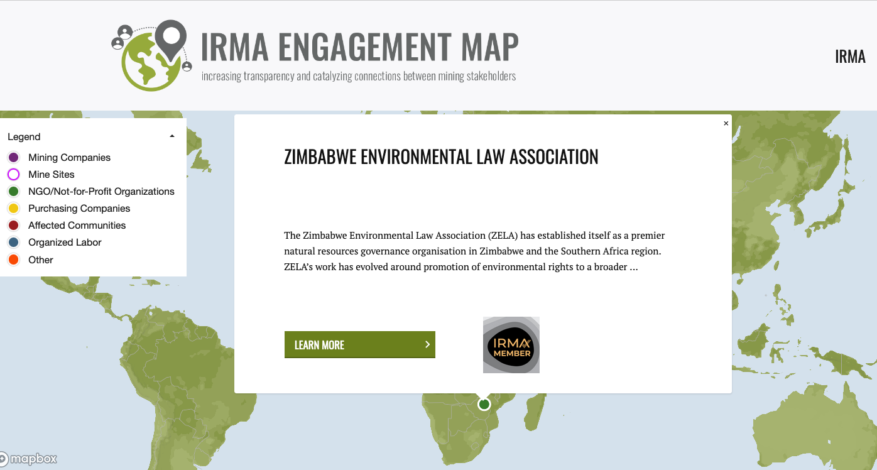
Member Spotlight: Zimbabwe Environmental Law Association

From time to time, our blog will feature IRMA Member organizations, allowing them to explain, in their own words, their interest in forwarding more responsible mining and why they are engaged with IRMA.

Below are responses from Fadzai Midzi, Programmes Assistant, ZELA

What is the mission and primary work of ZELA?

Zimbabwe Environmental Law Association (ZELA) exists to promote equitable, just, and sustainable environmental and natural resources management and protection of marginalised communities and citizens in Southern Africa. ZELA is motivated by a strategic mandate to influence mineral resource governance to ensure that communities benefit from exploitation of natural resource. Our, our work is mainly based on legal, policy reforms, partnership building, implementation and participatory research, impact and strategic litigation and movements such as the Publish What You Pay Coalition, that ZELA coordinates.

How did you become engaged with IRMA?

ZELA believes in partnership building locally, regionally, and international. In driving the mission, ZELA has collaborated with likeminded organisations including chairing platforms such as the Alternative Mining Indaba and the Kimberly Process – Civil Society Coalition. Through such platforms, ZELA learnt the value of being affiliated to the IRMA, whose mission is linked with that of ZELA, that is to protect people and the environment directly affected by mining. Thus, ZELA decided to engage and learn from IRMA whose value cannot be overemphasized.

The engagement started in 2019, when UNKI Mine was undergoing its audit certification process. IRMA came into the country when the Zimbabwean government had expressed interest to adopt and implement the Extractive Industry Transparency Initiative (EITI), a globally recognised standard on promoting transparency and accountability in the extractives sector.

Through Unki Mine, IRMA proved that disclosure in mineral exploitation is possible. When the Unki Mine IRMA audit report came out, ZELA managed to raise community awareness on the report, as a way of encouraging grassroot level participation of marginalised communities in development of correctional action plans, in response to the audit. In 2021, ZELA joined IRMA and the organisation has been advocating for adoption of the IRMA audit tool, in Zimbabwe.

Are you finding value in having an IRMA audit report on the performance of a mine in your region?

  • IRMA has ignited our work which is mainly based on evidential rigor to influence better natural resource reforms.
  • We acknowledge the usefulness of the IRMA audit report information helping us to improve our engagements through evidence gathering and access to information provided by the audit reports on mining operations and their impact on communities’ wellbeing, rights, and the environment.
  • The IRMA audit report also informs in carrying out advocacy work during national, regional, and international dialogue processes such as the Zimbabwe Alternative Mining Indaba (ZAMI), the Alternative Mining Indaba (AMI) and the Kimberly Process-Certification Civil Society Coalition
  • The IRMA audit tools help to bring out and plug some of the governance gaps for mining companies, for instance that was noted through the UNKI Mine audit.

What more or different would be helpful to you in your work to drive more responsible practices where mining is happening?

What would be helpful to our work is to have more companies adopt IRMA in Zimbabwe, to prove that the private sector has the capacity to be transparent and promote good governance in natural resource governance. Hopefully, that should encourage government to also take interest in utilising the audit tool for state owned enterprises. Partnerships with other IRMA members, and cross pollination of ideas with other IRMA members, contributes to advocacy for responsible mining.

For more information:
Visit the ZELA website

READ MORE
NGOs

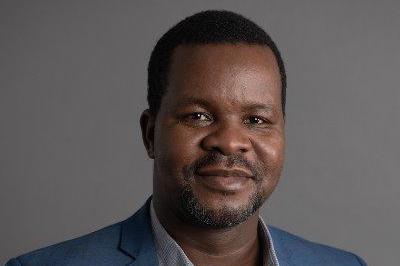
In Memoriam: IRMA Board Member Dewa Mavhinga

We honor our friend and colleague.

The staff and Board of Directors of IRMA join with the world in mourning the passing of IRMA Board leader Dewa Mavhinga, Southern Africa Director of Human Rights Watch, who passed away suddenly on 4 December while working in southern Africa. He was 41 years old, and leaves behind his wife Fiona, four young children, and mother. We grieve with the world, send blessings to his family, and honor Dewa’s lifetime of dedicated work in support of the dignity of all people.

Human Rights Watch honors Dewa’s life here.

In a memorial event organized by Crisis in Zimbabwe Coalition, testimonies on the impact of Dewa’s life included:

“In the way of Desmond Tutu and Martin Luther King. He was a defender for the rights of all, despite race, class, gender or creed — he believed in power of ideas.”

“He was committed to arguing things out, but did so by uplifting other people. It wasn’t the activity of struggle, he humanized the struggle…He saw the humanity of every person he was struggling with. He humanized everyone in society, the victims and the oppressors.”

“He brought faith, community, solidarity, logical disputations as not only values but also as practices…He was a man of faith, not only religious, but faith that the people of Africa would live on the continent free of human rights abuses.”

“From the logic of force, to the force of logic….He was a brilliant man.”

“He was a humble great mind and a unifier…To me his death is like the burning of a library.”

“Dewa became a global go-to person for human rights across southern Africa. We have lost not only a colleague but the world has lost an indefatigable champion. Our hearts are with you all, his family, and everyone who knew him.”

“Dewa would say, ‘if you must choose to be right or to be kind, always choose to be kind.’ Especially coming from a lawyer this is remarkable. He was kind, gentle and yet also fearless.”

Dewa Mavhinga alongside fellow leaders from IRMA’s NGO, labor and community sectors.

With deep appreciation for Dewa, we will continue our work for greater environmental and social responsibility, and fundamental commitment to human rights, where industrial scale mining happens. We are deeply grateful for Dewa‘s years of work on behalf of Human Rights Watch and in service to IRMA’s multistakeholder Board of Directors.

READ MORE
NGOs

BC Mining Law Reform Issues Recommendations for Legal Reform

BC Mining Law Reform was created in May 2019 to push for certain changes in the BC mining regulatory landscape. The new reports offer 69 recommendations that range from broad policy updates to small changes in current legislation. They include the adoption of free, prior, and informed consent for indigenous communities affected by mining projects and major changes to BC’s mineral tenure system.

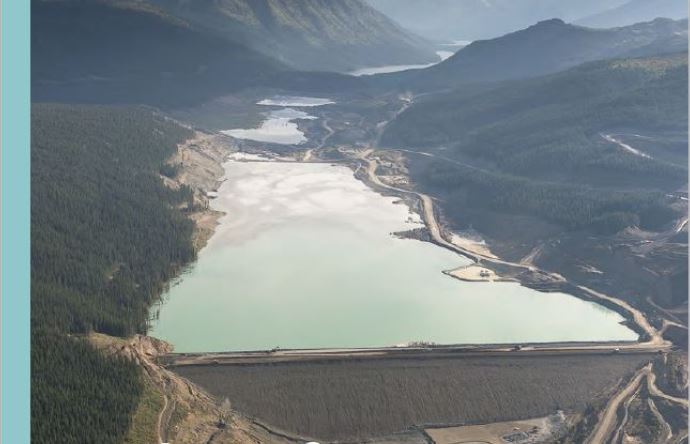
Waste Disposal and Management: BC Mining Law Reform recommends reducing the number of existing tailings dams; moving away from wet tailing impoundments; adopting the Initiative for Responsible Mining Assurance (IRMA) Standard for Responsible Mining for waste management; and banning disposal of wastes into lakes, rivers, or oceans.

Water Protection: BC Mining Law Reform recommends the adoption of the IRMA Standard for Responsible Mining water management standards, including full consultation with communities and stakeholders on critical water-related issues, with third party independent reviews. The network also recommends the prohibition of mines likely to require perpetual water treatment unless able to meet exceptional criteria.

Read full article >

READ MORE
Blog

30 law and advocacy groups in Canada recognize IRMA


This is one of more than 60 recommendations released in British Columbia, Canada in May as part of a package of legal reforms launched by more than 30 mining advocacy and law organizations. The recommendations are calling for an overhaul in the way BC regulates exploration, placer mining and metal/mineral mining.

B.C. Mining Law Reform: A Plan of Action for Change is the result of two years of research begun by the Environmental Law Centre, with support from Indigenous advocates and groups like MiningWatch Canada.

Read the full article on The Narwhal.

READ MORE
Blog

50 NGO’s sign open letter recognizing responsible sourcing through IRMA

50 NGOs including Greenpeace, Earthworks, Global Witness and others signed an open letter to the World Bank stating that ‘where sourcing from mining operations is absolutely necessary, purchasers must insist that those operations adhere to stringent international environmental and human rights best-practices standards (such as those developed by the multi-stakeholder Initiative for Responsible Mining Assurance) with independent, third-party assurance of compliance.’

The letter was signed on the launch of the Climate Smart Mining initiative in Washington DC. The leaders also stated that an ‘essential shift is necessary in order to keep global temperature rise below 1.5 degrees and avert the most disastrous impacts of climate change. And yet, even as new renewable energy infrastructure ramps up, we are concerned about the impacts of extracting minerals.

Read full article >

READ MORE
North America

B.C. needs to act quickly to prevent future mine-tailings disasters

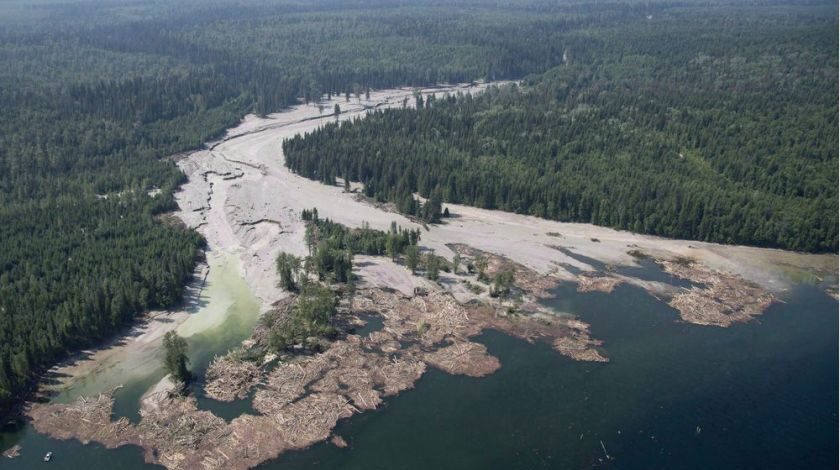
Loretta Williams, chairwoman of First Nations Women Advocating Responsible Mining and Calvin Sandborn, QC, legal director of the Environmental Law Centre at the University of Victoria call on Premier John Horgan to act now to protect the workers and communities below tailings dams.

Photo Credit: Jonathan Hayward / The Canadian Press.

About five years ago, both B.C. and Brazil got dramatic warnings of the danger that tailings dams pose. In 2014, the Mount Polley mine dam collapsed, creating one of Canada’s most epic environmental disasters. Only 15 months later, a tailings dam in Mariana, Brazil, collapsed, wiping out a neighbourhood, killing 19 and poisoning a vast watershed. Fish literally leaped out of the river to flap on the banks, trying to escape lethal effluent.

Read full article >

READ MORE