webinar

Credit: ResponsibleSteelCredit: ResponsibleSteelBlog

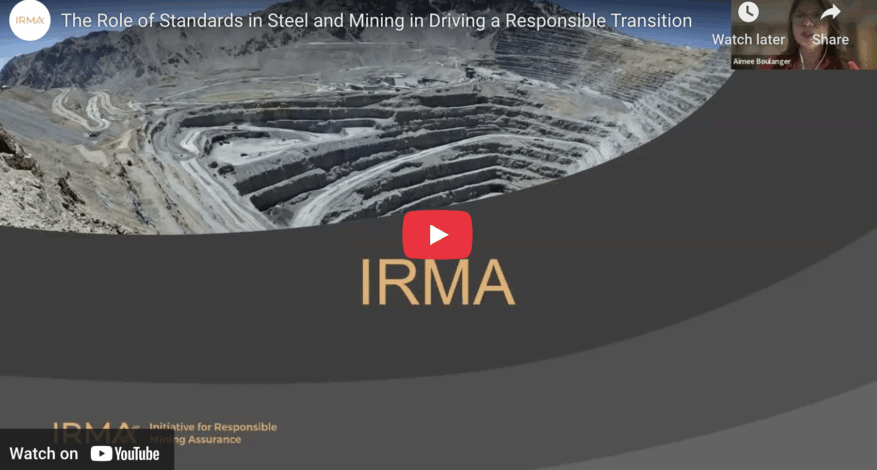
Standards’ Role in a Responsible Transition: An IRMA-ResponsibleSteel Collaboration

[This is post also lives on the ResponsibleSteel website]

Exploring the role of standards in driving a responsible transition in steel and mining: A collaborative journey between IRMA and ResponsibleSteel

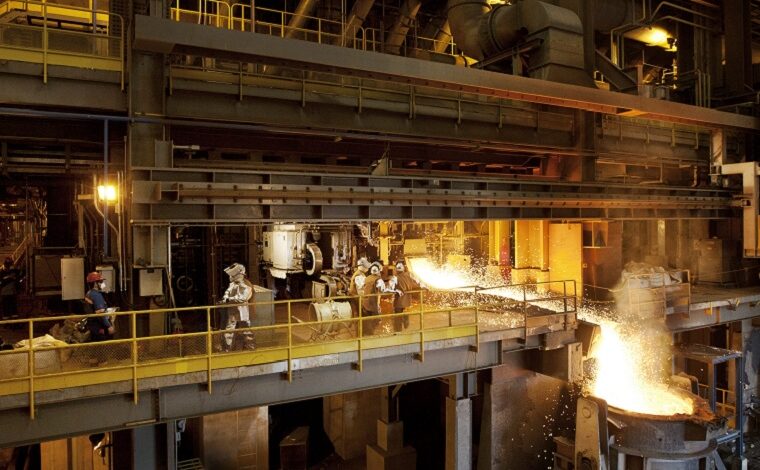
As the global shift toward decarbonisation gains momentum, so too do the questions around how the transition will affect people and communities. While emerging technologies bring a cleaner future, they also bring with them significant disruption, particularly in heavy industries like steel and mining. New technologies, shifting production geographies, and economic restructuring can create unintended social consequences such as job losses, community displacement, and weakened local economies.

In response to this, two Voluntary Sustainability Standards, the Initiative for Responsible Mining Assurance (IRMA) and ResponsibleSteel have come together to explore what a just transition looks like for these sectors, and to explore the role of standards in steel and mining to drive a responsible transition. This joint project, supported by the ISEAL Innovations Fund and the Swiss State Secretariat for Economic Affairs (SECO), seeks to understand the social impacts of transitions and how voluntary sustainability standards can help ensure that this transformation is fair, inclusive, and responsible.

This collaboration reflects a growing recognition of the value in shared learning between the steel and mining sectors. By working together, IRMA and ResponsibleSteel are exchanging insights, comparing approaches, and learning from each other’s experiences to strengthen how just transition principles are understood and applied.

A shared vision rooted in multi-stakeholder governance

IRMA and ResponsibleSteel were both founded on the principle of multi-stakeholder governance. Their boards include labour unions, civil society, and industry (Purchasers, Indigenous Rights Holders, Investors-IRMA), as well as affected communities in IRMA’s case, ensuring that decisions are not only transparent but also equitable. This approach forms the foundation of our collaboration on the just transition. Together, we bring complementary strengths: IRMA’s standard addresses upstream mining operations at the site level, while ResponsibleSteel covers the downstream steel production process.

The two initiatives are jointly exploring how standards can help mitigate adverse social impacts of decarbonisation, such as the economic consequences of site closures or workforce displacement. Our goal is to provide a common foundation that recognises diverse regional realities and reflects the voices of workers, Indigenous Rights Holders, communities, and industry actors alike in our voluntary sustainability systems.

Laying the groundwork: Research and stakeholder engagement

The first phase of the project centred on an in-depth literature review of over 200 sources, including international standards, academic and practitioner literature, case studies, and online materials, with a focus on content relevant to the steel and mining sectors. This review explored how voluntary sustainability standards, global frameworks, and national policies approach just transition issues, highlighting areas of alignment as well as gaps. Insights were drawn from 11 standards and frameworks relevant to the steel and mining sectors, along with case examples from seven additional countries. Building on this foundation, the team conducted over 30 stakeholder in-depth interviews with voices across industry, labour, Indigenous rights holders, supply chains, policymakers, academia, and civil society. These conversations were then complemented by two multi-stakeholder workshops in Johannesburg and Brussels, which brought together workers, unions, companies, NGOs, Indigenous representatives, and decision-makers. Each phase has contributed valuable, grounded perspectives that continue to shape the direction and priorities of the project.

Key insights from the project so far

What has become clear and consistent throughout both the literature review and the stakeholders’ engagement so far is the contested nature of the term ‘Just Transition’. As we all live in different worlds with different contexts of reality, everyone brings their own understanding and priorities when thinking about a just transition. As voluntary sustainability standards, we must be thoughtful in how we define and interpret this term. We need a flexible framework where local context can be well reflected, and the context and priorities are defined by local stakeholders.

Another key insight that emerged from all activities was the critical importance of an inclusive governance and management system that accommodates a meaningful stakeholders’ engagement process and inclusive decision making at every step of the way to achieve a just transition. This also presents a challenge – inherent tension between the urgency of just transition issues and the often time-consuming nature of stakeholders’ engagement. It is not just about having a process itself, but it is about recognising and addressing the existing power imbalance between stakeholders, and ensuring that the process facilitates meaningful consultation, which, in essence, means providing equitable access to consultation and decision-making processes.

Moving forward

Drawing on their sectoral expertise, multi-stakeholder governance models, and shared commitment to transparency and accountability, IRMA and ResponsibleSteel are exploring how standards can support a just transition in practice. This project marks an initial step toward building a stronger foundation for future efforts, recognising that meaningful progress will depend on continued collaboration and engagement.

Join the conversation

As this joint project progresses, ResponsibleSteel and IRMA would like to continue the conversation with stakeholders. An important milestone in this journey is an upcoming webinar, which will provide an opportunity to share key findings, share what we heard from those who contributed to the project, and explore how voluntary sustainability standards can play a meaningful role in supporting a responsible transition in the steel and mining sectors.

We invite you to join us for a webinar hosted by IRMA and ResponsibleSteel :

Date: Thursday, 4 September

To make it easier for participants in different time zones to join, the same session will be offered at two different times.

Session 1:
10:00–11:30 CEST / 10:00–11:30 SAST (South Africa)
9:00–10:30 BST (UK)
3:00–4:30 PM Southeast Asia (Jakarta Time)

Click here to register for session 1.

Session 2:
16:00–17:30 CEST / 16:00–17:30 SAST (South Africa))
15:00–16:30 BST (UK)
10:00–11:30 AM US Eastern Time (EDT)

Click here to register for session 2.

Find out more about ResponsibleSteel here.

READ MORE
Credit: Nick Youngson CC BY-SA 3.0 Pix4freeCredit: Nick Youngson CC BY-SA 3.0 Pix4freeStandard 2.0

The IRMA Standards revision — an update

IRMA would like to warmly thank all the people who have participated in the public-comment period that ended on 26 January to inform the revision of our Standards.

Through our live consultation webinars, our online platform, and direct engagement, we have collected about 2,000 individual lines of comments, submitted by more than 80 organizations spread across all continents (Asia, Africa, North America, South America, Europe, and Australia).

Building upon 5 years of implementation, learning, and continuous stakeholder engagement on the Standard, the IRMA Secretariat is now consolidating and processing all these comments and recommendations. Additional Expert Working Groups are being convened where necessary.

Subject to the approval of IRMA’s equally-governed multi-stakeholder Board, we hope to launch the IRMA Standard for Responsible Mining and Mineral Processing V2.0  before the end of the year, together with a public report on the comment period and the rationale for the final changes made and approved. We hope to also launch the IRMA Chain of Custody Standard this year, also subject to Board’s approval.

READ MORE
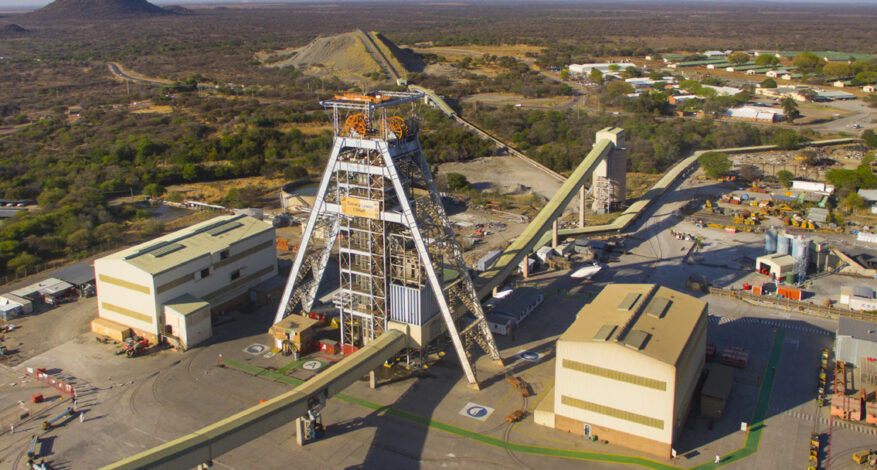
Amandelbult PGM Complex. Credit: Anglo AmericanAmandelbult PGM Complex. Credit: Anglo AmericanAudits

Audits released for Anglo’s Amandelbult, Mototolo, Unki

Two Anglo American mines are first South African operations audited against the IRMA Standard for Responsible Mining

Amandelbult and Mototolo achieve IRMA 50 and IRMA 75, respectively

UPDATE 28 Feb: Watch the audit report release webinar recording

16 Feb 2024 – Today the Initiative for Responsible Mining (IRMA) released the audits of Anglo American’s Amandelbult and Mototolo PGM operations against the IRMA Standard for Responsible Mining. Independent audit firm ERM-CVS assessed Amandelbult at IRMA 50 and Mototolo at IRMA 75 when measuring their performance against the Standard’s best practice social and environmental criteria.

IRMA also released the surveillance (interim) audit for Anglo’s Unki PGM operation in Zimbabwe, as conducted by audit firm SCS Global. In 2021, Unki achieved IRMA 75 in IRMA’s first-ever on-site audit; a surveillance audit is a more limited check-in, so it does not result in further detailed scoring but rather provides updates on performance.

IRMA 50 or 75 means that ERM-CVS verified that the operations at least substantially met all 40 critical requirements of the IRMA Standard, as well as at least 50 or 75% of the Standard’s criteria in each of the four principle areas: social responsibility, environmental responsibility, business integrity and planning for positive legacies. The full audit reports are available on the Amandelbult and Mototolo audit pages, as well as Unki’s surveillance report, on the IRMA website.

“The information stakeholders need to decide what’s going well — and what may require more attention.”

“This report demonstrates that mines can point to transparent, independent evaluations of their environmental and social performance,” said Aimee Boulanger, Executive Director of IRMA. “Through detailed IRMA audit reports, mining companies, communities and companies that purchase mined materials can gain the information they need to decide what’s going well — and what may require more attention — at specific mines.”

As the IRMA Standard is recognized and adopted around the globe, these audits are first steps in a deepening dialogue between mining companies and those affected by their operations. Because the process is still evolving, IRMA cautions that the initial results should be reviewed and interpreted accordingly.

“These mines began audits during the early Covid years. The timeline was delayed by travel challenges, and then the company’s decision to use the optional corrective action period to make improvements. The public has long awaited opportunity to review the information included here, and we applaud Anglo American for volunteering these mines for audit against such comprehensive criteria.” Ms. Boulanger went on to say, “That said, the IRMA Standard is relatively new for companies that volunteer to be audited, and even our accredited auditors are still learning. The same is true for community members and workers who are interviewed as part of the process, some of whom may not yet feel comfortable engaging. So, the Amandelbult and Mototolo audits need to be read with this in mind.”

The report also provides an honest accounting of IRMA’s own progress as the Standard and assessment process continue to mature.

“If the results don’t fully reflect the experience of communities, Indigenous rights holders or other affected groups, we want to hear from them,” Ms. Boulanger said. “We’ll help them communicate with the company to better understand its performance, and with the auditors on any issues they feel were overlooked in the review. This is a cornerstone of our own commitment to transparency. We invite anyone who has criticisms of our work to join us in making it better. Finding ways to improve is built into our system — and a measure of its success.”

The IRMA Standard is being updated in 2024; input on how to improve the IRMA Standard is welcomed. Chapters in the IRMA Standard include requirements on protection to human rights, water resources, worker health and safety, biodiversity, Indigenous free, prior, informed consent and more.

“Committing to an IRMA audit reflects our desire to improve and our openness to dialogue”

Craig Miller, CEO of Anglo American Platinum said, “This significant milestone at Mototolo and Amandelbult mines in our overall adoption of IRMA enables us to promote transparency and best practice in sustainability, while adding value to our global customers by helping them to meet increasing expectations for responsibly mined materials in an efficient and credible way. With Unki mine achieving IRMA 75 in 2021, and now the achievements of Mototolo with IRMA 75 and Amandelbult with IRMA 50, we are continuing to make great progress towards our sustainable mining plan target of having all our mining operations assured against a recognised responsible mining standard by 2025.”

Including Amandelbult, Mototolo and Unki, 19 industrial-scale mines worldwide are within the IRMA independent assessment system. After an initial self-assessment, a participating mine engages a third-party audit firm — trained and approved by IRMA — to conduct a detailed independent evaluation, including on-site visits to the mine and nearby communities. Following the release of the initial audit, a shorter surveillance audit checks on the mine’s performance. Three years after the initial audit, the operation is fully audited again (Note: The first mines audited in the IRMA system have had extensions to this timeline due to Covid delays and launch-phase learning; updated full reviews will be required to maintain or increase achievement scores.)

The independent IRMA system is the only global mining standard that provides equal power to the public sector (communities and Indigenous rights holders, mine workers, and environmental and human rights advocates) alongside the private sector (mining companies, mined materials purchasers and investors).

Feb 27th Webinar Q&A

  • Speakers:
    IRMA Executive Director Aimee Boulanger,
    IRMA Africa Regional Lead Davidzo Muchawaya,
    IRMA Assurance Director Michelle Smith, and
    Anglo American Platinum Head of Sustainability Stephen Bullock
  • IRMA slides: http://responsiblemining.net/IRMAAmandelbultMototoloUnkiSlides
  • Anglo American slides: http://responsiblemining.net/AngloAmandelbultMototoloUnkiSlides


For More Information:

  • Alan Septoff, +1.301.202.1445, aseptoff@responsiblemining.net
READ MORE
Barro Alto. Credit: Anglo AmericanBarro Alto. Credit: Anglo AmericanAudits

Audits released for Anglo’s Barro Alto, Minas-Rio

Anglo American’s Barro Alto, Minas-Rio operations in Brazil audited against the IRMA Standard for Responsible Mining

First nickel, iron mines to complete IRMA audits, both Barro Alto and Minas-Rio achieve IRMA 75

UPDATE 14 Feb: Webinar recording in English and Português added.

IRMA 75 achievement badge

07 Feb 2024 – Today the Initiative for Responsible Mining (IRMA) released the results of independent audits of Anglo American’s Barro Alto nickel and Minas-Rio iron ore operations against the IRMA Standard for Responsible Mining. The mines achieved IRMA 75 when two independent audit firms measured their performance on concrete social and environmental impact criteria.

IRMA oversees the only independent, comprehensive process for assessing individual mines’ performance against an equally governed, consensus-based standard — and for measuring their subsequent progress in reducing social and environmental harm. The rigorous IRMA process invites all those currently or potentially affected by a mine to share their experiences and perspectives with the auditing team.

The independent IRMA system is the only global mining standard that provides equal power to the public sector (communities and Indigenous rights holders, mine workers, and environmental and human rights advocates) alongside the private sector (mining companies, mined materials purchasers and investors).

Barro Alto and Minas-Rio join 17 other industrial-scale mines worldwide that are independently assessing against the IRMA Standard. After an initial self-assessment, a participating mine engages a third-party audit firm — trained and approved by IRMA — to conduct a detailed independent evaluation, including on-site visits to the mine and nearby communities.

IRMA 75 means the audit firms ERM-CVS (Barro Alto) and SCS Global (Minas-Rio) verified that the operations met all critical requirements of the IRMA Standard, as well as at least 75% of the Standard’s criteria in each of the four areas: social responsibility, environmental responsibility, business integrity and planning for positive legacies. The full audit reports are available in Results tab of the Barro Alto and Minas-Rio audit pages on the IRMA website.

“The information stakeholders need to decide what’s going well — and what may require more attention.”

“This report demonstrates that mines supplying materials essential to the renewable energy transition and the steel supply chain can now point to transparent, independent evaluations of their environmental and social performance,” said Aimee Boulanger, Executive Director of IRMA. “Through detailed IRMA audit reports, mining companies, communities and companies that purchase mined materials can gain the information they need to decide what’s going well — and what may require more attention — at specific mines.”

As the IRMA Standard is recognized and adopted around the globe, these audits are just the first steps in a deepening dialogue between mining companies and those affected by their operations. And because the process is still evolving, IRMA cautions that the initial results should be reviewed and interpreted accordingly.

“These mines began audits during the early Covid years. The timeline was delayed by travel challenges, and then the company’s decision to use the optional corrective action period to make improvements. The public has long awaited opportunity to review the information included here, and we applaud Anglo American for volunteering the first iron and nickel mines for audit against such comprehensive criteria.” Ms. Boulanger went on to say, “That said, the IRMA Standard is relatively new for companies that volunteer to be audited, and even our accredited auditors are still learning. The same is true for community members and workers who are interviewed as part of the process, some of whom may not yet feel comfortable engaging. So the Barro Alto and Minas-Rio audit reports need to be read with this in mind.”

The report also provides an honest accounting of IRMA’s own progress as the Standard and assessment process continue to mature.

“If the results don’t fully reflect the experience of communities, Indigenous rights holders or other affected groups, we want to hear from them,” Ms. Boulanger said. “We’ll help them communicate with the company to better understand its performance, and with the auditors on any issues they feel were overlooked in the review. This is a cornerstone of our own commitment to transparency. We invite anyone who has criticisms of our work to join us in making it better. Finding ways to improve is built into our system — and a measure of its success.”

The IRMA Standard is being updated in 2024; input on how to improve the IRMA Standard is welcomed. Chapters in the IRMA Standard include requirements on protection to human rights, water resources, worker health and safety, biodiversity, Indigenous free, prior, informed consent and more.

“Committing to an IRMA audit reflects our desire to improve and our openness to dialogue”

Ana Sanches, CEO of Anglo American in Brazil, said: “Anglo American’s achievement of IRMA 75 is a first for a nickel and an iron ore mine and is a testament to the hard work of our teams at Barro Alto and Minas-Rio. Participating in IRMA audits for our operations serve as recognition and proof of our commitment to high standard best practice, transparency and assurance, while it also provides independently verified next steps for further improvement. This transparent positive-feedback loop ensures we continue to improve our sustainability practices, leads to better ways to do business and creates greater value for employees, governments, NGOs, customers and communities alike.

Feb 8th Webinar Q&A – slides

Português – Webinar IRMA sobre relatórios de auditoria de Barro Alto/Minas-Rio

English – IRMA webinar re Barro Alto/Minas-Rio audit reports

 For More Information:


READ MORE
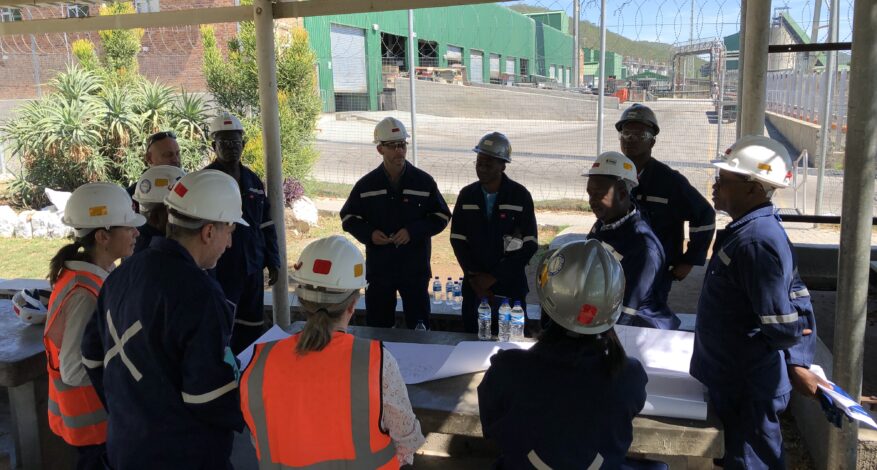
Unki on-site audit discussion. Credit: IRMAUnki on-site audit discussion. Credit: IRMAMining

Recording of the IRMA Deep Dive for Mining Companies

Thursday, December 14th, IRMA hosted a dedicated webinar for mining companies to learn more about the Initiative for Responsible Mining Assurance. It was simultaneously interpreted in Spanish, Russian, Portuguese, Indonesian, French, and Chinese.

Given our service to multiple sectors, we’re aware investors and companies who purchase mined materials are increasingly asking for mines to be independently assessed in IRMA system. Just as we seek to provide value to these sectors, as well as civil society, communities and labor unions, we’re equally committed to serving the mining sector.

The webinar was an open and candid discussion between representatives of mining companies that have been IRMA-audited, purchasing companies engaged in IRMA, and the key IRMA Secretariat staff who are dedicated to serving the mining sector. It highlighted the tools and training we’re developing to help mining companies better understand the standard and our assessment process. It also addressed common questions, hesitations, doubts and even frustrations, all with the aim of ensuring IRMA is responsive and useful to the mining sector.

The slides (English-only) are here. The webinars are available on our youtube channel and embedded below in Spanish, Russian, Portuguese, Indonesian, French, English and Chinese.

Spanish

Russian

Portuguese

Indonesian

French

English

Chinese

NOTE: At one point both interpreters talk simultaneously for a few minutes.

READ MORE
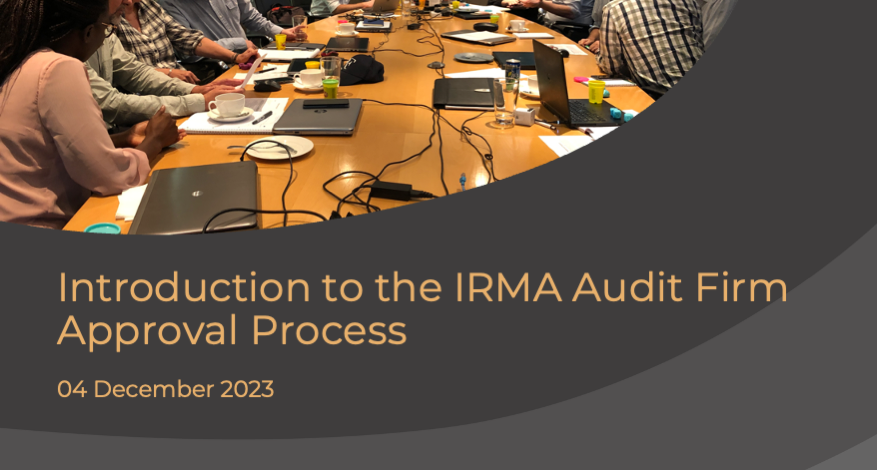
Introduction to the IRMA Audit Firm Approval Process - thumbnailIntroduction to the IRMA Audit Firm Approval Process - thumbnailAssurance

Introduction to the IRMA Audit Firm Approval Process

Co-hosted by IRMA Assurance Services International (ASI), held a meeting introducing the IRMA audit firm approval process, and how IRMA oversees its approved audit firms. The meeting recording and slides are below.

Development of robust standards are only one half of the IRMA system. Just as important to our mission is the work of highly competent and accountable audit firms to measure mine performance against those standards. 100+ mines owned by 75+ companies are engaged in the IRMA system. We are bringing on additional audit firms in response to increasing demand for IRMA audits.

More resources for audit firms are available on the Resources page.


Slides from the presentation

READ MORE
Unki on-site audit discussion. Credit: IRMAUnki on-site audit discussion. Credit: IRMAMining

IRMA: a deep dive session for mining companies

On Thursday, December 14th, IRMA is hosting a dedicated webinar for mining companies to learn more about the Initiative for Responsible Mining Assurance.

Given our service to multiple sectors, we’re aware investors and companies who purchase mined materials are increasingly asking for mines to be independently assessed in IRMA system. Just as we seek to provide value to these sectors, as well as civil society, communities and labor unions, we’re equally committed to serving the mining sector.

This will be an open and candid discussion between mining company representatives, purchasing companies engaged in IRMA, and the key IRMA Secretariat staff who are dedicated to serving the mining sector. In particular, we’ll highlight the tools and training we’re developing to help mining companies better understand the standard and our assessment process.

We’ll also address common questions, hesitations, doubts and even frustrations, all with the aim of ensuring IRMA is responsive and useful to the mining sector.

Our draft agenda is as follows:

  • An introduction to IRMA, including addressing some of the most common questions we receive from mining companies
  • Short presentations from representatives from purchasing and finance, sharing their motivations for participating
  • Insights from mining companies who have undertaken third-party assessments, sharing their experience and learnings
  • A Q&A session with attendees

Register here for the session, taking place from 10:30AM – 12PM Eastern on December 14th. In case you’re not able to make this date, please register in any case, as a recording will be shared.

READ MORE

Topic consultations for draft Standard 2.0

Over the next two months IRMA is hosting live, virtual consultations to discuss and comment on different topics covered by the Draft Standard for Responsible Mining and Mineral Processing 2.0. Facilitated by the IRMA Secretariat, these virtual meetings share what you need to know about the proposed changes and/or new areas in a specific topic inside the Standard (download or view specific chapters here). They will ask some guided questions where IRMA especially seeks feedback. And we encourage all comments — these Zoom sessions are meant to be inclusive and collaborative spaces for such discussion.

All consultations will be in English and last for 60 minutes. Registration is required, all times are UTC-0. Please register through the links provided below for any topics you might be interested in. NOTE: all consultations below are for the Standard for Responsible Mining and Mineral Processing. Visit the Chain of Custody Standard page for those webinars.

2023 2024
07 December 14:00-15:00
Water Management
Watch the recording
🔗 Presentation
10 January 09:00-10:00
Sector-specific: Mineral Processing
Watch the recording
🔗 Presentation
08 December 14:00-15:00
Gender Equality & Gender Protections
Watch the recording
🔗 Presentation
10 January 17:00-18:00
Sector-specific: Exploration and Development
Watch the recording
🔗 Presentation
11 December 14:00-15:00
Occupational Health & Safety
Watch the recording
🔗 Presentation
11 January 16:00-17:00
Sector-specific: Mining Companies
Watch the recording
🔗 Presentation
11 December 16:00-17:00
Waste & Materials Management (incl. tailings)
Watch the recording
🔗 Presentation
12 January 07:00-08:00
Water Management

🔗 Presentation
12 December 14:00-15:00
GHG Emissions & Energy Consumption
Watch the recording
🔗 Presentation
12 January 14:00-15:00
Land & Soil Management
Watch the recording
🔗 Presentation
12 December 16:00-17:00
Indigenous Peoples & FPIC
Watch the recording
🔗 Presentation
15 January 07:00-08:00
Occupational Health & Safety
Watch the recording
🔗 Presentation
13 December 14:00-15:00
Management of Physical Stability (incl. tailings)
Watch the recording
🔗 Presentation
16 January 07:00-08:00
Waste and Materials Management (including tailings)
Watch the recording
🔗 Presentation
14 December 14:00-15:00
Planning, Financing Reclamation and Closure
Watch the recording
🔗 Presentation
18 January 07:00-08:00
Management of Physical Stability (including tailings)
Watch the recording
🔗 Presentation
18 December 14:00-15:00
Land Acquisition, Displacement, and Resettlement
Watch the recording
🔗 Presentation
19 January 07:00-08:00
GHG Emissions & Energy Consumption
Watch the recording
🔗 Presentation
READ MORE
  • 1
  • 2