Mining Standard

Blog

IRMA Standard v2.0 – November 2025 Revision Update

The second public consultation on the IRMA Standard v2.0 closed a few days ago, and IRMA wants to warmly thank all the organizations and individuals that engaged.

Here are some initial statistics showing the level and diversity of interactions:

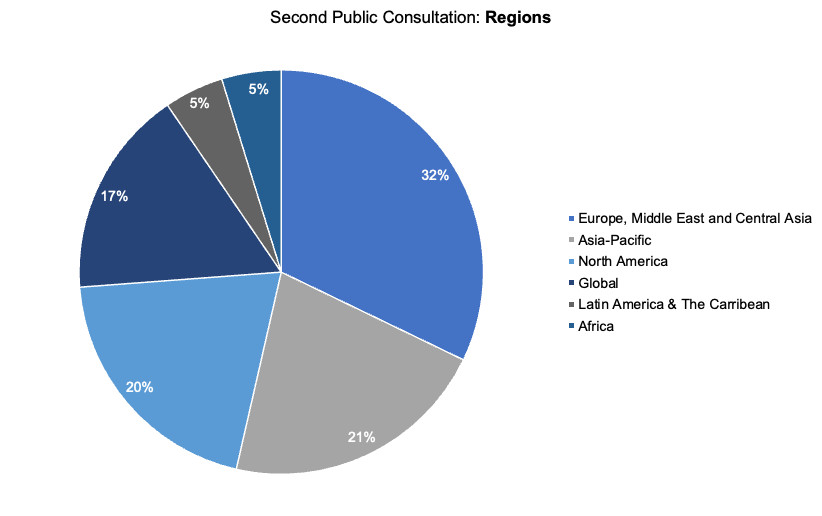
  • 82 organizations have engaged in the revision process, covering all regions of the world (see chart below).
  • Comments have been received from all categories of stakeholders and rights-holders, offering a wide and diverse range of perspectives.
  • We note and appreciate the substantial feedback received from multiple organizations that had not contributed during the first round.
  • Several organizations that had contributed during the first round have indicated to IRMA that they had no further comment to share during this second round.

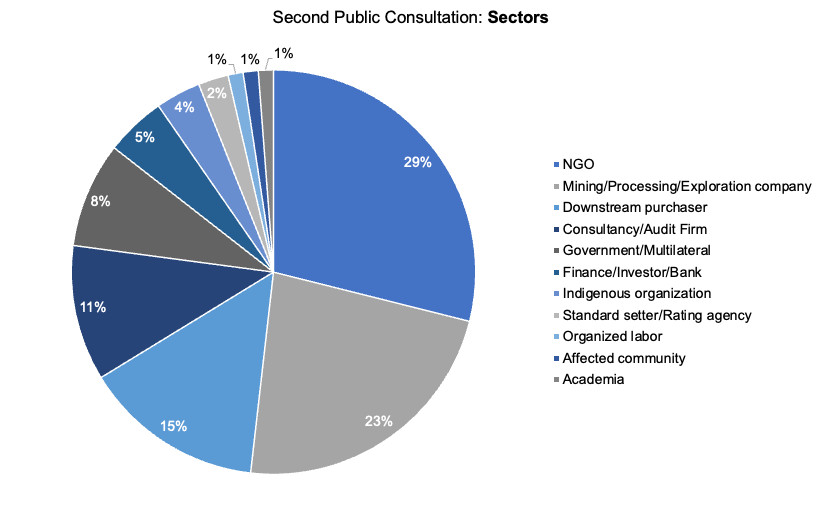
As shown in the pie chart below, IRMA received submissions from all categories of stakeholders and rights-holders:

  • 29% of the contributing organizations are NGOs
  • 23% are companies involved in mining and/or processing and/or exploration
  • 15% are downstream purchasers of mined material
  • 11% are consultancy or audit firms
  • 8% are governments or multilateral organizations
  • 5% are finance institutions or banks or investors
  • 4% are Indigenous organizations
  • Remaining 5% include standard-setters, rating agencies, organized labor, affected communities, and academia

What’s next?

We will now carefully review and process all the contributions, in order to prepare a final version of the Standard which our equally-governed multi-stakeholder Board of Directors will use to inform its discussions and standard approval process.

In the meantime, we are collecting the final answers from the 52 individual Expert Advisors who volunteered to guide us with advice regarding targeted questions on 6 topics.

And a cross-stakeholder Expert Working Group on tailings and mine waste will start soon (its composition is being finalized).

The IRMA Standard v2.0 won’t be approved until the IRMA Board has had time to review such final version, discuss the changes and the recommendations of their constituencies, and has reached consensus.


If you have any question regarding this process ,you can contact our Standards Director, Pierre Petit-De Pasquale at: pdepasquale@responsiblemining.net


You can find more information about our Standards Development Process here.


Picture: Pixabay – Creative Commons Zero (CC0) license

READ MORE
IRMA and CCCMC panelIRMA and CCCMC panelAsia

MOU with CCCMC

Today IRMA entered a new collaboration to advance more responsible mining.

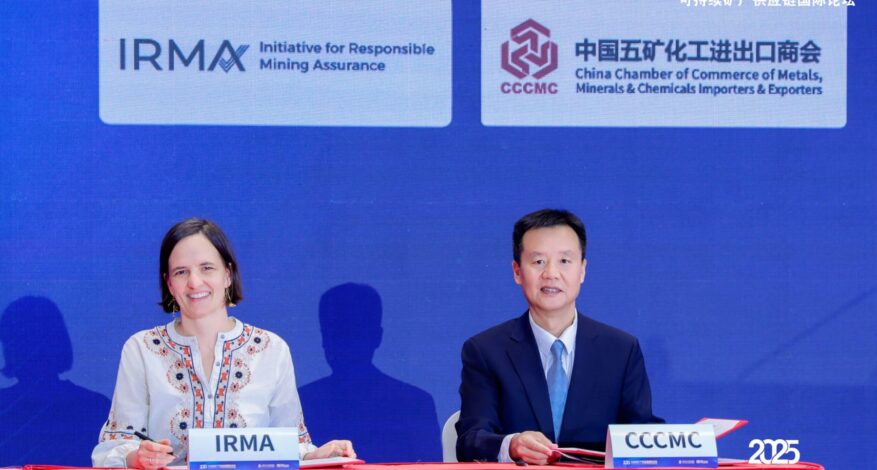
At the International Forum on Sustainable Mineral Supply Chains in Xiamen, IRMA and the China Chamber of Commerce of Metals, Minerals & Chemicals Importers & Exporters (CCCMC) signed a Memorandum of Understanding to strengthen collaboration on responsible mineral production.

Through this agreement, IRMA and CCCMC will work together to:
✅ Align standards and reduce duplication across assurance models
✅ Pilot co-audits to streamline expectations
✅ Provide joint training and capacity-building at mine sites
✅ Exchange lessons on system-wide grievance mechanisms
✅ Maintain ongoing dialogue to respond to global trends and stakeholder needs

This marks an important step in promoting transparency, accountability, and positive outcomes across the minerals value chain.

Chinese IRMA Draft 2.0 Standard coverAs we look forward to deepening this collaboration in support of companies, stakeholders, and communities worldwide, we are thrilled to release a Chinese version of the IRMA Standard v2.0 Draft 2 for public consultation. Please submit your comments!

Our goal is to make responsible mining standards accessible to all stakeholders, everywhere. The translation was made possible thanks to the fantastic work of Landscape Consulting.

READ MORE
Blog

IRMA Standard v2.0: Second DRAFT out for public consultation until October 22

Today, IRMA releases a 2nd DRAFT of the IRMA Standard v2.0 (for Responsible Exploration, Extraction, and Processing of Minerals) for a new round of worldwide public consultation – open until October 22, 2025.


This new draft builds on the 1st DRAFT version published in October 2023, and invites a global conversation to improve and update the 2018 IRMA Standard for Responsible Mining V1.0. This 2nd DRAFT is intended to provide as final of a look-and-feel as possible, although input from this consultation will result in final edits, and consolidation to reduce overall number of requirements, for a version that will be presented to IRMA’s unique equally-governed multi-stakeholder Board of Directors for adoption and implementation.

The 2nd DRAFT does not represent content that has yet been formally endorsed by the IRMA Board. IRMA’s Board leaders seek the wisdom and guidance of all readers to inform this through an inclusive revision process one more time, to improve the Standard.

This 2nd DRAFT has been prepared and updated by the IRMA Secretariat based on:

  • learnings from the implementation of the current IRMA Standard (V1.0)
  • experience from the first mines independently audited (as of July 2025, 24 sites have completed audits or are in the process of being audited)
  • evolving expectations for best practices in mining to reduce harm
  • comments and recommendations received from stakeholders and Indigenous rights-holders
  • the input of subject-specific Expert Working Groups convened by IRMA between 2022 and 2024
  • all comments and contributions received during the public-comment period of the 1st DRAFT version (October 2023-March 2024)

Please note: The IRMA Standard v2.0 is new in its approach (compared to v1.0, currently in use) in that it now covers more phases of the mining and mineral supply chain, from exploration and development, through mining, closure, and mineral processing. IRMA also, separately, oversees a Chain of Custody Standard for tracking materials through the supply chain from mine-to-market end use products.


Summary of the first public consultation
Cover of the Report on the 2023-2024 1st Public Consultation

IRMA held a 90-day public consultation on the Draft IRMA Standard v2.0 which ran from October 26, 2023, to January 26, 2024. The consultation aimed to receive feedback from a wide range of members and partners of IRMA, and the diverse categories of rights-holders and stakeholders that IRMA serves and that would be affected by the changes to the IRMA Standard requirements. IRMA worked to ensure that all comments could be received in a wide range of languages and channels for communications, and we informed stakeholders that all comments would be considered carefully, objectively and equally. Comments could be sent using a diverse set of communication channels (emails, online platform, live webinars, letters, text messages via phones). Respondents could contribute in a confidential and/or anonymous manner.

During this first round, we received more than 2,500 points of comments from 82 organizations. Feedback came primarily from NGOs and the private sector with additional comments from Indigenous organizations, governments and multilaterals, organized labor and other standards systems. We were encouraged to see more than 10% of the organizations commenting were Indigenous organizations. In addition, more than 20% of the organizations were from the Global South.

A public summary report of this first public consultation and changes made is available here.
It provides the following:

  1. Context on the review of the IRMA Standard V1.0 to consider a revision.
  2. The components of IRMA’s preparation for releasing a 1st DRAFT v2.0 for consultation.
  3. A summary of the first public consultation that took place over 2023-2024.
  4. An overview of key changes captured in the first public consultation.
  5. A summary of the remaining and arising issues that are included in the second public consultation.
  6. Plans for the second consultation and how to engage.
  7. Links to online resources that are relevant to both the 1st and 2nd public consultations.

What is included in this 2nd DRAFT and how to engage?
The IRMA Board, supported by the IRMA Secretariat, has approved the release of this 2nd DRAFT IRMA Standard v2.0 for a second 90-day consultation period, from July 22 to October 22, 2025.

The second consultation will support rights-holders and stakeholders to engage and submit feedback by offering these resources, among others (see ‘Resources’ section below):

  • The public summary report on the first consultation period (see above).
  • A detailed log of all the comments that were submitted (confidential contributions have been redacted), and the individual responses from IRMA.
  • The full 2nd DRAFT Mining Standard v2.0 (the new consolidated draft developed based on the first consultation period), in English, that includes:
    1. For each chapter: summary of the changes since the 2023 first draft; details on feedback received and decision made for every consultation question.
    2. Applicability to respective development stages (exploration to permitting to operations) integrated within the design of the chapters.
    3. Updated charts, tables, annexes and glossary.
  • At-a-glance tables to easily compare the IRMA Standard V1.0 (2018) and this new consolidated 2nd DRAFT, highlighting substantial differences.
  • Comparative mapping of the relevant sections of the 2nd DRAFT against the OECD Guidance For Responsible Supply Chains, the UN Guiding Principles on Business and Human Rights, and the EU CSDDD Directive (ET) 2024/1760.
How to engage?

Our dedicated consultation page lists all the ways to comment, including:

      • An online commenting form, allowing for anonymous and/or confidential submissions.
      • Email (at comments@responsiblemining.net) and postal options; including confidential options;
      • WhatsApp (+1 301 202 1445) for text or voice comments; including confidential and encrypted options.
      • Webinars and live consultations, to be announced in the coming weeks.

IRMA Expert Advisors and Expert Working Group

Building on the positive experience of Expert Working Groups, IRMA welcomes the contribution of individual experts as follows:

Expert Advisors

Pools of Expert Advisors will be created for the year 2025, seeking their individual perspective and suggestions on the following topics:
—        Conflict-Affected and High-Risk Area Due Diligence
—        Upstream and Downstream Sustainability Due Diligence
—        Indigenous Peoples and Free, Prior, and Informed Consent (FPIC)
—        Climate Action
—        Applicability of the Standard to Mineral Exploration and Development
—        Applicability of the Standard to Mineral Processing Projects and Operations

The Terms of Reference applicable to these Expert Advisors, including instructions on how to apply, are available at (click on this link): ToR for Expert Advisors 2025.

If you are interested in participating in joining the 2025 pools of IRMA Expert Advisors on one or more of these topics, please contact IRMA’s Standards Director, as explained in the Terms of Reference

Expert Working Group

Additionally, and acknowledging that several issues and challenges related to the management of tailings storage and mine waste facilities could not be resolved during the development of this 2nd DRAFT, IRMA proposes to discuss and explore potential approaches within an IRMA Expert Working Group dedicated to Tailings Storage and Mine Waste Facility Management.

The Terms of Reference applicable to this Expert Working Group, including instructions on how to apply, are available at (click on this link): ToR for Expert Working Group 2025.

If you are interested in participating in the IRMA Expert Working Group on Tailings and Mine Waste Storage Management, please contact IRMA’s Standards Director, as explained in the Terms of Reference.


Resources

2nd DRAFT for public consultation
To access the 2nd DRAFT of the IRMA Standard v2.0, open for public consultation until October 17, 2025, click here for a pdf version, and here for a tabular version (Excel).

Individual chapters are available here too.

➭ Public summary report of the first public consultation
To access the public summary report, click here for a pdf version.

Summary of changes made in the 2nd DRAFT
To view the summary of the changes by Chapter that were completed during the first public consultation and resulted in the new 2nd DRAFT that is open for the second public consultation until October 17, 2025, click here for a pdf version.

Comparative tables (2018-2025)
To access the comparative tables between the IRMA Standard v1.0 (2018) and this new 2nd DRAFT, highlighting all substantial differences, click here for a pdf version (excel versions are available here)

All comments received during the 1st public consultation and IRMA responses
To view the full comments log for the first public consultation of the DRAFT IRMA Standard v2.0, click here for a pdf version, and here for a csv version (machine-readable).

Summary of feedback received on consultation questions and decisions made
To view a summary of the feedback received for each consultation together with decisions made by IRMA, click here for a pdf version.

Mapping of the 2nd DRAFT against the OECD Guidance
To view a mapping of the relevant section of the 2nd DRAFT against the OECD Guidance For Responsible Supply Chains, click here for an excel version.

Mapping of the 2nd DRAFT against the UN Guiding Principles on Business and Human Rights
To view a mapping of the relevant section of the 2nd DRAFT against the OECD Guidance For Responsible Supply Chains, click here for an excel version.

Mapping of the 2nd DRAFT against the EU CSDDD DIRECTIVE (EU) 2024/1760
To view a mapping of the relevant section of the 2nd DRAFT against the EU CSDDD DIRECTIVE (EU) 2024/1760, click here for an excel version.

Additional resources

  • Individual Chapters can be downloaded from our Resources page: click here
  • Key External References Used in IRMA Standards (July 2025 update): click here
  • Log of the main documents and publications considered for the IRMA Standard review and revision (until 2023): Log of main documents and publications
  • IRMA Standard for Responsible Mining v1.0 (2018) – EN | ES | FR | PT | ZH
  • IRMA Standard (for Responsible Mining and Mineral Processing) v2.0 – 1st DRAFT for public consultation – used for the first public consultation held October 2023 to January 2024) – EN | ES

Note: If you wish to discuss your previously submitted comments you can write to IRMA’s Standards Director Pierre Petit-De Pasquale: pdepasquale@responsiblemining.net

READ MORE
Credit: Suki Lee via Pexels.com (free use license)Credit: Suki Lee via Pexels.com (free use license)Blog

Update on the IRMA Mining Standard revision process

Background

Following the release of a 1st Draft of the IRMA Mining Standard V2.0 in October 2023 for a 90-day public consultation, the IRMA Secretariat received more than 2,500 points of comments from 82 organizations, organized additional engagement with stakeholders and Indigenous rights-holders, and solicited complementary guidance from multiple topic-specific Expert Working Groups.

We first anticipated the release of a 2nd Draft – for a second round of public consultation – as early as Q3 2024, then subsequently announced that this would likely not be approved by the IRMA multi-stakeholder equally-governed Board of Directors before March 2025. We provided a detailed explanation for why the process was taking longer than planned.

Where are we now?

We are now in June and a sub-group of the IRMA Board of Directors is still actively working to resolve the final points of disagreements. This discussion is entirely focused on the draft revised Chapter dedicated to the management of Mine Waste Facilities, including tailings storage/management facilities (TSF or TMF), especially with regard to the GISTM standard and the recent announcement of a Global Tailings Management Institute being established to oversee it.

Once all issues are resolved and approved by the IRMA Board, the Secretariat will be able to release the 2nd Draft IRMA Mining Standard V2.0 for a 60-day consultation period.

(NOTE: the Board agreeing to release a Draft Standard for consultation does not constitute endorsement of everything in the Standard; it will be an invitation to the world to help further improve and refine the revision of the IRMA Mining Standard for the Responsible Exploration, Extraction, and Processing of Minerals.)

Expert Working Groups: 2025 and beyond

At the time of the release of the 2nd Draft IRMA Mining Standard V2.0 for public consultation, the IRMA Secretariat plans to circulate a call for interest to refresh and restart the topic-specific IRMA Expert Working Groups (EWG). The final list of topics to be covered is being finalized, and Terms of Reference are being updated.

We express our gratitude to you all again for your patience and understanding, as IRMA remains committed to working transparently on the revision of the world’s most comprehensive and rigorous standard available for the minerals sector.

If you don’t want to miss the relevant announcements, make sure to subscribe to the IRMA Newsletter!
READ MORE
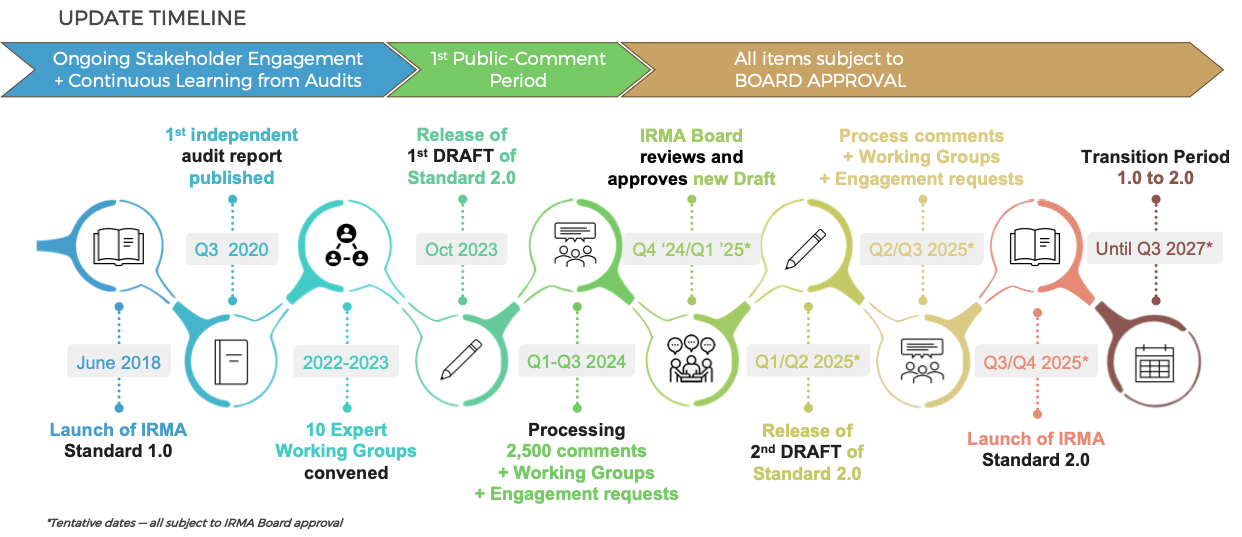
Standard 2.0 updated timelineStandard 2.0 updated timelineBlog

Update on the IRMA Mining Standard 2.0 revision

NOTE: This post is superseded by the linked 3 June 2025 update.

Following the release of a first draft of Standard 2.0 in October 2023 for a 90-day public consultation, the IRMA Secretariat received more than 2,500 points of comments from 82 organizations (see previous update).

Although we had first anticipated the release of a second draft as early as Q3 2024 for a 60-day public consultation, such release is now expected for March 2025; and subject to approval by the IRMA multi-stakeholder equally-governed Board of Directors.

Standard 2.0 updated timeline
Click to enlarge.
Why is the process taking longer than planned?
  1. IRMA granted extensions to organizations that asked for more time during the first public consultation up to March 2024) to ensure all could contribute.
  2. The quality and length of most contributions required a longer processing time from our team of subject matter experts.
  3. During and after the first public consultation, IRMA received requests for additional engagement, including calls and in-person meetings, from a number of organizations (across NGOs, Indigenous rights’ organizations, mining companies, government agencies, and other industry actors). IRMA responded by engaging in all requests; this engagement occurred mainly April-July 2024, but also continued through November 2024.
  4. This lengthened process delayed our ability to prepare updated material and questions for our Expert Working Groups (see note below).
  5. A new consolidated draft was then submitted to the IRMA Board of Directors on 1st November 2024 for a 6-week review period, aiming for their approval before the end of 2024.
  6. Board members from the mining and the NGO sectors requested additional discussions about, and work on, the following topics:
    • Rationale for, and listing of, critical requirements;
    • Upstream and downstream sustainability due diligence;
    • Free, Prior, and Informed Consent of Indigenous Peoples;
    • Tailings management, especially with regard to the GISTM standard;
    • Water management;
    • Biodiversity offsets;
    • Carbon offsets;
    • Air quality and dust management.
  7. Finally, the fact that IRMA finalized and launched the first official version of the IRMA Chain of Custody Standard (with its associated Assurance Manual, and Claims Procedure and Communications Policy) over the course of the three first quarters of 2024 consumed attention, discussion, and refining time from both the IRMA Secretariat and the IRMA Board.
What’s next?

The second round of public consultation is coming up soon!

The IRMA Board, supported by the IRMA Secretariat, is working to finalize the new draft for a 60-day consultation period. This is now expected for March-April (NOTE: the Board agreeing to release the Standard for consultation doesn’t constitute endorsement of everything in the Standard It’s an invitation to the world to help further improve the new draft.)

Materials we will release in support of  this second consultation:

  1. A public report on the first consultation period;
  2. A fully detailed log of all the comments that were submitted (confidential contributions will be redacted), and the response from IRMA;
  3. The full draft Standard, that includes:
    • For each chapter: summary of the changes since the 2023 first draft; details on feedback received and proposed decision for every consultation question;
    • Applicability to respective development stages (exploration to permitting to operations) will be integrated within the design of the chapters;
    • An updated Glossary;
    • Updated annexes (including environmental quality tables);
  4. Comparative tables between IRMA Standard V1.0 and this second draft, highlighting substantial differences.

IRMA is committed to again offer opportunities for feedback from all stakeholders and Indigenous rightsholders.

We aspire to process all the comments, convene expert working groups, and meet requests for specific engagement, during Q2 and Q3 2025, so that a final Standard may be adopted as final by the IRMA Board  before the end of 2025.

We thank you all for your patience; we remain committed to working transparently on this updated IRMA Mining Standard that many are eager to use and implement.

Expert Working Groups: 2023-2024 update

Some of the Expert Working Groups that were convened in 2022 have been solicited again, while a new one was created (Mineral Supply Chain). Note that no group calls took place, and members were only asked to provide individual feedback. Details are provided in the table below:

IRMA Working Groups Status
Conflict-Affected and High-Risk Areas (CAHRAs) Asked for additional contribution in August 2024 on the new draft Chapter on “Conflict-Affected and High-Risk Area Due Diligence“.

It is anticipated that this working group will need to be reconvened during the second public consultation.

Land Acquisition, Displacement, and Resettlement Asked for additional contribution in April 2024 on the new draft Chapter.
Mineral Supply Chain Asked for additional contribution in August 2024 on the new draft Chapter on “Upstream and Downstream Sustainability Due Diligence“.

It is anticipated that this working group will need to be reconvened during the second public consultation.

Planning and Financing for Mine Closure Asked for additional contribution in August 2024 on the new draft Chapter on “Concurrent Reclamation, Closure, and Post-Closure“.
Waste and Materials Management Asked for additional contribution in August 2024 on the new draft Chapter on “Tailings Storage Facilities and Physical Stability Management“.

It is anticipated that this working group will need to be reconvened during the second public consultation.

Water Management Asked for additional contribution in August 2024 on the new draft Chapter on “Water Management“.

It is anticipated that this working group will need to be reconvened during the second public consultation.

Circularity Solicited feedback in October 2023 when 1st Draft was released.

No particular challenge identified since.

Gender Equality and Gender Protections Solicited feedback in October 2023 when 1st Draft was released.

No particular challenge identified since.

Greenhouse Gas Emissions (GHG) Solicited feedback in October 2023 when 1st Draft was released.

No particular challenge identified at that time.

Former “Greenhouse Gas Emissions” chapter has been expanded, renamed “Climate Action” and peer-reviewed by an external consultancy firm, AGS Carbon, specializing in Climate Action, Standard setting, and audits. It is anticipated that this working group will need to be reconvened during the second public consultation.

Indigenous Peoples and FPIC Solicited feedback in October 2023 when 1st Draft was released.

No particular challenge identified at that time.

Following specific request for engagement, the new draft chapter was sent to 15 Indigenous leaders from across all 7 socio-cultural regions (most of them were not previously part of the Expert Working Group). An in-person closed-door meeting was also organized in November 2024, following a request from Indigenous rights’ organizations and Indigenous leaders to do so.

It is anticipated that this working group will need to be reconvened during the second public consultation.

Occupational Health and Safety (OHS) Solicited feedback in in October 2023 when 1st Draft was released.

No particular challenge identified since.

Expert Working Group Demographics

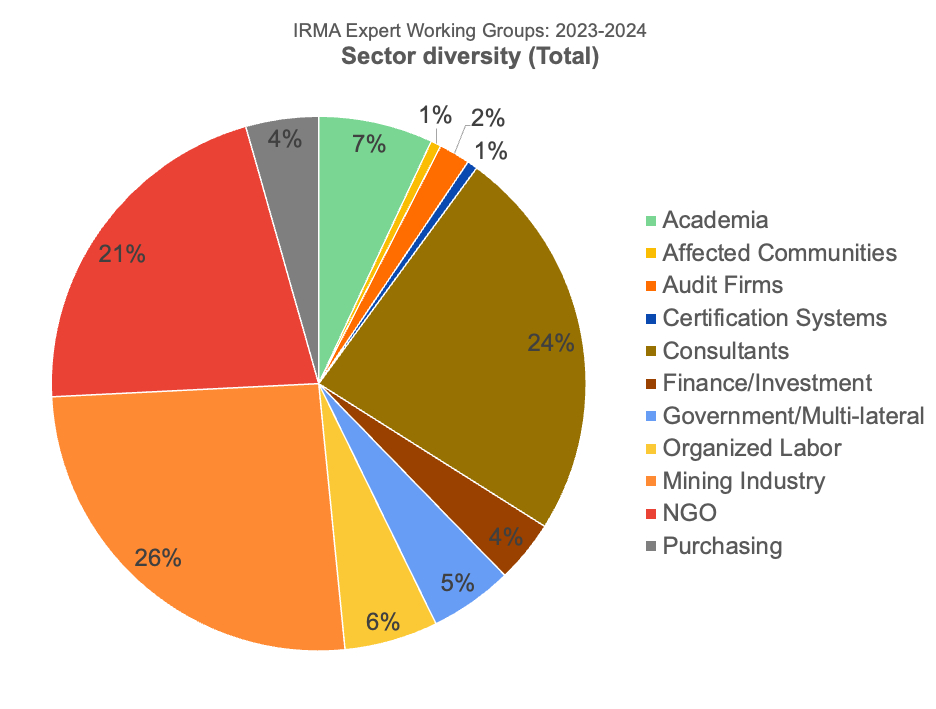
Total number of Working Groups: 11
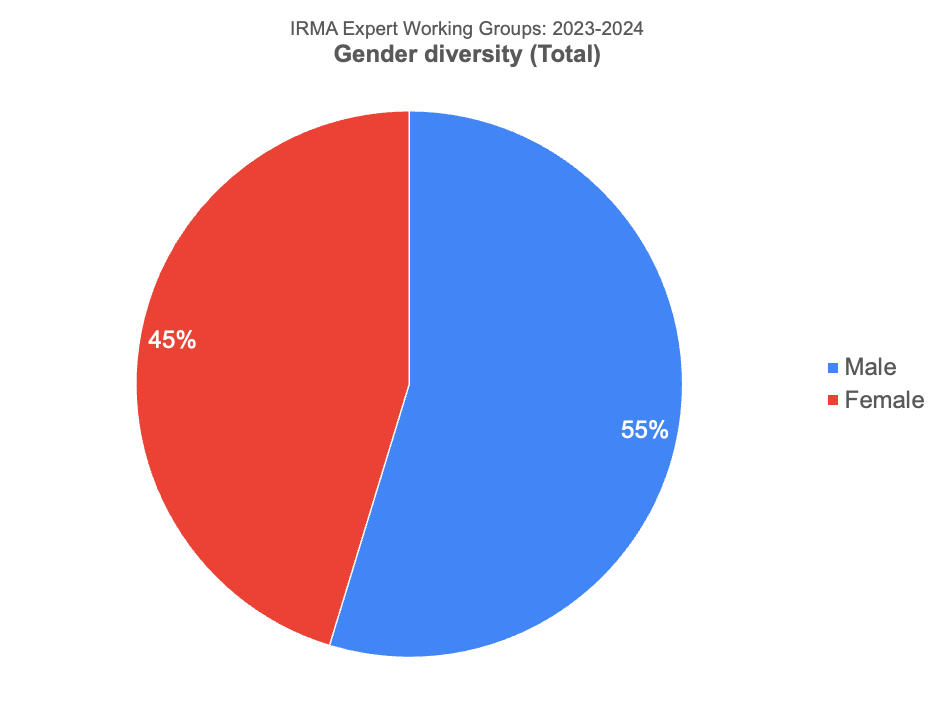
Total number of Experts: 159 (87 male, 72 female)
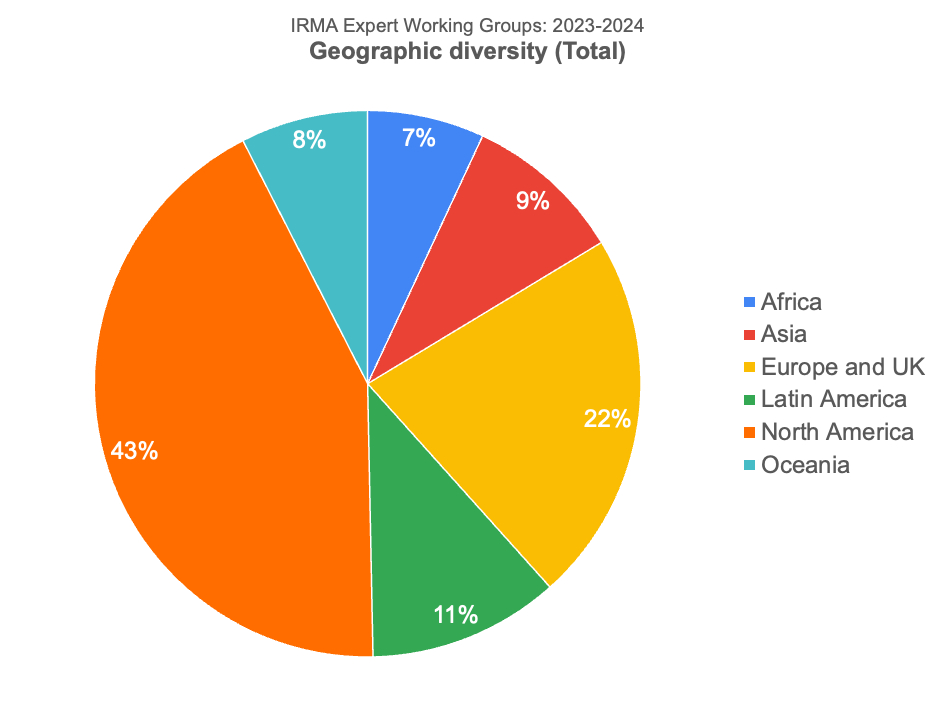
Countries represented: 26

Expert Working Group 2023-2024 Gender Pie Chart

IRMA Expert Working Groups 2023-2024 Geographic Diversity

READ MORE
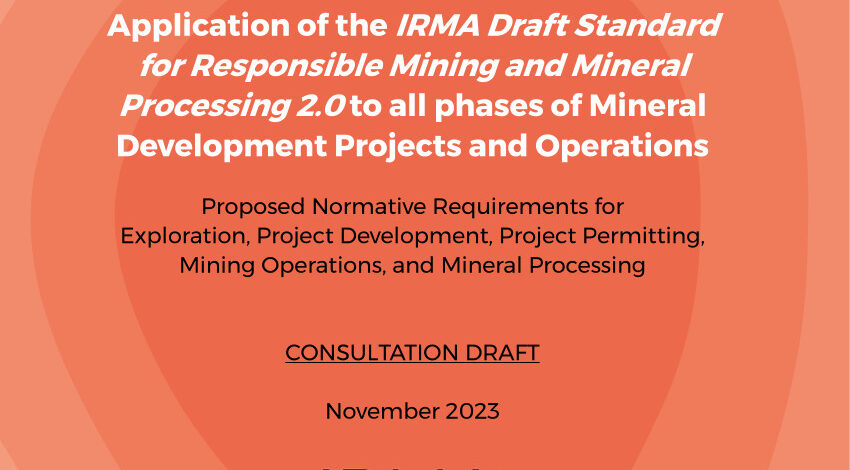
Cover of IRMA Draft Standard 2.0 Proposed Normative Requirements for Exploration, Development and Mineral ProcessingCover of IRMA Draft Standard 2.0 Proposed Normative Requirements for Exploration, Development and Mineral ProcessingStandard 2.0

Std 2.0 and Exploration, Development & Processing

The IRMA Draft Standard for Responsible Mining and Mineral Processing 2.0 incorporates the draft IRMA Standard for Responsible Mineral Development and Exploration (the ‘IRMA-Ready’ Standard – Draft v1.0 December 2021), the draft IRMA Standard for Responsible Minerals Processing (Draft v1.0 June 2021), and the IRMA Standard for Responsible Mining 1.0 (2018) into one integrated standard that covers all phases and types of mineral development activities.

The 2023 proposed revisions for version 2.0 are meant to apply at any phase of the mineral development life cycle (e.g., exploration, project development, permitting, construction, mining and processing operations, reclamation and closure, post-closure).

To highlight and clarify those additions, we have released a summary of the draft Normative Requirements for those phases — where IRMA requirements are modified to govern stages of exploration, development or mineral processing.  The IRMA Draft Standard 2.0 Normative Requirements for each chapter are provided and discussed in Appendix A.

In the context of this guidance document, a normative requirement modifies a given IRMA requirement from the IRMA DRAFT Standard 2.0 for a specific phase, by either replacing or  supplementing the original text of this requirement. We use the terminology “normative requirements” here since they modify the elements that would actually be required and that auditors would measure against, not just guidance that helps to enrich or guide understanding of those requirements.

These Normative Requirements are part of the Draft Standard 2.0, so just as with the rest of the draft Standard, they are proposed and open for public comment until January 26, 2024.

READ MORE
Blog

IRMA’s Work to Advance Circular Economy Approaches

IRMA is working across sectors and initiatives to clarify and advance circular economy approaches to responsible production and use of minerals. Circular economy approaches utilize integrated strategies to address a range of climate, environmental, and social issues associated with primary and secondary materials, reducing waste while capturing greater value from materials and processes throughout the life cycle of the mineral.

Circular economy approaches involve a systems approach throughout the materials life cycle, including:

  • designing products and services for material recovery and reuse;
  • establishing better technology, infrastructure, and policies for the extraction of metals and minerals including from consumer products and existing mine waste; and
  • adopting regenerative approaches to ecosystem impacts.

Demands for minerals associated with the energy transition will require expansion of both primary and secondary production of mined materials for decades to come. At the same time, expectations are increasing throughout supply chains regarding low carbon production methods, broader responsible sourcing requirements, and integration of circular economy strategies ranging from production and sourcing of durable goods, enhancing material reuse and recycling, integrating responsibly sourced recycled and scrap material at the mineral processing level, and beyond.

IRMA formed an Expert Working Group on Mining and Circularity in 2022 to inform integration of circular economy approaches into the IRMA Standard for Responsible Mining and IRMA system. We will continue to work to clarify, incorporate, and encourage best practice circular economy approaches throughout all stages of extraction, processing, reuse, and recycling of minerals.

Over the past year, IRMA served as a member of the Expert Working Group on the OECD Handbook on Environmental Due Diligence in Mineral Supply Chains, published in September 2023 and including coverage of circularity and enhanced use of secondary sources.

This year IRMA became a member of the Roundtable on the Responsible Recycling of Metals (RRRM) Non-Ferrous Working Group, collaborating in RRRM efforts to advance understanding of appropriate standards, systems, and tools for the responsible production and sourcing of recycled metals.

IRMA will participate in the United Nations Framework Convention on Climate Change 28th Conference of the Parties (COP 28) this year in Dubai, engaging in roundtables and events focused on improving environmental and social responsibility in mineral supply chains for the energy transition and opportunities to advance circularity.

If you have recommendations for ways IRMA can advance circular economy approaches or wish to share case studies of successful strategies, please contact us at info@responsiblemining.net.

READ MORE
Mining Standard

Gender equality, gender protections and IRMA

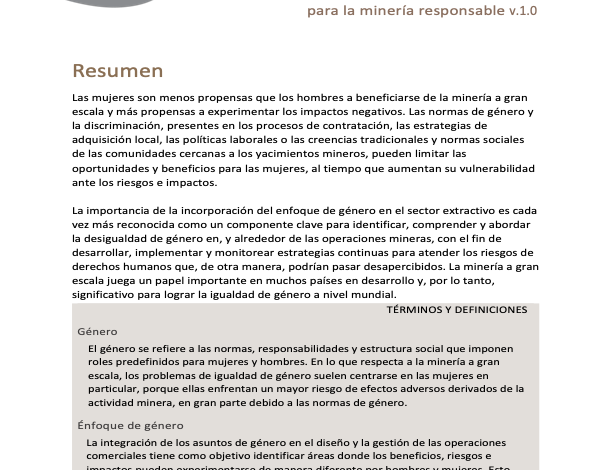
The IRMA Standard for Responsible Mining contains requirements integrating gender equality and gender protections in Chapters 1, 2 and 3. Today we posted a Spanish language fact sheet explaining them.

READ MORE

Updated financial assurance guidance

In response to practical difficulties obtaining financial surety for mine closure and post closure as defined by the IRMA Standard, IRMA has modified 2.6.4.1 which is a critical requirement in the IRMA standard and must be substantially or fully met in order to achieve IRMA 50 or higher.

With this modification, the requirement for “financial surety instruments” — which by definition exclude corporate guarantees and self-bonding — is replaced with “financial assurance mechanisms.” This allows a broader range of acceptable means to guarantee the costs associated with third-part mine closure and post-closure.

The IRMA Secretariat made this change with the concurrence of the IRMA Board and external expert feedback. This is a temporary adaptation that will be reconsidered in the planned revision of the IRMA Standard expected in late 2023.

The background and challenges for this temporary modification and our plan going forward are presented in this guidance document, along with specific details on how this modification is to be interpreted by mine sites, independent auditors, and other interested stakeholders.

READ MORE
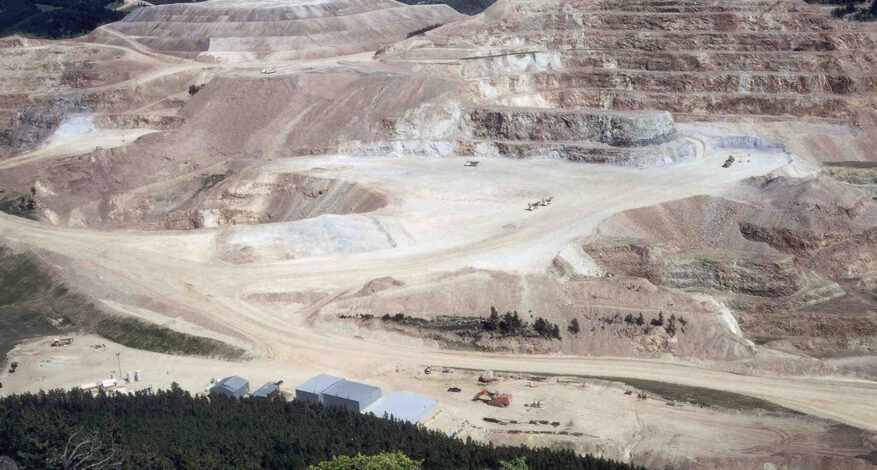
Zortman-Landusky mine complexZortman-Landusky mine complexGovernment

The IRMA Standard – A Tool For U.S. Mining Law Reform

IRMA a Tool for U.S. Mining Law Reform_Examples of Gaps in U.S. Framework - coverOn Tuesday August 30, the IRMA Secretariat submitted a letter to the Biden Administration’s Interagency Working Group (IWG) on mining reform.

The letter provides examples of areas where there are gaps between the good practices in the IRMA Mining Standard and the U.S. legal framework governing the mining sector. Although not comprehensive, the examples identify areas where gaps can be addressed to ensure conformity with good international practice.

These examples are based on a preliminary review of the U.S. legal framework. A requirement-by-requirement comparison between the IRMA Standard and the U.S. legal framework would be necessary to identify all the gaps, and could guide the work of the IWG and support recommendations for improvements to the U.S. legal framework. We recommend that such a study be funded and completed to inform IWG efforts.

READ MORE
  • 1
  • 2