Chain of Custody Standard

Chain of Custody Standard

From Mine to Market and Source to Store: Why IRMA’s Chain of Custody Standard Matters

Minerals power the modern world, from the batteries that drive electric vehicles to the metals in wind turbines, phones, and medical equipment. But as demand increases, so does the pressure to ensure these materials are sourced responsibly.

IRMA’s independent, community- and worker-centered mine-site audits address one part of this challenge: verifying responsible practices at the mine itself. Yet for many companies and consumers, a key question remains:

How do we know the minerals in a finished product actually came from an IRMA-assessed mine?

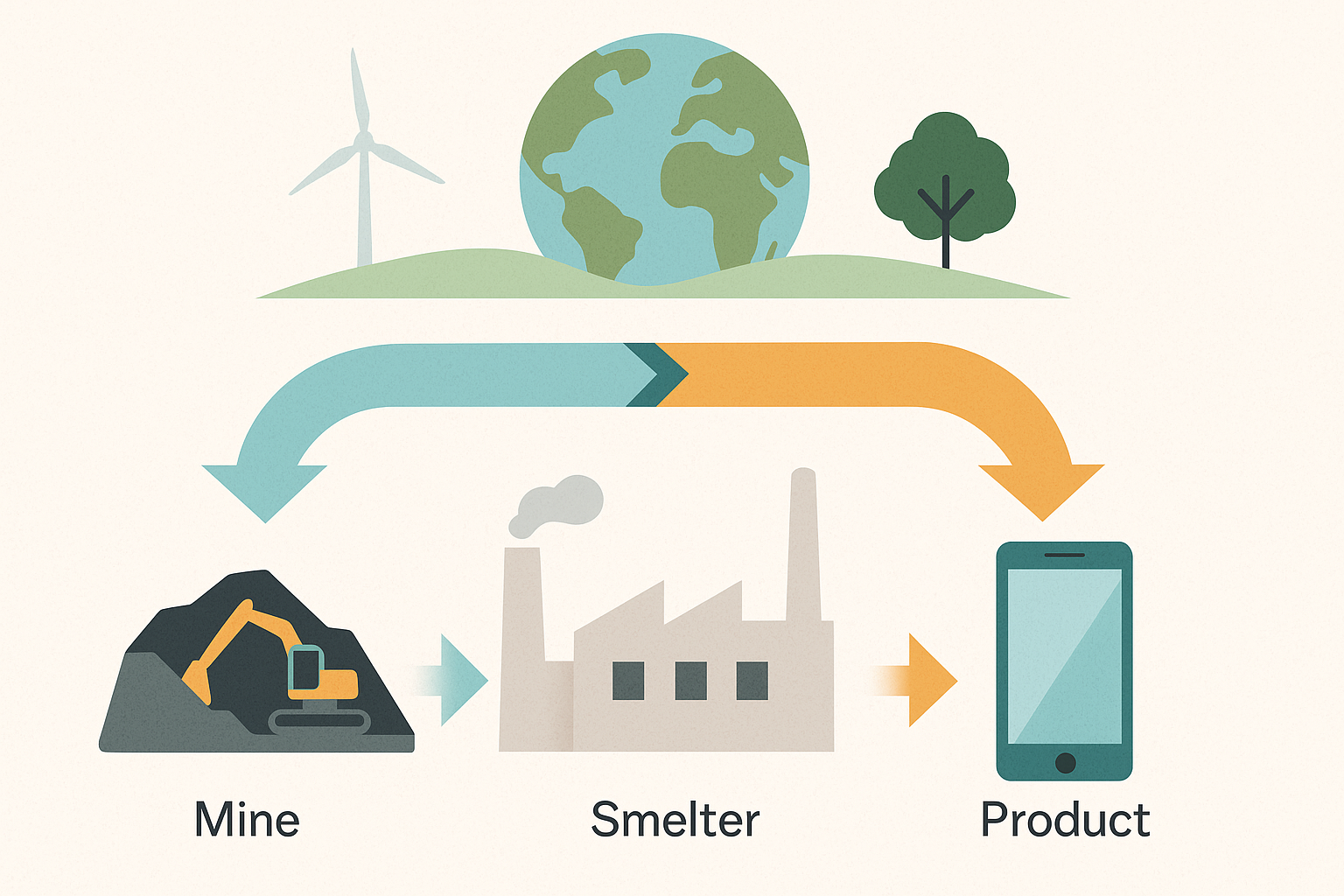
The answer lies in a chain of custody. IRMA’s Chain of Custody (CoC) Standard, launched in 2024, is designed to carry trust beyond the mine and into the complex networks of processors, refiners, manufacturers, and brands.

Why Chain of Custody Is Essential

Once minerals leave the mine, they often enter global systems where materials are blended, transformed, or routed through multiple facilities. A CoC standard closes this gap by enabling companies to make verifiable sourcing claims linked directly to IRMA-audited mines. As transparency becomes a regulatory expectation and a growing consumer demand, this link is more important than ever.

New EU rules, including the Critical Raw Materials Act and the 2025 mineral-supply-chain transparency platform, signal that traceability is rapidly shifting from a voluntary gesture to a regulatory requirement. Companies importing or using critical minerals will increasingly need credible systems to demonstrate where materials come from and how they manage associated risks.

Recent New York Times reporting also highlights the human cost of opaque supply chains, documenting how recycled battery lead has poisoned communities. It is a stark reminder that reliable chain-of-custody systems like IRMA’s are no longer optional but essential.

A Step Toward More Transparent Minerals

The IRMA CoC Standard outlines five models, a flexible structure that meets companies where they are while maintaining transparency and credibility:

Identity Preserved: Minerals stay physically separate and traceable from mine to final product.

Segregated: IRMA-assured materials from different mines can be mixed, but never combined with non-assured material.

Controlled Blending: Allows mixing with non-assured material while maintaining clear controls and limits.

Mass Balance: Tracks inputs and outputs over time, offering flexibility where physical separation is not possible.

Book & Claim: A credit-based model enabling support for responsible mining even when physical traceability is highly complex.

Together, these models give companies flexibility in how they track materials, and the pilots now underway are helping IRMA understand which approaches work best across different supply-chain contexts.

Next Steps for IRMA

IRMA has developed and published the Chain of Custody Standard, including guidance on assurance and on how the IRMA seal enables credible, transparent claims about responsibly sourced materials. Building on this foundation, IRMA has launched pilots across different mineral sectors and industries to test how the CoC models work in practice and what companies need for effective implementation. As these pilots progress, IRMA is now working to formalize the resulting data into a materials registry that will allow participating companies to make verified chain-of-custody claims with confidence.

Piloting the CoC Standard with mining companies, processors, and downstream buyers to test feasibility across different supply-chain contexts.

Integrating feedback from pilot participants, auditors, and technical experts to strengthen clarity and usability.

Creating tools and templates that support consistent data collection and transparent sourcing claims.

The chain of custody alone cannot solve every supply-chain challenge. But it plays a crucial role in linking responsible mining practices with the products people rely on every day. It supports stronger procurement decisions, clearer consumer communication, and more consistent accountability across the value chain. These efforts mark real progress toward knowing where your phone battery comes from—from mine to market, and source to store.

If your company would like to join the brands already piloting the IRMA CoC Standard and explore how it could work in your supply chain, I’d welcome a conversation! Feel free to reach out.


coc@responsiblemining.net
READ MORE
Credit: Suki Lee via Pexels.com (free use license)Credit: Suki Lee via Pexels.com (free use license)Chain of Custody Standard

Without a Trace: What’s Missing in Discussions about Supply Chain Traceability

Blockchain is the solution to supply chain traceability, right?

Well, perhaps it might help, one day. But while technology – including blockchain – promises to help amass and process the enormous volume of complex supply chain data, there remains a key, unresolved barrier to progress: people.

Likely every piece of data already exists today for brands to be able to figure out the provenance of the materials in their products. Existence of data is not the problem. Rather, it is its availability and accessibility. Whether intentionally or not, it is people within supply chains that are effectively acting as gatekeepers to critical supply chain information. Creating value for people to share data – even conditionally – is the key to ultimately unlocking the supply chain visibility that downstream brands are increasingly expecting.

An electronics brand recently managed to trace a critical mineral in its device through every step of the supply chain all the way to the specific mine from which the raw material was dug out of the ground. Yet you will not hear that brand make any claim as to this achievement. Why? Because the mine was unwilling to provide the necessary documentation to verify the data. Without that critical validation, the end-to-end tracing of that material – an astonishing feat given the complexity of today’s supply chains – was left unconfirmed.

There are a variety of reasons why suppliers might refuse to share data with customers, particularly those with whom they have an indirect relationship, multiple supply chain tiers apart. For some, perhaps it is yet another customer request for which they are consuming bandwidth and resources to fulfill with no clear benefit or reward. For others, perhaps it is a concern that giving customers information about their own business relationships might provide customers all they need to know to cut that supplier out and go straight to their sub-tier suppliers. For others still, perhaps there is a fear that the information could somehow be triangulated to determine the supplier’s ‘special sauce’ of material composition or manufacturing process. In other words, a trust problem. Whatever the reason, the result is the same: efforts toward supply chain visibility are starved of the data they need.

But does it matter? Brands are increasingly under legal, regulatory, market, investor, and activist pressure to be able to demonstrate the integrity of their supply chains, to prove that they are sourcing their materials and components responsibly and ethically. But even more than that, supply chain traceability is also what makes responsible mining real.

The experience of the Initiative for Responsible Mining Assurance (IRMA) demonstrates that the overwhelming primary motivator for mines to meet IRMA’s Responsible Mining Standard and to undergo independent third-party audit is customer request. But such requests are most powerful if a customer knows – and can demonstrate – who their suppliers are, by tracing the provenance of the materials in their products to the source. After all, it is important for us not to lose sight as to what traceability ultimately delivers to society. Traceability builds connection between everyday products like cars and phones to the source of their raw materials, providing the opportunity to positively influence the supply chain to reduce harm to real people and their lands from where those raw materials are sourced.

It is an irony therefore that upstream suppliers, including some mining companies, may claim that they do not hear customer demand for responsibly mined materials since, at the same time, upstream suppliers may be denying access to the very information that would allow customers to connect the dots and make those demands known. It is difficult for a customer to make demands to a supplier if they do not know who their supplier is, after all.

So how to fix this? Certainly, technology can help. There are service providers in the market who analyze vast quantities of customs and shipping records, for example, to seek to triangulate data and identify links in the supply chain. But easily the most direct route is to just get it from the source: incentivize upstream suppliers to provide the data necessary for supply chain traceability.

On the one hand, compulsion – either regulatory, contractual, or market – will drive conformance. It is unlikely, perhaps in the short term, that governments the world over will be scrambling to create a regulatory mandate for higher tier suppliers to provide data to their customers. More likely is that customers will require data sharing in their procurement specifications and contracts and in so doing also create a market incentive where data sharing and transparency becomes the price of entry to sell into a market, regardless of customer.

On the other hand, could we assuage the concerns of suppliers who do not trust how their data will be used? Is there context for conditional data sharing, where a limited amount of ‘just enough’ data is shared such that confidentiality is maintained? Or the opportunity to provide for data to be shared with independent third parties (such as auditors)? Or scrubbing and anonymizing data to protect elements of it that may be proprietary in nature while still providing customers with the information they need to meet their requirements? IRMA and some of its members will be exploring these possibilities in the year ahead as we trial the implementation of our own Chain of Custody Standard with a series of pilot initiatives. It may be that complete transparency may not be necessary and perhaps the quest for 100% openness may be impeding greater progress, and that there may be some forms of limited disclosure still worthy of public confidence.

Though the vast amounts of supply chain data and the flashy solutions on offer, (like blockchain) may lead us to believe that the answer is technological, in reality the impediment to meaningful supply chain traceability and transparency is very human. It will only be through meeting suppliers where they’re at – through requirements, incentives, workarounds, and trust building – that we can ever hope to solve the problem and enable those tech solutions to be able to crunch all that data that will hopefully one day magically become available. And in so doing make responsible supply chains more of a reality.

READ MORE
Chain of Custody Standard

Responding to Market Demand, IRMA Releases Chain of Custody Standard

In September, IRMA’s equally-governed, multi-stakeholder board approved IRMA’s new Chain of Custody Standard (CoC Standard). The CoC Standard sets requirements for tracking material produced from mining operations audited against the IRMA Standard for Responsible Mining, enabling consumer-facing brands and other actors along the supply chain to make credible claims that they are using materials from  IRMA-assessed mines.

Chain of Custody Standard v1.0 coverIRMA developed the CoC Standard and system in response to demands from consumer-facing brands and other companies for independently verified socially and environmentally responsible mined materials. Using specific requirements for tracking material from verified IRMA-audited mines and mineral processors, companies can better understand impacts in their supply chains, choose to buy from operators increasing transparency, and support their suppliers to improve practices.

The CoC Standard is also designed to be compatible with other standards programs that ensure responsible sourcing of mined materials downstream of the mine (e.g., ResponsibleSteel). In addition, IRMA developed the CoC Standard to work in concert with existing and emerging traceability services and technologies (e.g., block chain, mineral ID scanning, testing, etc.).

Based on the ISO 22095:2020 guidance, the CoC Standard allows for five different chain of custody models for chain of custody systems. Four models require and assure the actual physical presence of material with an IRMA Achievement Level: Identity Preserved, Segregated, Controlled Blending, and Mass Balance. One model is not connected to the physical flow of material, but an administrative record to ensure the quantity and achievement levels booked for materials from IRMA-assessed mines are not exceeded by the claims for those materials: Book and Claim Credits. Each model has specific requirements that allow different claims to be made about materials or products that are delivered using that chain of custody model.

“The release of the IRMA Chain of Custody Standard is an important milestone for Fairphone and the rest of the industry. This Standard enables us to provide independent proof that our responsible sourcing practices are in line with our material use responsibility: the Book and Claim Credits model provides a legitimate and workable solution for complex supply chains assuring we cover our material use with responsible production, whilst the Mass Balance model also assures the flow of these materials throughout the supply chain. At Fairphone, we look forward to piloting this standard to improve transparency and invite our industry peers to join.” – Lisa Minère, Project Manager Fair Mining at Fairphone.

“The lack of visibility into the origin of key metals in our renewable energy projects is a big hurdle to mapping and mitigating social and environmental risks in our metal supply chains. While increasing transparency has its challenges, it is possible and needed to advance our work to ensure responsible mined materials for the renewable energy transition. We support IRMA developing their new Chain of Custody Standard to work towards this goal.”– Joel Frijhoff, Sustainability Due Diligence Manager at Ørsted.

For More Information

READ MORE
Credit: Nick Youngson CC BY-SA 3.0 Pix4freeCredit: Nick Youngson CC BY-SA 3.0 Pix4freeStandard 2.0

The IRMA Standards revision — an update

IRMA would like to warmly thank all the people who have participated in the public-comment period that ended on 26 January to inform the revision of our Standards.

Through our live consultation webinars, our online platform, and direct engagement, we have collected about 2,000 individual lines of comments, submitted by more than 80 organizations spread across all continents (Asia, Africa, North America, South America, Europe, and Australia).

Building upon 5 years of implementation, learning, and continuous stakeholder engagement on the Standard, the IRMA Secretariat is now consolidating and processing all these comments and recommendations. Additional Expert Working Groups are being convened where necessary.

Subject to the approval of IRMA’s equally-governed multi-stakeholder Board, we hope to launch the IRMA Standard for Responsible Mining and Mineral Processing V2.0  before the end of the year, together with a public report on the comment period and the rationale for the final changes made and approved. We hope to also launch the IRMA Chain of Custody Standard this year, also subject to Board’s approval.

READ MORE
earth at nightearth at nightStandard 2.0

Public Consultation Begins for Draft Standards

Click here to register for webinarsToday we began public consultation for the Draft Standard for Responsible Mining and Mineral Processing, and the Draft Chain of Custody Standard. Public consultation runs through 26 January 2024. For more information on how to comment, please click through to each standard.

The Draft Standard for Responsible Mining and Mineral Processing is an update of the 2018 IRMA Standard for Responsible Mining – the strongest voluntary mining standard in the world, and the only one equally governed by a multistakeholder coalition. The updated draft:

  • Addresses the entire mining process: Mineral Exploration & Development, and Processing in addition to Mining.
  • Adds new chapters on Gender Equality / Gender Protections; Physical Stability; Land and Soil
  • Improves chapters on Financial Transparency and Anti-Corruption; Free, Prior, and Informed Consent (FPIC); and Indigenous Peoples
  • Improves how the standard addresses specific topics including greenhouse gas emissions and energy; recycling materials and circularity; operational health & safety; responsible sourcing; human rights; cultural heritage

The new Chain of Custody Standard Draft is designed to provide baseline requirements for tracing material coming from any IRMA-audited mine through the downstream processing of minerals into products, all the way to the end consumer.

Transparently reviewing and updating IRMA Standards ensures they are accountable to all sectors, stakeholders and Indigenous rights holders, and allows for the incorporation of changes in best practice to provide a global responsible mining benchmark. We review every 5 years using the ISEAL Standard Setting Code of Good Practice as a reference.

To provide comment, IRMA is reaching out to a wide and diverse set of stakeholders and Indigenous rights holders, including affected local communities, workers and their unions, nonprofit organizations, mining and minerals processing companies, purchasing and investment companies, governments and international organizations, scientists and researchers. Anyone can provide input. Comments will be confidential on request. All comments will be considered carefully – a summary of comments and IRMA’s responses will be provided after the consultation period ends.

READ MORE