Sectors

Credit: Mohamed Hassan via Creative Commons - CC0 LicenseCredit: Mohamed Hassan via Creative Commons - CC0 LicenseFinance

How IRMA Benefits the Finance Sector

The Case of IRMA Finance thumbnailA new resource for the finance sector is now available on the IRMA website.

The mining industry and companies using mined materials—and their financiers and investors—share a need to optimize the benefits delivered to communities and workers to de-risk mine operations and build resilience across the mineral supply chain. The world is now expecting even more from the mining sector, especially given the role it will play in the global energy transition. Finance will benefit from more responsible mining and, at this critical juncture, has a critical role to play in incentivizing it.

How IRMA Benefits Finance describes how IRMA advances mining performance and de-risks the supply chain, focuses on continuous improvement, assesses material impacts and systemic risks, and simplifies the mining standards landscape.

READ MORE
Sectors

IRMA Board Meeting Cross-Stakeholder Dialogue

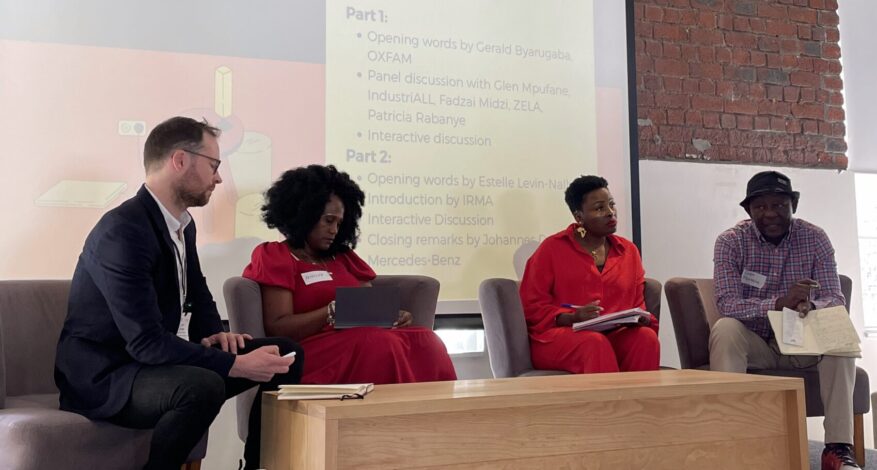
As part of IRMA’s annual in-person board meeting hosted by Mercedes-Benz in early March, IRMA convened a dialogue between 80+ attendees to better understand how they can work together and also use the IRMA system to achieve their diverse goals.

For a full afternoon, attendees exchanged learnings and ideas about how to grapple with ever-present questions about transparency, traceability, and the cost of responsible mining, all with the aim of hearing from each other and taking back fresh ideas on how to inform their own work.

The dialogue occurred in two parts. To begin, IRMA Board members representing our six governing houses – Meshack Mbangula from Mining Affected Communities United in Action in South Africa, Glen Mpufane from IndustriALL Global Union, Jim Wormington from Human Rights Watch, Johannes Danz from Mercedes, Katie Fergusson from Anglo American, and Ashley Claxton from Royal London Asset Management – each how they have used an IRMA audit to advance their organizations’ goals. IRMA Stuttgart Stakeholder Cross-Dialogue Panel

After that all attendees divided into nine groups to discuss one of three issues:

  1. Is there such a thing as too much transparency? Although transparency benefits all stakeholders, it can also bring heightened scrutiny and criticism for mines, consumer-facing brands, and investors. What do diverse stakeholders most need when it comes to valuing transparency?
  2. What do diverse stakeholders most need when it comes to market signals and traceability given the indirect contact between the many upstream and downstream players in the mineral supply chain?
  3. What’s really at play when it comes to the cost of an IRMA audit? Stakeholders find audit cost concerns are more related to the cost of improvements that result from an IRMA audit’s transparency, rather than the audit itself. How can stakeholders signal the value of an audit?

Some of the discussion results:

  • For mines, IRMA audits and the audit process provide a clear roadmap and driver toward operational excellence. The audit is as much for a mine’s own operational and strategic benefit as it is for anybody else’s.
  • For impacted communities, nothing about us without us. The *process* of the IRMA audit provides as much or more value to communities as the audit itself. It provides an opportunity for inclusiveness, fairness, dignity, and importantly, a voice.
  • As demand for mining rapidly increases, so too does the need for capital to finance it. For investors, IRMA audits provide the necessary visibility and assurance to credibly understand an investment’s risk profile and suitability for investment, thus providing a clearer path to enabling that access to capital.

The ability to catalyze candid discussion amongst wary stakeholders is one of the benefits of IRMA’s governance model, the only place in modern industrial mining where civil society has equal power and voice to the private sector.

READ MORE
Stakeholder Engagement and Remedy panel at Mining Indaba 2025Stakeholder Engagement and Remedy panel at Mining Indaba 2025Africa

Indaba 2025: Advancing Stakeholder Engagement and Remedy

On February 6th of 2025, IRMA had the privilege of hosting an interactive workshop on “Advancing Stakeholder Engagement and Remedy in the Mining Sector” as a side session of Investing in African Mining Indaba and Alternative Mining Indaba. The workshop reunited stakeholders in mining and responsible sourcing, as well as representatives of NGOs, workers, and local communities for an engaging discussion on the future of responsible mining.

The keynote
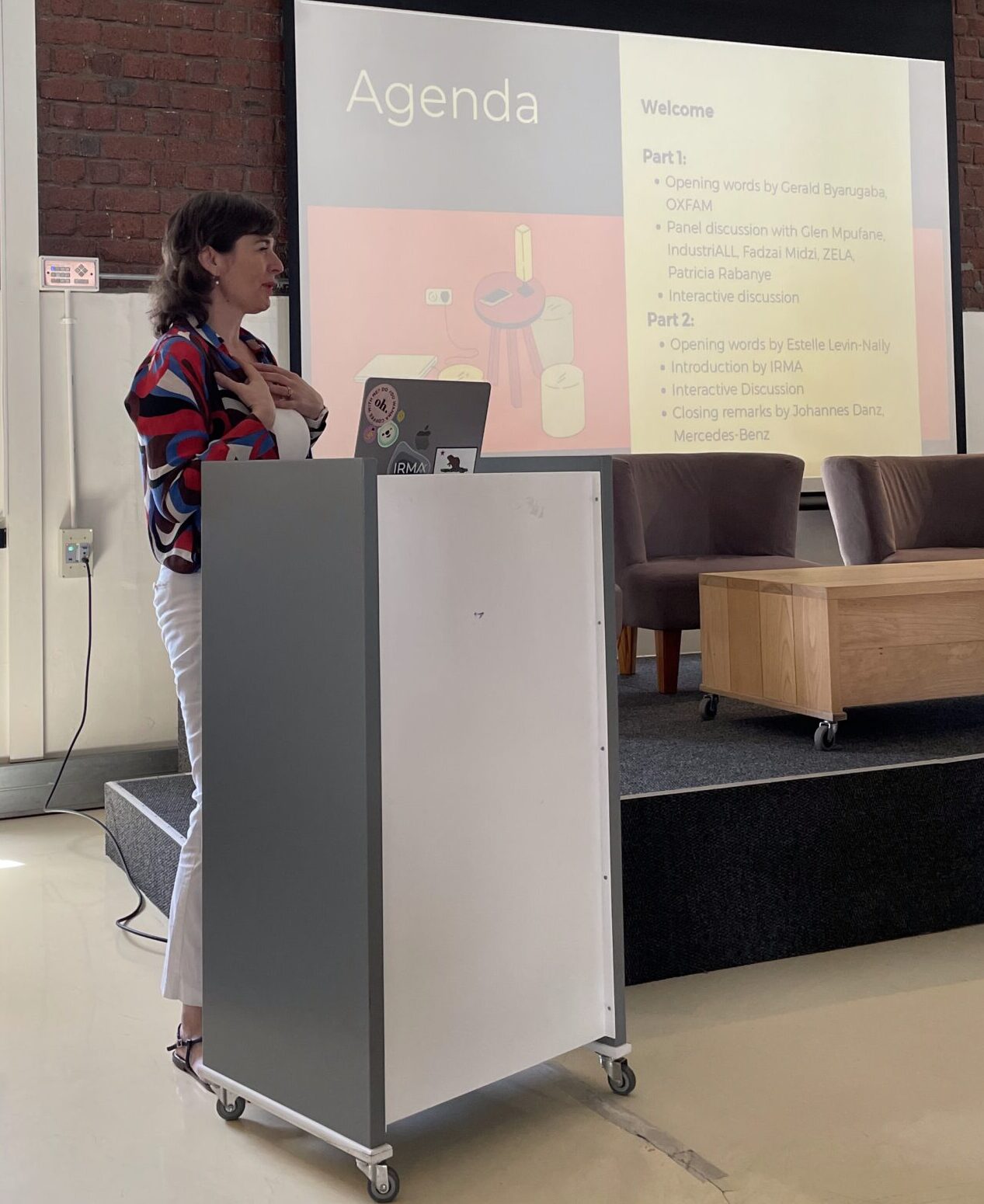
Estelle Levin at IRMA's Mining Indaba eventThe workshop was opened with a keynote by Estelle Levin-Nally, a human rights expert and Founder of Levin Sources, who shared her experience with remedy and its significance. She highlighted that remediation is one of the three core pillars of the United Nations Guiding Principles on Business and Human Rights and as these principles are increasingly being incorporated into national and international law, companies must demonstrate compliance, not only to meet legal requirements but also to align with business partner expectations.

She emphasized that unremediated past harms can leave individuals aggrieved, which undermines trust, discourages participation in company or regulatory initiatives, increases the likelihood of resistance and conflict, and hinders cooperative efforts that could maximize positive impacts for both business and society. Therefore, remedy serves as a pathway to healing for victims and their families, as the consequences of unremediated harms often persist across generations.

Estelle also shared insights into the challenges of implementing effective remedy in the mining sector. These include weak rule of law in many jurisdictions, which limits access to justice; autocratic regimes, which can lead to deregulation; the exclusion of remedy as a sixth step in due diligence under the OECD Minerals Guidance; and the complexity of different remedy pathways, which can create confusion for rightsholders regarding their entitlements and the mechanisms available to them. She concluded by stressing that business partners and civil society can do more to support affected rightsholders in understanding and accessing remedy when harms occur. While companies must be prepared for remediation, they should always prioritize prevention.

The workshop

Cecilia Mattea, IRMA’s Europe Regional Lead, continued the discussion by introducing the draft IRMA Remedy Framework and its purpose to respond to communities and workers who have been harmed by mineral exploration, development, and processing. Because the absence of remediation often leads to conflict and mistrust, the remedy framework could provide meaningful solutions for past and ongoing harms and a pathway for mining companies to regain trust. 

She also outlined and explained IRMA’s accountability mechanisms that support remediation efforts, including IRMA-Standard requirements for operational-level grievance mechanism; IRMA Membership Principles and Policy of Association and its policy of disassociation; the IRMA Feedback and Complaints Mechanism; and, finally, the IRMA Remedy Framework, which is currently under development.

Participants were then invited to reflect on and engage with key questions regarding the Remedy Framework. For example:

  • What should the IRMA Remedy Framework include? What would you like to see?
  • How far past should remediation go? How to ensure that communities are aware of their rights, and whose role is that?
  • Should the IRMA remedy framework be limited to assessed sites? 

Cecilia shared some of the suggestions IRMA received from previous engagements with stakeholders, NGOs, and remediation experts. These recommendations include ensuring that the framework is inclusive in its design, reflects the complexities on the ground, aligns with regulatory requirements such as the EU’s Corporate Sustainability Due Diligence Directive, and does not impose an additional burden on Indigenous Peoples but rather complements existing tools.

As participants engaged in the discussion, interesting points were raised regarding how governments can engage in this process and how to ensure it doesn’t restrict access to remedy through the judicial system but rather establishes a positive link to it; which other institutions could play a role in the remediation process; how traditional leaderships structures could contribute to the process; and whether it would be better for IRMA to support access to remedy rather than create a new framework.

At the end of the session, Johannes Danz, sustainability expert at Mercedes Benz, shared the business perspective on supporting the project and standards, highlighting their benefits in fostering interaction across the supply chain, resolving conflicts, building trust, strengthening relationships, and improving access to remedy.

The workshop provided an invaluable learning experience across sectors through dialogue and engagement, fostering a deeper understanding of the role of the IRMA Remedy Framework and stakeholders’ expectations.

IRMA thanks all the participants for their contributions in the workshop.
READ MORE
Sulfidic tremolitite (platinum-palladium ore) Credit: James St. John via Wikimedia Commons under CC-by-2.0Sulfidic tremolitite (platinum-palladium ore) Credit: James St. John via Wikimedia Commons under CC-by-2.0Mining

How IRMA Benefits the Mining Sector

A new resource for the mining sector is now available on the IRMA website.

IRMA acknowledges the challenges mining companies face, such as the fact that governments have not always required certain standards, the market didn’t previously value them, and that companies often operate in complex regions. By using IRMA, mining companies can tell a transparent and truthful story about the materials we rely on every day, highlighting ongoing efforts and progress.

How IRMA Benefits Mining Operators describes how IRMA offers a robust solution by providing a comprehensive, independently verified standard and assessment system that allows mining companies to receive credit for the positive work they are already doing, while also identifying areas for improvement.

READ MORE
Credit: rawpixel.com Free CC0 imageCredit: rawpixel.com Free CC0 imageBlog

How IRMA Benefits Downstream Purchasers

A new resource for the downstream purchasing sector is now available on the IRMA website.

Downstream purchasers, as customers of mined materials, have a significant interest in how those materials are extracted and processed. Current and emerging regulations, as well as the expectations of consumers, investors, and affected stakeholders – as well as companies’ own business needs to address risk and build resilience – are driving companies to increase visibility over their supply chain and expect more responsible performance at every stage. By using IRMA, downstream purchasers can leverage a transparent and truthful story about the materials we rely on every day.

How IRMA Benefits Downstream Purchasers describes how IRMA provides a credible system for demonstrating that materials have been extracted to a widely accepted standard that meets a broad range of ESG metrics and safeguards, providing unprecedented visibility into individual mine performance. Included are IRMA’s benefits to purchasers and our value proposition.

READ MORE
Stewart Investors logoStewart Investors logoPress Release

Stewart Investors is 1st investment manager to join IRMA

EDINBURGH, United Kingdom and SEATTLE, United States — Stewart Investors, an active long-only equity specialist and a global leader in sustainable investing, has become the first investment management firm to become a member of the Initiative for Responsible Mining Assurance (IRMA), an organization addressing the global demand for more socially and environmentally responsible mining.

With a global presence, IRMA’s members include both civil society and corporate entities from across the globe, representing the mining industry, consumer-facing brands, labor unions, NGOs, and mining-impacted communities, including Indigenous rights holders. Board members include: Anglo American, Mercedes-Benz, Human Rights Watch, IndustriALL Global Union, Batani Foundation, and Mining Affected Communities United in Action (MACUA).

As the first investment firm to become a member of IRMA, Stewart Investors joins a network of nearly 100 members committed to a common vision: a world where the mining industry respects the human rights and aspirations of affected communities, provides safe, healthy and supportive workplaces, minimizes harm to the environment, and leaves positive legacies.

“Stewart Investors is strongly aligned with IRMA’s mission and looks forward to continuing to learn from its expertise as the first investment manager to become a member. Responsible mineral sourcing is a strategic imperative for companies and investors across sectors, and we see membership and collaboration with IRMA as an exciting opportunity to bring stakeholders together and leverage collective action to drive progress,” said Chris McGoldrick, Senior Investment Analyst, Stewart Investors

Stewart Investors became involved with responsible mineral sourcing in 2020 when discussions with companies, particularly in the electronics sector, led the investment team to commission research on conflict minerals in the semiconductor supply chain. Since then, Stewart Investors has engaged with over 30 companies on the issue and led an ongoing collaborative engagement initiative with over 160 investor supporters representing US$6.59 trillion of assets under management to encourage best practices in mineral due diligence and disclosure.

“We welcome Stewart Investors as the first investment manager in IRMA’s membership. Its team has already taken an active leadership role in the industry, leveraging a broad investor network to advocate for more responsible mining. This membership signals that investors are adding their voice to the chorus of consumer-facing brands encouraging mining companies to assess through IRMA. We commend the firm’s engagement and commitment to work with the other stakeholders to drive positive change in an industry upon which we all rely,” said Rebecca Burton, Deputy Director, Initiative for Responsible Mining Assurance

IRMA is a system in three parts. It is a voluntary, global mining standard describing best practices to protect people and the environment, an assurance process to independently and transparently measure mines against that standard, and an organization that works to build value for all stakeholders involved in and impacted by mining. IRMA is unique in that its governance provides civil society and workers equal power to the mining industry and other corporate actors. This unique model contributes to its credibility, which in turn provides a range of benefits for mines assessed in the system.

Investment managers have a unique role in IRMA’s membership, as they can directly encourage mining companies to be assessed and also recommend consumer-facing brands in their portfolios to encourage their suppliers to engage.

About Stewart Investors
Founded in 1988, Stewart Investors is an active, long-only equity manager focused on sustainable investing. Based in Edinburgh, the firm also has offices in London, Frankfurt, Singapore, New York, Hong Kong, and Sydney. For more information, visit: www.stewartinvestors.com

About IRMA
IRMA is a nonprofit organization working to protect people and the environment directly affected by mining by creating financial value for industrial-scale mining operations independently assessed against IRMA’s best practice Standard for Responsible Mining. For more information, visit: responsiblemining.net

Media Inquiries

For Stewart Investors

For IRMA

READ MORE
At the Unki audit. Credit: Michelle SmithAt the Unki audit. Credit: Michelle SmithBlog

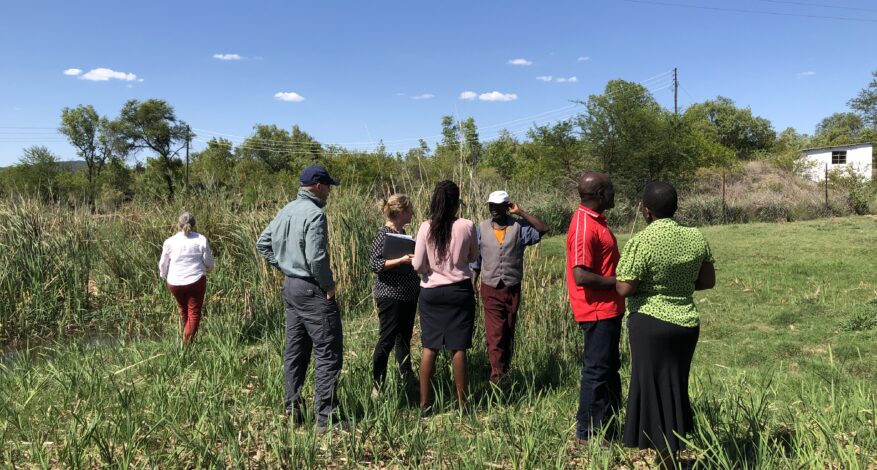
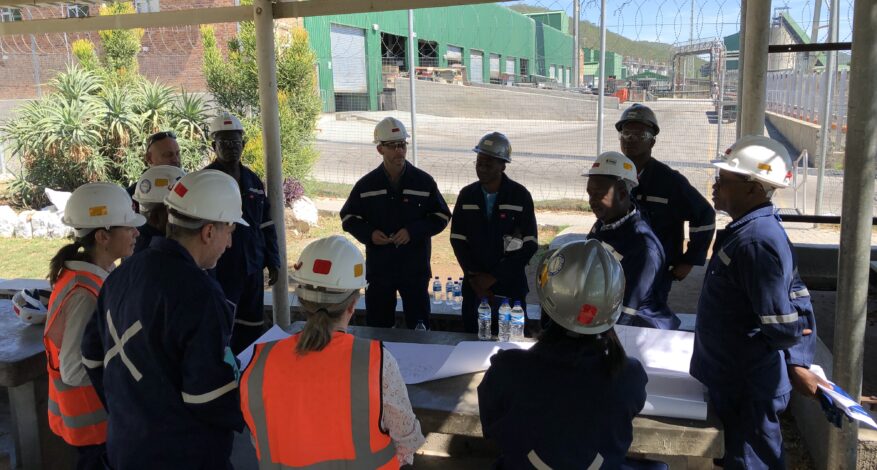
Community perspectives on IRMA: The Unki Mine audit

In late June the Zimbabwe Environmental Law Association (ZELA, an IRMA member) published Community success stories: Tracking service delivery and environmental issuesa blog explaining the Shurugwi Development Trust’s experiences with the independent audit of Anglo American’s Unki platinum group metals mine in Zimbabwe. We excerpt it below:

Through meetings facilitated by the Zimbabwe Environmental Law Association (ZELA), Unki mine embarked on a third party-audit process against the IRMA standard in 2019 that involved the Shurugwi community, [achieved] IRMA 75 in the audit report. In 2022, a surveillance audit for Unki Mine was done, communities shared their concerns with the audit firm SCS Global. This was after the mine publicly audited against the Initiative for Responsible Mining Assurance (IRMA) [voluntary] standard for Responsible Mining in 2019.

ZELA, which is the only Zimbabwean member of the IRMA Civil Society Organisations global working group on worker and community engagement rights participated in development of data collection tools for communities such as the Community impact survey, IRMA Audits and Communities, sample letter to mining company, tools that can be used to monitor service delivery, engage with mining companies and government. The IRMA processes have enhanced Unki Mine’s relationship with the community, through the community engagement forum which meets quarterly to discuss the company’s mining operations in the community.

Benefits of the Unki IRMA processes and audit to the Shurugwi Community

  • There is now great improvement in the relationship and trust between the company and the community.
  • There is now an active quarterly community engagement forum meeting where 2 people were selected from each of the surrounding villages to represent the community. The relationship is promoting access to information which is enshrined in Section 62 of the Constitution of Zimbabwe.
  • In addition to the Community Engagement Forum, there is an emergency and response Coordinator which includes village chairpersons.
  • The IRMA audit report is a source of information, assists in identifying gaps and strengths to improve our engagements with government through evidence gathering on mining operations and their impact on communities’ wellbeing, rights and the environment.
  • The IRMA audit reports assist us in carrying out our advocacy work and provides us with information to participate in national, regional and international dialogues such as Alternative Mining Indaba.
  • Unki mine funded 4 partners – Technoserve, World vision, Zvandiri and Apostolic Women Empowerment Trust (AWET) – to implement community development projects.
  • The company is capacitating women with knowledge on their health and empowering them to stand for their rights. It also encourages women in the apostolic sect to register and go for hospital deliveries.  In support, AWET also trains behavior change facilitators (BCFs) on safe motherhood.
  • Unki mine promoted hygiene in the community, building Double Blair Ventilated Improved Pit Latrines in ward 19 and part of ward 18 (now ward 4).
READ MORE
RIA Conference Vancouver 2024RIA Conference Vancouver 2024Finance

IRMA at Responsible Investment Association

In May IRMA  presented at the annual conference of the Responsible Investment Association in Vancouver, British Columbia, Canada. Launched more than 30 years ago, the RIA’s vision is to align capital with sustainable and inclusive development as codified in the Paris Agreement and the UN Sustainable Development Goals. Today, the RIA today serves the needs of investment institutions, financial planners and industry service-suppliers collectively managing more than C$44 trillion in assets. The RIA serves as a secretariat for Climate Engagement Canada, a finance-led initiative to drive dialogue between finance and industry to promote a just transition to a net zero economy.

IRMA participated as part of the Critical Minerals and Mining: Balancing Net-Zero Ambitions with Social Responsibilities panel. IRMA board and secretariat members also hosted a side session to introduce IRMA to Vancouver-based colleagues, and to talk about the issues of climate, energy transition, materials needed from mining, Indigenous rights and the role investors serve.

Given Canada’s large support for mining and mine finance, Canadian investors have the potential to play a major role in encouraging mining companies to pursue the IRMA Standard. IRMA’s strategy includes an effort to engage the RIA and its institutional members.

READ MORE
Sishen Mine. Credit: Anglo American KumbaSishen Mine. Credit: Anglo American KumbaAudits

Audits released for first African iron ore mines

Two Anglo American mines are first African iron ore operations audited against the IRMA Standard for Responsible Mining

Kolomela and Sishen achieve IRMA 75

UPDATED 5 April with recording of 4 April webinar

27 March 2024 – Today the Initiative for Responsible Mining (IRMA) released the audits of Kumba Iron Ore’s Kolomela and Sishen iron ore operations against the IRMA Standard for Responsible Mining. Independent audit firm ERM-CVS assessed both operations at IRMA 75 when measuring their performance against the Standard’s best practice social and environmental criteria. Kumba Iron Ore is an Anglo American subsidiary.

The IRMA 75 achievement level means that ERM-CVS verified that the operations at least substantially met all 40 critical requirements of the IRMA Standard, as well as at least 75% of the Standard’s criteria in each of the four principle areas: social responsibility, environmental responsibility, business integrity and planning for positive legacies. The full audit reports are available on the Kolomela and Sishen audit pages on the IRMA website.

“The information stakeholders need to decide what’s going well — and what may require more attention.”

“This report demonstrates that mines can point to transparent, independent evaluations of their environmental and social performance,” said Aimee Boulanger, Executive Director of IRMA. “Through detailed IRMA audit reports, mining companies, communities and companies that purchase mined materials can gain the information they need to decide what’s going well — and what may require more attention — at specific mines.”

As the IRMA Standard is recognized and adopted around the globe, these audits are first steps in a deepening dialogue between mining companies and those affected by their operations. Because the process is still evolving, IRMA cautions that the initial results should be reviewed and interpreted accordingly.

“These mines began audits during the early COVID years. The timeline was delayed by travel challenges, and then the company’s decision to use the optional corrective action period to make improvements. The public has long awaited opportunity to review the information included here, and we applaud Anglo American for volunteering these mines for audit against such comprehensive criteria.” Ms. Boulanger went on to say, “That said, the IRMA Standard is relatively new for companies that volunteer to be audited, and even our accredited auditors are still learning. The same is true for community members and workers who are interviewed as part of the process, some of whom may not yet feel comfortable engaging. So, the Amandelbult and Mototolo audits need to be read with this in mind.”

The report also provides an honest accounting of IRMA’s own progress as the Standard and assessment process continue to mature.

“If the results don’t fully reflect the experience of communities, Indigenous rights holders or other affected groups, we want to hear from them,” Ms. Boulanger said. “We’ll help them communicate with the company to better understand its performance, and with the auditors on any issues they feel were overlooked in the review. This is a cornerstone of our own commitment to transparency. We invite anyone who has criticisms of our work to join us in making it better. Finding ways to improve is built into our system — and a measure of its success.”

The IRMA Standard is being updated in 2024; input on how to improve the IRMA Standard is welcomed. Chapters in the IRMA Standard include requirements on protection to human rights, water resources, worker health and safety, biodiversity, Indigenous free, prior, informed consent and more.

“Committing to an IRMA audit reflects our desire to improve and our openness to dialogue”

Mpumi Zikalala, Chief Executive for Kumba Iron Ore said, “Our achievement of IRMA 75 for Kolomela and Sishen mines is testament to the hard work of our teams. The result is informed by evidence from a diverse range of stakeholders including employees, governments, NGOs, and communities alike. This invaluable input will drive our ongoing efforts to enhance sustainability performance. Achieving excellent results in IRMA audits serves as recognition and proof of our commitment to high standards, best practices, transparency and assurance.”

Including Kolomela and Sishen, 19 industrial-scale mines worldwide are within the IRMA independent assessment system. After an initial self-assessment, a participating mine engages a third-party audit firm — trained and approved by IRMA — to conduct a detailed independent evaluation, including on-site visits to the mine and nearby communities. Following the release of the initial audit, a shorter surveillance audit checks on the mine’s performance. Three years after the initial audit, the operation is fully audited again (Note: The first mines audited in the IRMA system have had extensions to this timeline due to Covid delays and launch-phase learning; updated full reviews will be required to maintain or increase achievement scores.)

The independent IRMA system is the only global mining standard that provides equal power to the public sector (communities and Indigenous rights holders, mine workers, and environmental and human rights advocates) alongside the private sector (mining companies, mined materials purchasers and investors).


Apr 4th Webinar Q&A

For More Information:

READ MORE
ISO logoISO logoGovernment

“Sustainable Critical Minerals Supply Chains” ISO Workshop

Share Your Experience: ISO Workshop on “Sustainable Critical Minerals Supply Chains” 16-17 April, New York City

RSVP with ISO for Virtual or In-Person Participation

IRMA is participating in a series of International Organization for Standardization (ISO) International Workshop Agreement (IWA) 45 sessions focused on “sustainable critical minerals supply chains.” ISO welcomes you to share your experience at the second session of IWA 45 this 16-17 April.

The series, hosted by Standards Australia, explores sustainability tools, guides, and frameworks available to “assist in improving an organization’s sustainability outcomes.” Following a first in-person only session held in Tokyo, Japan, the second IWA 45 session aims to broaden stakeholder engagement, including by enabling both in-person and virtual participation in the New York City session.

The IWA 45 series is important as it will inform the work of the ISO and the national standards bodies of its member countries, including, for example, work under ISO/PC 348 to specify criteria for sustainable raw materials from extraction to final product manufacturing.


For More Information:

READ MORE