Mining

Mining

China, e-silk roads and a plea for change

The EV revolution is in its infancy, but it is gaining traction, and its minerals, whatever they are, will have to be mined responsibly.  

Author, John Harker


What if China, the EU, and North America co-operated to undertake a major survey of Responsible Mining and Rare-Earths? A survey in which major mining houses such as BHP, Glencore, and Anglo-American would have much to offer, especially as they are increasing or refining their own focus on “battery” minerals.

In fact, their involvement is key. They know the ups and downs in mining as the EV revolution unfolds. A year ago, Ivan Glasenberg, the CEO of Glencore, stressed that his company has “a key role to play in enabling the transition to a low-carbon economy”. This is true, but the company has seen its profits drop due in large part to its “battery minerals” business.

Anglo-American is the world’s largest supplier of platinum and palladium, which are essential to the smooth running of cars fueled by Petrol/Gas, and the company is now intent on developing a lithium battery which will use the platinum-group metals instead of cobalt and nickel.

The great mining houses are among the companies which created the Initiative for Responsible Mining Assurance, a body which would also be a source of strength for any such survey.

Read the full article on Mining.com >

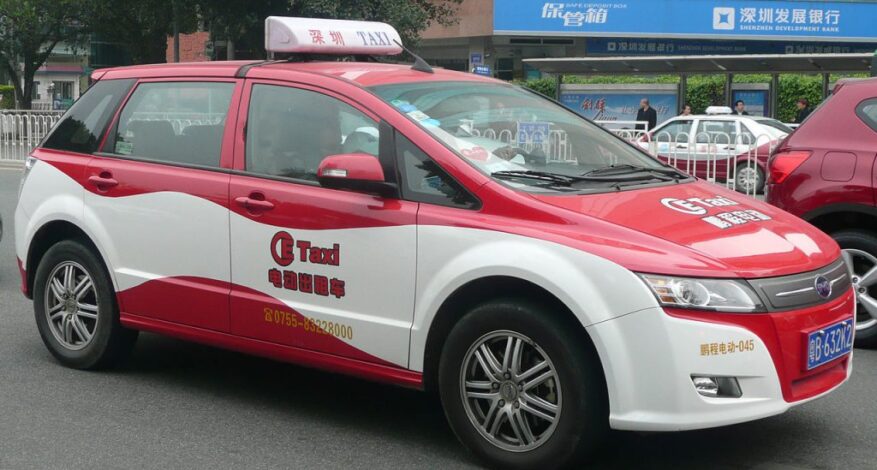
Photo credit: Electric taxi in Shenzhen, China. (Image: Brücke-Osteuropa | Wikimedia Commons.)

READ MORE
Mining

Canadian mining companies will now face human rights charges in Canadian courts

“Canada is the undisputed powerhouse of the mining industry, home to 75 per cent of its companies — but the industry is plagued by allegations of rape and slavery abroad. Now those who feel harmed or violated can seek justice back in Canada,” according to an article published in The Narwhal on June 7, 2019 (Read full article here). In the piece, IRMA Executive Director, Aimee Boulanger is quoted where author Andrew Findlay says that Canadian companies need to do more to be responsible and cites IRMA as the independent standard that activists and industry are watching for as it becomes fully operational after its 12 years of development.

“‘We don’t yet have any Canadian mines that have come in asking to be recognized by [the Initiative for Responsible Mining Assurance] system, but we hope some soon will,’ Boulanger says.”

The article also states: “Boulanger places mining in a similar phase as the garment and forestry industries more than a decade ago, when consumers and activists began placing their practices in a glaring spotlight, whether it was a sweatshop in Bangladesh or old-growth clear-cutting in B.C. Such pressure helped put corporate and social responsibility at the top of boardroom agendas in those industries; Boulanger believes mining’s day of reckoning is next.”

“‘My hope is that CEOs will realize that they won’t be able to avoid this level of corporate responsibility indefinitely,’ she says.”

Access the full article on The Narwhal.


READ MORE
Mining

Can Lab-Grown Diamonds Ever Really Be Sustainable?

In recent weeks, we have seen several lab-created diamond producers move away from calling themselves “eco-friendly.” That’s largely due to the Federal Trade Commission’s (FTC) warning to lab-grown diamond producers that they should stop using “general benefit environmental claims” like eco-friendly and sustainable, and in part due to a growing cry that companies need to actually prove their eco-friendliness, beyond saying bad things about diamond mines.

Natural diamond miners will soon get a chance to label their gems with a similar phrase—“responsibly mined”—thanks to the work done by the Initiative for Responsible Mining Assurance (IRMA), Mathuram notes. That label could also be used to certify the gold and other mined metals used to create lab-diamond jewelry.

Read full article on JCK Online

READ MORE