Partner

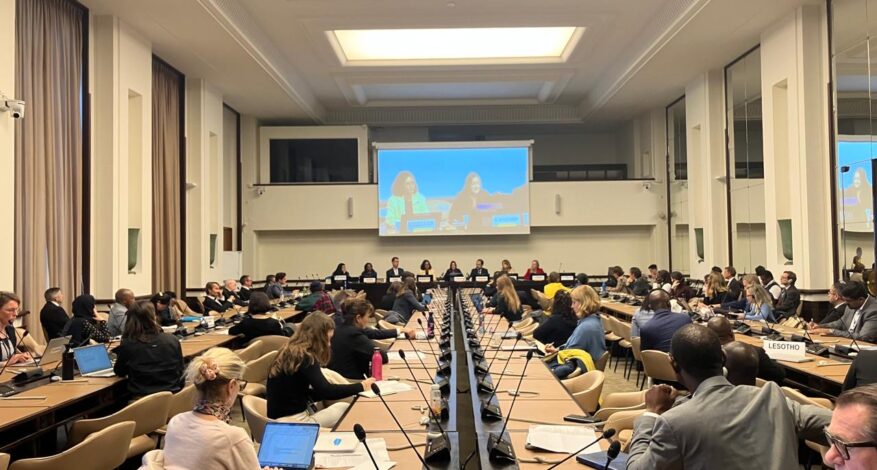
UNEP-IRMA Side Session. Photo Credit: Brendan SchwartzUNEP-IRMA Side Session. Photo Credit: Brendan SchwartzBlog

IRMA Engagement at IGF Annual General Meeting

This November IRMA participated in the Intergovernmental Forum on Mining, Minerals, Metals, and Sustainable Development (IGF) 21st Annual General Meeting (AGM) at the Palais des Nations in Geneva. IGF’s 86 Member Countries met with participants from around the world to discuss “Value Beyond Extraction: Rethinking Mining for a Resilient Future.”

The IGF AGM offers an opportunity for IRMA to gather with IRMA Members and AGM participants from around the globe and to contribute to discussions on key topics. This year IRMA’s contribution to the IGF AGM focused on organizing and co-facilitating a Partner-led Side Session with the UN Environment Programme (UNEP).

The UNEP-IRMA Side Session “Strategies for Strengthening Traceability and Circularity,” provided an overview of emerging strategies and partnerships for traceability and circularity, emphasizing opportunities to advance the General Principles and Actionable Recommendations from the UN Secretary-General’s Panel on Critical Energy Transition Minerals. The session outlined UNEP’s work on traceability and circularity, including the implementation of the UN Environment Assembly (UNEA) 6/5 Resolution on environmental aspects of minerals and metals; strategies from the African Union, G7, and G20; examples of approaches of voluntary standards; and a discussion of opportunities to build coherence to amplify positive impacts.

UNEP’s Charlotte Ndakorerwa opened the session with a summary of the UNEA Resolution 6/5, including development of a knowledge hub, and Colombia’s resolution for UNEA-7 on traceability and other aspects of minerals and metals. IRMA’s Law and Policy Director, Kristi Disney Bruckner, provided a brief overview of IRMA and examples of the many new initiatives in development, including the Future Minerals Forum Sustainability Framework, the UN Industrial Development Organization (UNIDO) Global Alliance for Responsible and Green Minerals, the G7 Critical Minerals Action Plan and recently launched Roadmap, International Organization for Standardization (ISO) standards development, emerging national standards, and others. “This is an opportunity moment to build partnerships and coherence to amplify the positive impacts of these initiatives,” she said, “including to advance the UN Secretary-General’s Panel on Critical Energy Transition Minerals Guiding Principles and Actionable Recommendations.”

Marit Kitaw of the UN Economic Commission for Africa (UNECA) and Former Interim Director of the African Minerals Development Centre (AMDC) provided an overview of the African Union’s Green Minerals Strategy. The strategy aims to retain value that historically has been lost with exports, focusing on infrastructure, skills, technology, sustainability, value addition, and governance. “We need win-win partnerships,” Marit said, noting that Africa is endowed with over 30% of the world’s critical minerals. “Win-win means for everyone.”

Parliamentarian Cecilia Nicolini, Former National Environment Secretary of Argentina, leading energy transition minerals discussions in Argentina and in MERCOSUR, shared development of a MERCOSUR Regional Strategic Minerals Plan, noting the need for regulatory harmonization and strengthening South-South relationships. “We can be more competitive in a sustainable world,” she said, with “a common voice in the international arena.”

Rodrigo Urquiza Caroca of Chile’s Ministry of Mining discussed Chile’s national strategies for energy transition minerals. Chile has built experience over more than 100 years, learning to balance environmental, social, and economic impacts and implement the International Labour Organization Indigenous and Tribal Peoples Convention (ILO 169). Over 14 meetings with communities over two years informed Chile’s National Lithium Strategy. The country is also learning from its relationships and agreements with bordering countries.

The panel also discussed the work of the G7. Daniel Hill, Deputy Director of Natural Resources Canada, provided an overview of the G7 Critical Minerals Action Plan and  Roadmap noting efforts on traceability, transparency, investment resiliency, innovation, anti-corruption, and performance-based criteria.

The work of civil society organizations is essential to inform and guide development of emerging frameworks. Erica Westenberg, Governance Programs Director at the Natural Resource Governance Institute (NRGI), shared experience collaborating with civil society to advance the objectives of the UN Secretary-General’s Panel on Critical Energy Transition Minerals. Erica noted that the UN Framework Convention on Climate Change has been silent on critical minerals and NRGI is working with others to change this to increase equity and justice in the minerals sector. Erica also discussed Colombia’s UNEA-7 resolution on minerals and metals, covering traceability and other topics that aim to advance the work of the UN Secretary-General’s Panel. In her remarks, Erica launched the Expert Group on Preventing Corruption in Transition Minerals report “From Mine to Market: Using Traceability to Fight Mineral Sector Corruption,” noting contributions from IRMA.

Inga Petersen, Executive Director of the Global Battery Alliance, shared GBA’s commitment to a multistakeholder approach to enhance traceability and circularity. “We need collaboration, now more than ever,” she said, noting that even with full recycling of batteries we will have more mining and need to scale social and environmental protections. “We need transparency to understand risks along the value chain,” she said, and “it can only be meaningful if it comes with accountability.” Inga shared an overview of GBA’s recently released Battery Benchmarks, inviting collaboration.

Discussion focused on the need to focus not only on producing countries but also on consumers to ask about responsible sourcing. Participants further discussed traceability, noting that while there is much progress to be made, this has been done in other high-risk and high-reward sectors, and we can learn from these efforts. The discussion also identified opportunities to focus more on value addition, end use of materials, and circularity.

Charlotte concluded the session, noting themes that emerged from the panel and discussion. “There is a need for alignment and interoperability,” she said. “We really need more partnership and collaboration at global and regional levels that are win-win.”
READ MORE
Blog

New Collaboration Promotes Responsible Sourcing of Platinum Group Metals

London Platinum and Palladium Market and the Initiative for Responsible Mining Assurance Increasing Value for More Responsible Business Practices

Oct 27 – The Initiative for Responsible Mining Assurance (IRMA) and the London Platinum and Palladium Market (LPPM) announced a new, non-exclusive collaboration to advance responsible sourcing in the platinum group metals (PGM) value chain. This partnership strengthens shared approaches to assurance and supports the mutual members of both organizations.

As two key entities focused on the responsible production of PGMs, IRMA and LPPM are committed to best practices and to advancing transparent and effective systems that are responsive to the needs of mining-affected stakeholders and rightsholders. This collaboration comes at a time of increasing global scrutiny, regulatory requirements, and rising stakeholder expectations for responsible mining and sourcing.

“The London Platinum and Palladium Market is delighted to have the opportunity to work with the Initiative for Responsible Mining Assurance, through the LPPM’s Responsible Sourcing Committee,” said John Cullen, Chair of the LPPM. “We look forward to the collaboration yielding benefits for all our members and the entire PGM Industry.”

“Working with LPPM illustrates IRMA’s collaborative approach to improving mining practices,” said Aimee Boulanger, IRMA Executive Director. “Learning from each other will help us achieve our vision to increase value for the efforts of mining companies who respect the human rights of affected communities, provide healthy and supportive workplaces, minimize environmental harm, and leave positive legacies.”

The two organizations have prioritized three key areas of collaboration:

  • Maintaining a regular, constructive dialogue on the metrics for best practices that drive more responsible mining practices
  • Jointly listening to member needs, seeking to support and bring reputational and financial value to companies improving practices
  • Exchanging knowledge to improve the approach of how we measure performance through audits that are trusted

More Info:

LPPM is a trade association that oversees and promotes the trading of platinum and palladium in London, with a primary focus on market quality and the responsible sourcing of PGMs. IRMA is a non-profit that works to better protect communities and the environment by creating financial value for mine sites whose performance is independently and transparently audited against the IRMA Standard for Responsible Mining.

READ MORE
IRMA and ResponsibleGlass logosIRMA and ResponsibleGlass logosBlog

ResponsibleGlass and IRMA forge foundational partnership to drive responsibility in glass supply chains

FOR IMMEDIATE RELEASE:

Date: 21 October 2025.   ResponsibleGlass, the newly formed global multi-stakeholder not-for-profit standards and certification programme for the responsible low-carbon production of glass, today announced a landmark Memorandum of Understanding (MOU) with the Initiative for Responsible Mining Assurance (IRMA).

This MOU marks the first major collaboration for ResponsibleGlass and establishes a clear path to align the new developing glass standard with IRMA’s comprehensive best practices for the responsible extraction and processing of the materials critical to glassmaking, including sand, silicates and soda ash (trona).

Both organisations share a core belief in the value of multi-stakeholder governance – involving civil society, labour advocates, mining and processing companies, manufacturers, product end users and the finance sector – to drive positive environmental and social change.

The collaboration will focus on several significant areas:

  • Standards Alignment: ResponsibleGlass will align its requirements for the sourcing of mined materials with IRMA’s established standards to strengthen due diligence and transparency from the points of extraction.
  • Avoiding duplication: by leveraging IRMA’s existing assurance system for raw materials, the partnership aims to avoid duplication and inefficiency in developing standards for the entire glass supply chain.
  • Market Demand:  the organisations will work together to communicate with downstream glass users, building market demand for responsibly sourced glass in high growth sectors such as building, automotive, solar and technology industries.
  • Shared systems: the organisations will also explore the potential to develop joint systems for managing the chain of custody of materials through the glass supply chain, from “cradle to grave”.

Francis Sullivan, chair of ResponsibleGlass, commented on the significance of the partnership:

“This partnership with IRMA is a foundational step for ResponsibleGlass and immediately injects world-class credibility into our initiative.  Our mission is to ensure the entire glass supply chain is responsible, and that journey starts at the source. By aligning with IRMA, the global leader in responsible mining assurance, we will ensure our standard for essential inputs like sand and soda ash are robust, credible, and truly benefit the people and lands involved in extraction.  This is how we build a glass standard the world can trust.”

Aimee Boulanger, Executive Director of IRMA highlighted the strategic alignment:

“IRMA’s standards are built on a foundation of multi-stakeholder equal governance, driving value for better social and environmental practices in mining.  This collaboration with ResponsibleGlass is a logical and powerful extension of our work. It allows us to apply our expertise to key glass inputs – avoiding duplication and accelerating market demand for responsibly sourced glass in critical sectors. This partnership shows how two independent organisations can collectively create a more resilient and responsible global supply chain.”

The specific actions and joint programmes under the MOU will be developed over time, focusing on accelerating the shift toward more responsible practices across the glass industry.

FOR MORE INFO contact:
Ali Lucas, Project Director – ResponsibleGlass +44 (0) 7786 546724
Ali.lucas@responsibleglass.org

Rebecca Burton, Deputy Director – IRMA
info@responsiblemining.net

NOTES: 

  1. This MOU is nonexclusive between ResponsibleGlass and IRMA.
  2. Further information on ResponsibleGlass can be found here: www.responsibleglass.org
  3. Further information on IRMA can be found here: www.responsiblemining.net


READ MORE
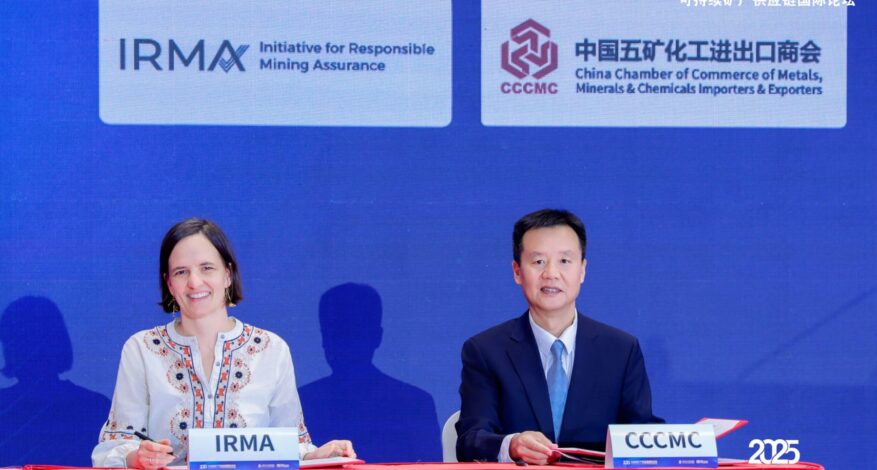
IRMA and CCCMC panelIRMA and CCCMC panelAsia

MOU with CCCMC

Today IRMA entered a new collaboration to advance more responsible mining.

At the International Forum on Sustainable Mineral Supply Chains in Xiamen, IRMA and the China Chamber of Commerce of Metals, Minerals & Chemicals Importers & Exporters (CCCMC) signed a Memorandum of Understanding to strengthen collaboration on responsible mineral production.

Through this agreement, IRMA and CCCMC will work together to:
✅ Align standards and reduce duplication across assurance models
✅ Pilot co-audits to streamline expectations
✅ Provide joint training and capacity-building at mine sites
✅ Exchange lessons on system-wide grievance mechanisms
✅ Maintain ongoing dialogue to respond to global trends and stakeholder needs

This marks an important step in promoting transparency, accountability, and positive outcomes across the minerals value chain.

Chinese IRMA Draft 2.0 Standard coverAs we look forward to deepening this collaboration in support of companies, stakeholders, and communities worldwide, we are thrilled to release a Chinese version of the IRMA Standard v2.0 Draft 2 for public consultation. Please submit your comments!

Our goal is to make responsible mining standards accessible to all stakeholders, everywhere. The translation was made possible thanks to the fantastic work of Landscape Consulting.

READ MORE
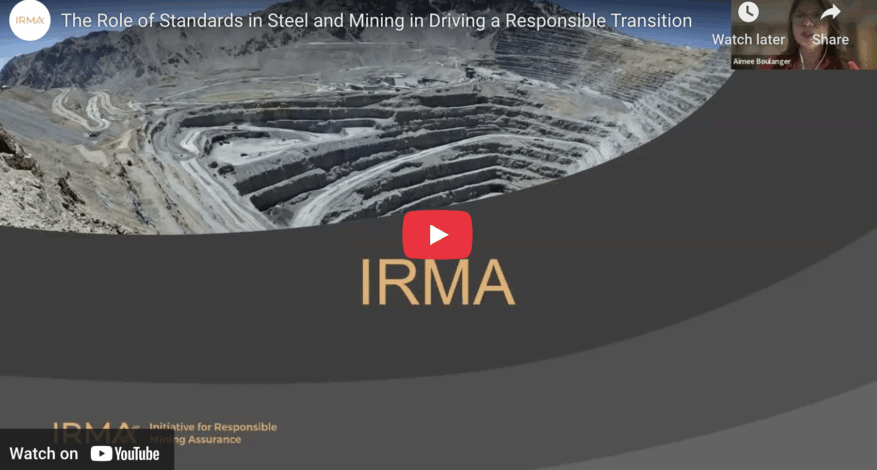
Thumbnail of just transition webinarThumbnail of just transition webinarBlog

Reflections on the Webinar: How Steel and Mining Standards Can Support a Just Transition

The urgency to decarbonize industries like mining and steel is stronger than ever. Around the world, governments, businesses, and investors are racing to reduce emissions and meet climate targets. But amid this urgency, there is an equally important question; how do we make sure that the communities and workers most affected by these transitions are not left behind? For workers, communities, and Indigenous Peoples, the shift to low-carbon economies can bring uncertainty as well as opportunity. Without deliberate action, there’s a real risk that many will be left behind, displaced by job losses, or burdened by the impacts of change without sharing in the benefits.

This is where Voluntary Sustainability Standards (VSSs) like IRMA’s Standard for Responsible Mining play an essential role. They help translate “just transition” into concrete action by setting clear expectations and guidance for companies, creating accountability mechanisms that allow workers and communities to raise concerns and seek remedies, and providing support to protect the rights and livelihoods of those most affected. In doing so, VSSs help ensure that transitions are not only fast but also center justice at the heart of climate targets.

Earlier this month, IRMA and ResponsibleSteel co-hosted a webinar to share the findings of our joint project on how voluntary sustainability standards (VSSs) can support just transition in the mining and steel sectors.

The project drew on an extensive literature review, more than 30 in-depth interviews, and two multi-stakeholder workshops in Johannesburg and Brussels. Perspectives came from organized labour, affected communities, Indigenous Rights Holders, mining companies, steelmakers, civil society, and supply chain actors.

Setting the stage

ResponsibleSteel CEO Annie Heaton opened the webinar with a reminder of the urgency of the moment. Decarbonisation, automation, and digitalisation are reshaping industries at speed, but workers and communities risk being left behind:

“This isn’t just about how fast we hit climate targets,” she said. “It’s about how well we protect workers, communities, and the environment along the way.”

IRMA’s Executive Director, Amy Boulanger, followed with a reminder of our shared reliance on mining:

“Every phone, car, and building depends on it,” she said. “The question is: how do we create value for responsibility, not just extraction? There is no supply chain security without community consent.”

What we heard from stakeholders

The engagement process brought a diverse range of perspectives, but several clear themes stood out:

  • Justice is the foundation, not an add-on. Justice must sit at the heart of transitions.
  • Social dialogue must be meaningful. Too often, workers and communities are consulted too late, with little influence on outcomes.
  • Reskilling must connect to real opportunities. As one labour representative put it: “Reskilling is the headline, but redeployment is the lifeline.”
  • Indigenous Peoples must be partners. Rights to self-determination and Free, Prior and Informed Consent must be respected in practice, not just principle.

We also heard about “tick-box” stakeholder engagement and training programmes that fail to lead to decent work. Indigenous Rights Holders in particular challenged the framing of just transition:

“Our way of life is already sustainable, yet we carry the heaviest burdens.”

A framework for action

To translate these insights into practice, IRMA and ResponsibleSteel developed a framework of nine principles and 52 criteria, structured around four pillars: rights and equity, procedural justice, distributive justice, and restorative justice.

Divergent views

Not all questions were resolved. There was significant debate on whether VSSs should define “just transition” and whether historical reparations should be part of the agenda. Some stakeholders argued that justice cannot be separated from history, while others cautioned that reparations could stretch standards beyond their mandate. What is clear is that these tensions cannot be ignored by VSSs, and that transparency and context-specific approaches are essential.

Recommendations for VSSs

The project also identified five priority recommendations for voluntary sustainability standards:

  1. Ensure transparent, inclusive governance.
  2. Co-develop principles and requirements with affected communities, workers, Indigenous Rights Holders, civil society, and business.
  3. Provide practical implementation support to companies.
  4. Strengthen assurance systems so that audits reflect the lived realities of workers and affected communities.
  5. Collaboration with governments, peer standards, labour, and civil society on just transition is key.

For IRMA, the next steps are clear:

Our Standard revision is currently underway, with public comment open until 22 October. As part of this process, we are engaging Expert Advisors on Climate Action to carry the just transition work forward. We will also continue strengthening the Standard in direct response to the challenges raised by workers, communities, Indigenous Rights Holders, and other stakeholders. In addition, new auditor training is being developed to ensure that the lived realities of workers and communities are fully reflected in assurance.

For ResponsibleSteel, the focus is on integrating just transition into its standard revision through a multi-stakeholder working group and a 60-day public consultation later this year.

Final reflections

The project showed both the urgency and complexity of just transition. Voluntary standards cannot solve every challenge, but they can provide the frameworks, accountability, and assurance needed to guide transitions responsibly.

This project was made possible thanks to a grant from the ISEAL Innovations Fund, which is supported by the Swiss State Secretariat for Economic Affairs SECO.

READ MORE
Credit: ResponsibleSteelCredit: ResponsibleSteelBlog

Standards’ Role in a Responsible Transition: An IRMA-ResponsibleSteel Collaboration

[This is post also lives on the ResponsibleSteel website]

Exploring the role of standards in driving a responsible transition in steel and mining: A collaborative journey between IRMA and ResponsibleSteel

As the global shift toward decarbonisation gains momentum, so too do the questions around how the transition will affect people and communities. While emerging technologies bring a cleaner future, they also bring with them significant disruption, particularly in heavy industries like steel and mining. New technologies, shifting production geographies, and economic restructuring can create unintended social consequences such as job losses, community displacement, and weakened local economies.

In response to this, two Voluntary Sustainability Standards, the Initiative for Responsible Mining Assurance (IRMA) and ResponsibleSteel have come together to explore what a just transition looks like for these sectors, and to explore the role of standards in steel and mining to drive a responsible transition. This joint project, supported by the ISEAL Innovations Fund and the Swiss State Secretariat for Economic Affairs (SECO), seeks to understand the social impacts of transitions and how voluntary sustainability standards can help ensure that this transformation is fair, inclusive, and responsible.

This collaboration reflects a growing recognition of the value in shared learning between the steel and mining sectors. By working together, IRMA and ResponsibleSteel are exchanging insights, comparing approaches, and learning from each other’s experiences to strengthen how just transition principles are understood and applied.

A shared vision rooted in multi-stakeholder governance

IRMA and ResponsibleSteel were both founded on the principle of multi-stakeholder governance. Their boards include labour unions, civil society, and industry (Purchasers, Indigenous Rights Holders, Investors-IRMA), as well as affected communities in IRMA’s case, ensuring that decisions are not only transparent but also equitable. This approach forms the foundation of our collaboration on the just transition. Together, we bring complementary strengths: IRMA’s standard addresses upstream mining operations at the site level, while ResponsibleSteel covers the downstream steel production process.

The two initiatives are jointly exploring how standards can help mitigate adverse social impacts of decarbonisation, such as the economic consequences of site closures or workforce displacement. Our goal is to provide a common foundation that recognises diverse regional realities and reflects the voices of workers, Indigenous Rights Holders, communities, and industry actors alike in our voluntary sustainability systems.

Laying the groundwork: Research and stakeholder engagement

The first phase of the project centred on an in-depth literature review of over 200 sources, including international standards, academic and practitioner literature, case studies, and online materials, with a focus on content relevant to the steel and mining sectors. This review explored how voluntary sustainability standards, global frameworks, and national policies approach just transition issues, highlighting areas of alignment as well as gaps. Insights were drawn from 11 standards and frameworks relevant to the steel and mining sectors, along with case examples from seven additional countries. Building on this foundation, the team conducted over 30 stakeholder in-depth interviews with voices across industry, labour, Indigenous rights holders, supply chains, policymakers, academia, and civil society. These conversations were then complemented by two multi-stakeholder workshops in Johannesburg and Brussels, which brought together workers, unions, companies, NGOs, Indigenous representatives, and decision-makers. Each phase has contributed valuable, grounded perspectives that continue to shape the direction and priorities of the project.

Key insights from the project so far

What has become clear and consistent throughout both the literature review and the stakeholders’ engagement so far is the contested nature of the term ‘Just Transition’. As we all live in different worlds with different contexts of reality, everyone brings their own understanding and priorities when thinking about a just transition. As voluntary sustainability standards, we must be thoughtful in how we define and interpret this term. We need a flexible framework where local context can be well reflected, and the context and priorities are defined by local stakeholders.

Another key insight that emerged from all activities was the critical importance of an inclusive governance and management system that accommodates a meaningful stakeholders’ engagement process and inclusive decision making at every step of the way to achieve a just transition. This also presents a challenge – inherent tension between the urgency of just transition issues and the often time-consuming nature of stakeholders’ engagement. It is not just about having a process itself, but it is about recognising and addressing the existing power imbalance between stakeholders, and ensuring that the process facilitates meaningful consultation, which, in essence, means providing equitable access to consultation and decision-making processes.

Moving forward

Drawing on their sectoral expertise, multi-stakeholder governance models, and shared commitment to transparency and accountability, IRMA and ResponsibleSteel are exploring how standards can support a just transition in practice. This project marks an initial step toward building a stronger foundation for future efforts, recognising that meaningful progress will depend on continued collaboration and engagement.

Join the conversation

As this joint project progresses, ResponsibleSteel and IRMA would like to continue the conversation with stakeholders. An important milestone in this journey is an upcoming webinar, which will provide an opportunity to share key findings, share what we heard from those who contributed to the project, and explore how voluntary sustainability standards can play a meaningful role in supporting a responsible transition in the steel and mining sectors.

We invite you to join us for a webinar hosted by IRMA and ResponsibleSteel :

Date: Thursday, 4 September

To make it easier for participants in different time zones to join, the same session will be offered at two different times.

Session 1:
10:00–11:30 CEST / 10:00–11:30 SAST (South Africa)
9:00–10:30 BST (UK)
3:00–4:30 PM Southeast Asia (Jakarta Time)

Click here to register for session 1.

Session 2:
16:00–17:30 CEST / 16:00–17:30 SAST (South Africa))
15:00–16:30 BST (UK)
10:00–11:30 AM US Eastern Time (EDT)

Click here to register for session 2.

Find out more about ResponsibleSteel here.

READ MORE