events

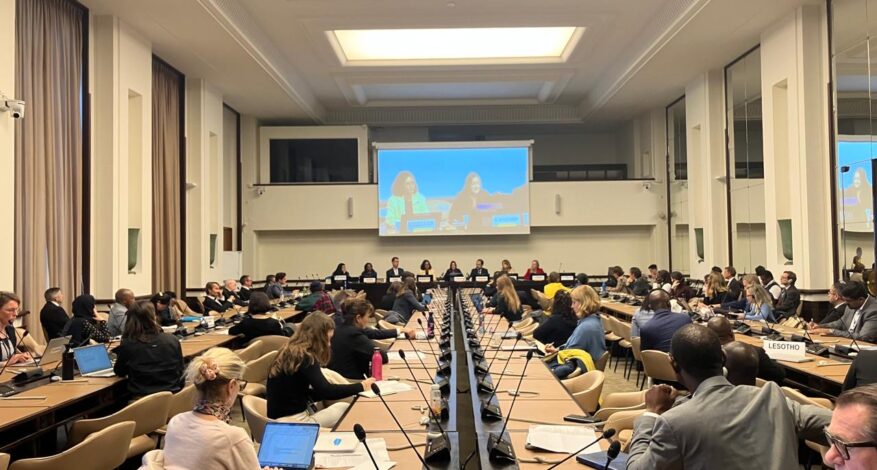
UNEP-IRMA Side Session. Photo Credit: Brendan SchwartzUNEP-IRMA Side Session. Photo Credit: Brendan SchwartzBlog

IRMA Engagement at IGF Annual General Meeting

This November IRMA participated in the Intergovernmental Forum on Mining, Minerals, Metals, and Sustainable Development (IGF) 21st Annual General Meeting (AGM) at the Palais des Nations in Geneva. IGF’s 86 Member Countries met with participants from around the world to discuss “Value Beyond Extraction: Rethinking Mining for a Resilient Future.”

The IGF AGM offers an opportunity for IRMA to gather with IRMA Members and AGM participants from around the globe and to contribute to discussions on key topics. This year IRMA’s contribution to the IGF AGM focused on organizing and co-facilitating a Partner-led Side Session with the UN Environment Programme (UNEP).

The UNEP-IRMA Side Session “Strategies for Strengthening Traceability and Circularity,” provided an overview of emerging strategies and partnerships for traceability and circularity, emphasizing opportunities to advance the General Principles and Actionable Recommendations from the UN Secretary-General’s Panel on Critical Energy Transition Minerals. The session outlined UNEP’s work on traceability and circularity, including the implementation of the UN Environment Assembly (UNEA) 6/5 Resolution on environmental aspects of minerals and metals; strategies from the African Union, G7, and G20; examples of approaches of voluntary standards; and a discussion of opportunities to build coherence to amplify positive impacts.

UNEP’s Charlotte Ndakorerwa opened the session with a summary of the UNEA Resolution 6/5, including development of a knowledge hub, and Colombia’s resolution for UNEA-7 on traceability and other aspects of minerals and metals. IRMA’s Law and Policy Director, Kristi Disney Bruckner, provided a brief overview of IRMA and examples of the many new initiatives in development, including the Future Minerals Forum Sustainability Framework, the UN Industrial Development Organization (UNIDO) Global Alliance for Responsible and Green Minerals, the G7 Critical Minerals Action Plan and recently launched Roadmap, International Organization for Standardization (ISO) standards development, emerging national standards, and others. “This is an opportunity moment to build partnerships and coherence to amplify the positive impacts of these initiatives,” she said, “including to advance the UN Secretary-General’s Panel on Critical Energy Transition Minerals Guiding Principles and Actionable Recommendations.”

Marit Kitaw of the UN Economic Commission for Africa (UNECA) and Former Interim Director of the African Minerals Development Centre (AMDC) provided an overview of the African Union’s Green Minerals Strategy. The strategy aims to retain value that historically has been lost with exports, focusing on infrastructure, skills, technology, sustainability, value addition, and governance. “We need win-win partnerships,” Marit said, noting that Africa is endowed with over 30% of the world’s critical minerals. “Win-win means for everyone.”

Parliamentarian Cecilia Nicolini, Former National Environment Secretary of Argentina, leading energy transition minerals discussions in Argentina and in MERCOSUR, shared development of a MERCOSUR Regional Strategic Minerals Plan, noting the need for regulatory harmonization and strengthening South-South relationships. “We can be more competitive in a sustainable world,” she said, with “a common voice in the international arena.”

Rodrigo Urquiza Caroca of Chile’s Ministry of Mining discussed Chile’s national strategies for energy transition minerals. Chile has built experience over more than 100 years, learning to balance environmental, social, and economic impacts and implement the International Labour Organization Indigenous and Tribal Peoples Convention (ILO 169). Over 14 meetings with communities over two years informed Chile’s National Lithium Strategy. The country is also learning from its relationships and agreements with bordering countries.

The panel also discussed the work of the G7. Daniel Hill, Deputy Director of Natural Resources Canada, provided an overview of the G7 Critical Minerals Action Plan and  Roadmap noting efforts on traceability, transparency, investment resiliency, innovation, anti-corruption, and performance-based criteria.

The work of civil society organizations is essential to inform and guide development of emerging frameworks. Erica Westenberg, Governance Programs Director at the Natural Resource Governance Institute (NRGI), shared experience collaborating with civil society to advance the objectives of the UN Secretary-General’s Panel on Critical Energy Transition Minerals. Erica noted that the UN Framework Convention on Climate Change has been silent on critical minerals and NRGI is working with others to change this to increase equity and justice in the minerals sector. Erica also discussed Colombia’s UNEA-7 resolution on minerals and metals, covering traceability and other topics that aim to advance the work of the UN Secretary-General’s Panel. In her remarks, Erica launched the Expert Group on Preventing Corruption in Transition Minerals report “From Mine to Market: Using Traceability to Fight Mineral Sector Corruption,” noting contributions from IRMA.

Inga Petersen, Executive Director of the Global Battery Alliance, shared GBA’s commitment to a multistakeholder approach to enhance traceability and circularity. “We need collaboration, now more than ever,” she said, noting that even with full recycling of batteries we will have more mining and need to scale social and environmental protections. “We need transparency to understand risks along the value chain,” she said, and “it can only be meaningful if it comes with accountability.” Inga shared an overview of GBA’s recently released Battery Benchmarks, inviting collaboration.

Discussion focused on the need to focus not only on producing countries but also on consumers to ask about responsible sourcing. Participants further discussed traceability, noting that while there is much progress to be made, this has been done in other high-risk and high-reward sectors, and we can learn from these efforts. The discussion also identified opportunities to focus more on value addition, end use of materials, and circularity.

Charlotte concluded the session, noting themes that emerged from the panel and discussion. “There is a need for alignment and interoperability,” she said. “We really need more partnership and collaboration at global and regional levels that are win-win.”
READ MORE
Sectors

IRMA Board Meeting Cross-Stakeholder Dialogue

As part of IRMA’s annual in-person board meeting hosted by Mercedes-Benz in early March, IRMA convened a dialogue between 80+ attendees to better understand how they can work together and also use the IRMA system to achieve their diverse goals.

For a full afternoon, attendees exchanged learnings and ideas about how to grapple with ever-present questions about transparency, traceability, and the cost of responsible mining, all with the aim of hearing from each other and taking back fresh ideas on how to inform their own work.

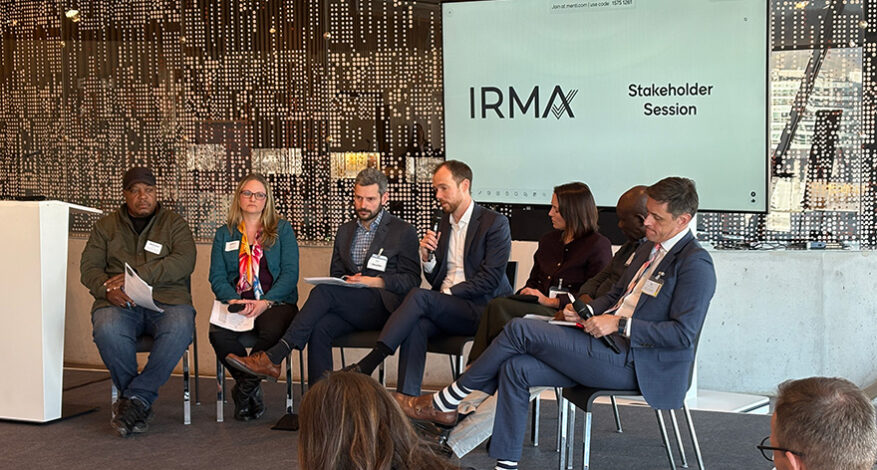
The dialogue occurred in two parts. To begin, IRMA Board members representing our six governing houses – Meshack Mbangula from Mining Affected Communities United in Action in South Africa, Glen Mpufane from IndustriALL Global Union, Jim Wormington from Human Rights Watch, Johannes Danz from Mercedes, Katie Fergusson from Anglo American, and Ashley Claxton from Royal London Asset Management – each how they have used an IRMA audit to advance their organizations’ goals. IRMA Stuttgart Stakeholder Cross-Dialogue Panel

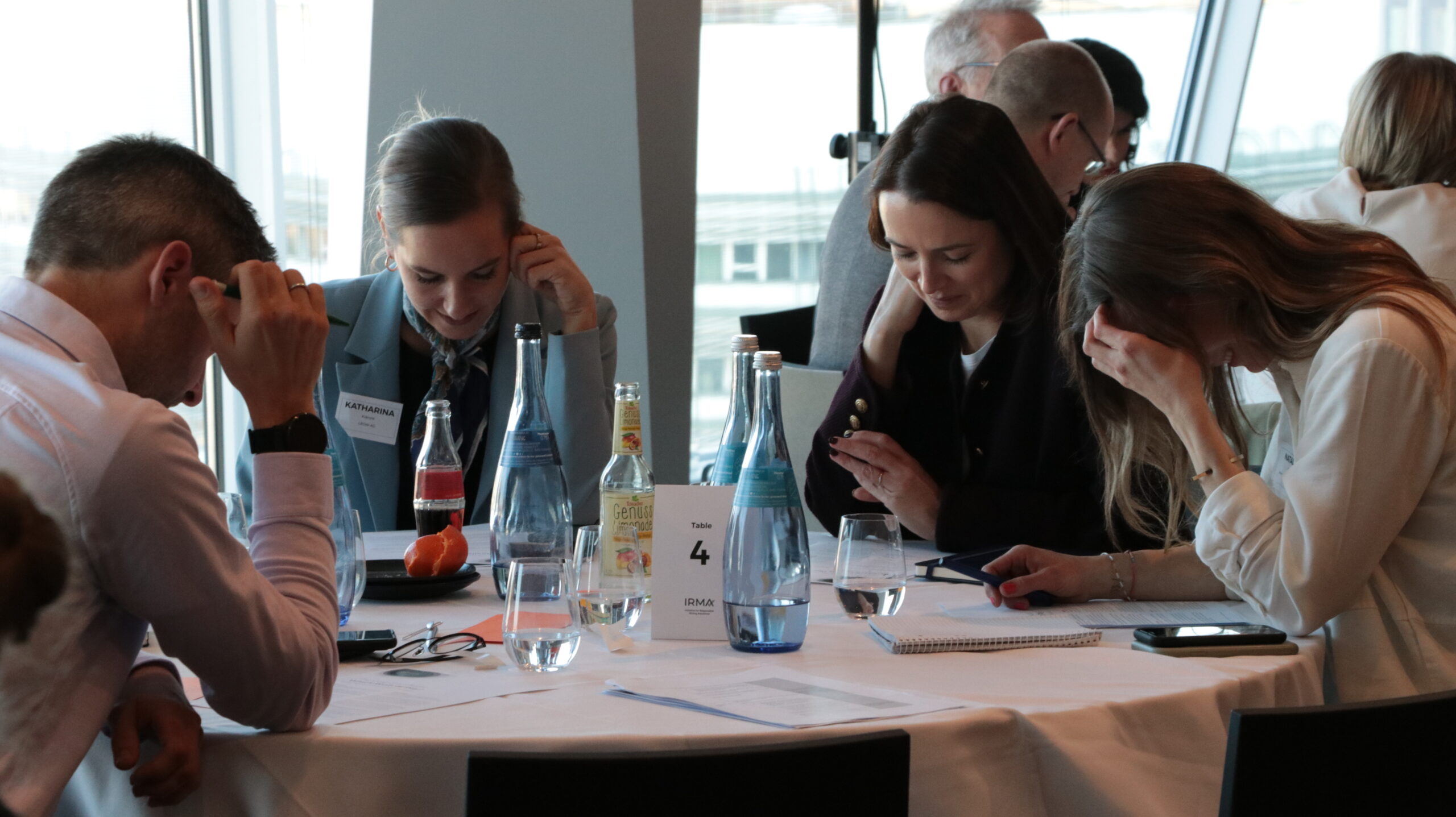
After that all attendees divided into nine groups to discuss one of three issues:

  1. Is there such a thing as too much transparency? Although transparency benefits all stakeholders, it can also bring heightened scrutiny and criticism for mines, consumer-facing brands, and investors. What do diverse stakeholders most need when it comes to valuing transparency?
  2. What do diverse stakeholders most need when it comes to market signals and traceability given the indirect contact between the many upstream and downstream players in the mineral supply chain?
  3. What’s really at play when it comes to the cost of an IRMA audit? Stakeholders find audit cost concerns are more related to the cost of improvements that result from an IRMA audit’s transparency, rather than the audit itself. How can stakeholders signal the value of an audit?

Some of the discussion results:

  • For mines, IRMA audits and the audit process provide a clear roadmap and driver toward operational excellence. The audit is as much for a mine’s own operational and strategic benefit as it is for anybody else’s.
  • For impacted communities, nothing about us without us. The *process* of the IRMA audit provides as much or more value to communities as the audit itself. It provides an opportunity for inclusiveness, fairness, dignity, and importantly, a voice.
  • As demand for mining rapidly increases, so too does the need for capital to finance it. For investors, IRMA audits provide the necessary visibility and assurance to credibly understand an investment’s risk profile and suitability for investment, thus providing a clearer path to enabling that access to capital.

The ability to catalyze candid discussion amongst wary stakeholders is one of the benefits of IRMA’s governance model, the only place in modern industrial mining where civil society has equal power and voice to the private sector.

READ MORE
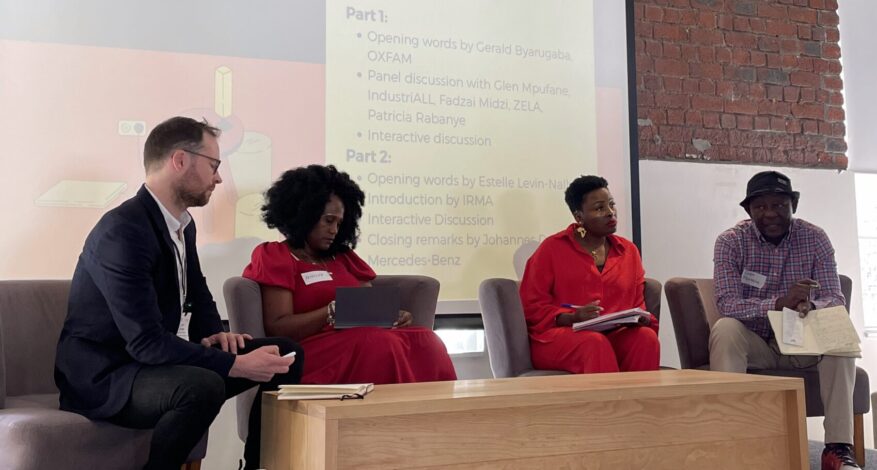
Stakeholder Engagement and Remedy panel at Mining Indaba 2025Stakeholder Engagement and Remedy panel at Mining Indaba 2025Africa

Indaba 2025: Advancing Stakeholder Engagement and Remedy

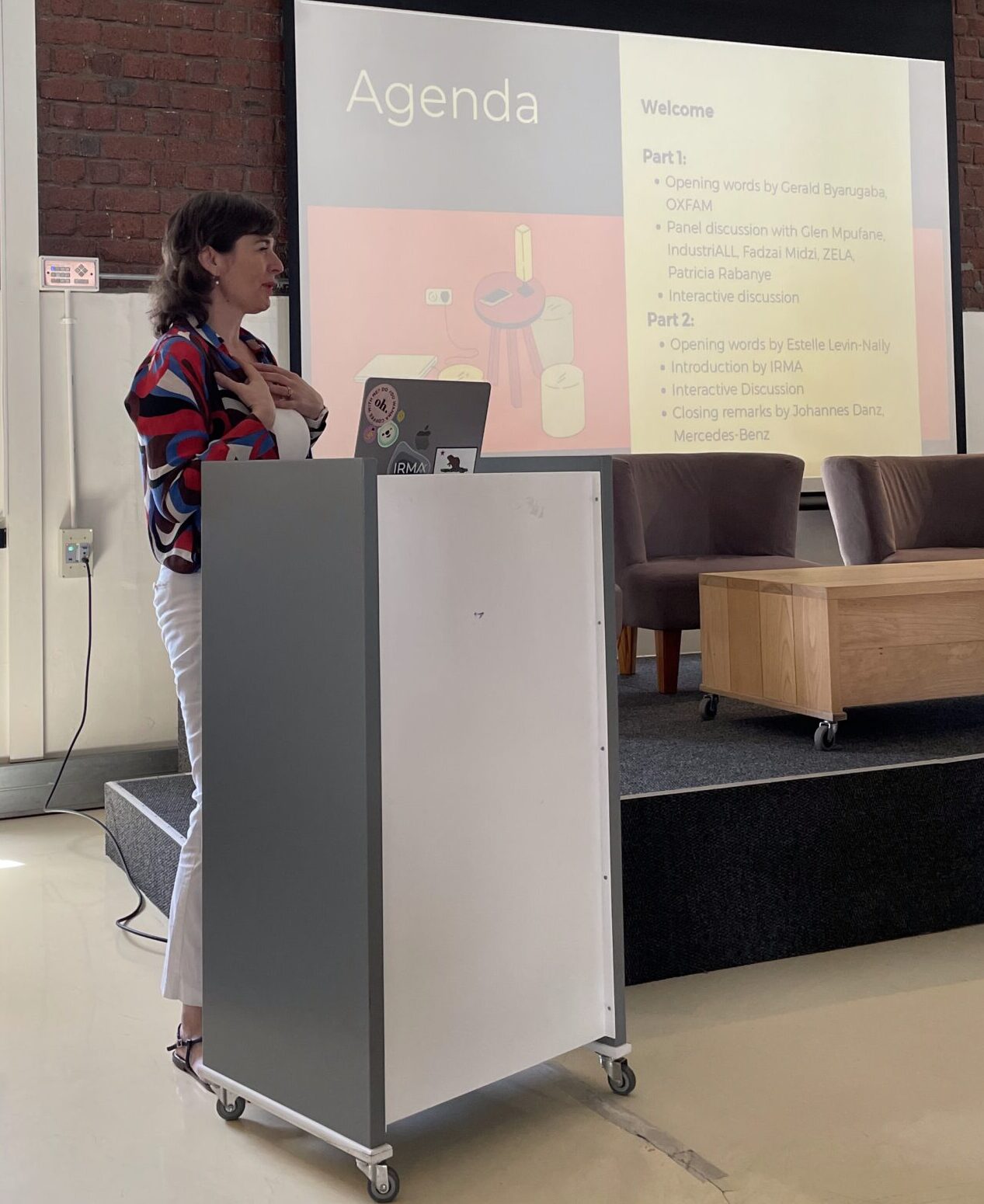
On February 6th of 2025, IRMA had the privilege of hosting an interactive workshop on “Advancing Stakeholder Engagement and Remedy in the Mining Sector” as a side session of Investing in African Mining Indaba and Alternative Mining Indaba. The workshop reunited stakeholders in mining and responsible sourcing, as well as representatives of NGOs, workers, and local communities for an engaging discussion on the future of responsible mining.

The keynote

Estelle Levin at IRMA's Mining Indaba eventThe workshop was opened with a keynote by Estelle Levin-Nally, a human rights expert and Founder of Levin Sources, who shared her experience with remedy and its significance. She highlighted that remediation is one of the three core pillars of the United Nations Guiding Principles on Business and Human Rights and as these principles are increasingly being incorporated into national and international law, companies must demonstrate compliance, not only to meet legal requirements but also to align with business partner expectations.

She emphasized that unremediated past harms can leave individuals aggrieved, which undermines trust, discourages participation in company or regulatory initiatives, increases the likelihood of resistance and conflict, and hinders cooperative efforts that could maximize positive impacts for both business and society. Therefore, remedy serves as a pathway to healing for victims and their families, as the consequences of unremediated harms often persist across generations.

Estelle also shared insights into the challenges of implementing effective remedy in the mining sector. These include weak rule of law in many jurisdictions, which limits access to justice; autocratic regimes, which can lead to deregulation; the exclusion of remedy as a sixth step in due diligence under the OECD Minerals Guidance; and the complexity of different remedy pathways, which can create confusion for rightsholders regarding their entitlements and the mechanisms available to them. She concluded by stressing that business partners and civil society can do more to support affected rightsholders in understanding and accessing remedy when harms occur. While companies must be prepared for remediation, they should always prioritize prevention.

The workshop

Cecilia Mattea, IRMA’s Europe Regional Lead, continued the discussion by introducing the draft IRMA Remedy Framework and its purpose to respond to communities and workers who have been harmed by mineral exploration, development, and processing. Because the absence of remediation often leads to conflict and mistrust, the remedy framework could provide meaningful solutions for past and ongoing harms and a pathway for mining companies to regain trust. 

She also outlined and explained IRMA’s accountability mechanisms that support remediation efforts, including IRMA-Standard requirements for operational-level grievance mechanism; IRMA Membership Principles and Policy of Association and its policy of disassociation; the IRMA Feedback and Complaints Mechanism; and, finally, the IRMA Remedy Framework, which is currently under development.

Participants were then invited to reflect on and engage with key questions regarding the Remedy Framework. For example:

  • What should the IRMA Remedy Framework include? What would you like to see?
  • How far past should remediation go? How to ensure that communities are aware of their rights, and whose role is that?
  • Should the IRMA remedy framework be limited to assessed sites? 

Cecilia shared some of the suggestions IRMA received from previous engagements with stakeholders, NGOs, and remediation experts. These recommendations include ensuring that the framework is inclusive in its design, reflects the complexities on the ground, aligns with regulatory requirements such as the EU’s Corporate Sustainability Due Diligence Directive, and does not impose an additional burden on Indigenous Peoples but rather complements existing tools.

As participants engaged in the discussion, interesting points were raised regarding how governments can engage in this process and how to ensure it doesn’t restrict access to remedy through the judicial system but rather establishes a positive link to it; which other institutions could play a role in the remediation process; how traditional leaderships structures could contribute to the process; and whether it would be better for IRMA to support access to remedy rather than create a new framework.

At the end of the session, Johannes Danz, sustainability expert at Mercedes Benz, shared the business perspective on supporting the project and standards, highlighting their benefits in fostering interaction across the supply chain, resolving conflicts, building trust, strengthening relationships, and improving access to remedy.

The workshop provided an invaluable learning experience across sectors through dialogue and engagement, fostering a deeper understanding of the role of the IRMA Remedy Framework and stakeholders’ expectations.

IRMA thanks all the participants for their contributions in the workshop.

READ MORE
Africa

IRMA at Indaba: Mining Sustainability Standards interview

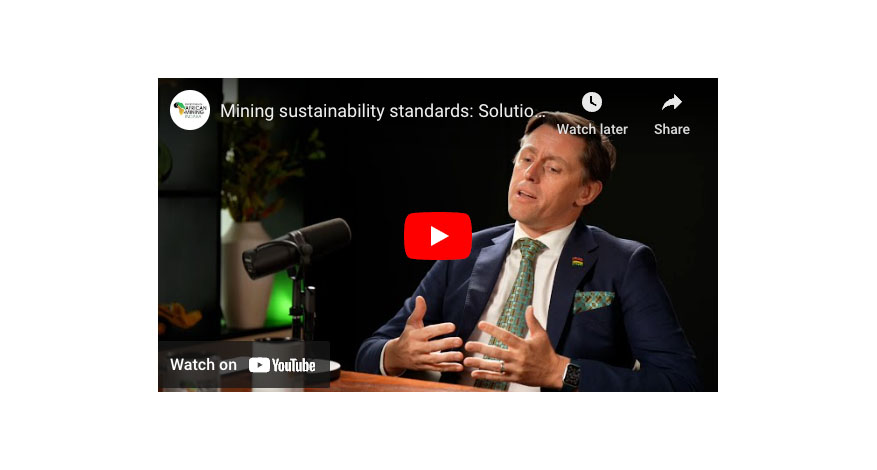
From the Mining Indaba website:

In this compelling interview for Mining Indaba TV, J.J. Messner de Latour, Sector Lead for Downstream Purchasers at the Initiative for Responsible Mining Assurance (IRMA), delves into the challenges and opportunities of implementing rigorous mining standards in the African mining industry.

J.J. discusses ways to overcome obstacles, improve transparency and accountability, and align with global best practices to ensure sustainable development. He also addresses the complexity of multiple mining standards and explores whether a unified industry standard is the solution. For junior miners, J.J. shares valuable advice on adopting best practices from the outset of their projects. Finally, he offers his perspective on what future-proofing African mining means today.

READ MORE
Mining Indaba 2025 logoMining Indaba 2025 logoAfrica

IRMA at Mining Indaba 2025

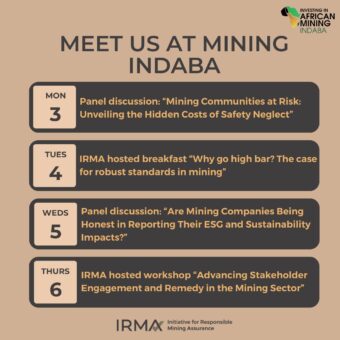
This is where you will find IRMA at Indaba 2025:

READ MORE
Panelists at IRMA Breakfast Side Event. Photo: IndustriALL Global UnionPanelists at IRMA Breakfast Side Event. Photo: IndustriALL Global UnionAfrica

IRMA at Mining Indaba and Alternative Mining Indaba 2024

This February three members of the IRMA Secretariat participated in events in Cape Town at and around the Investing in African Mining Indaba and Alternative Mining Indaba. This was IRMA’s largest delegation to Indaba to date, an indication of the growing importance of these gatherings and the wide range of associated side events to IRMA’s mission and accountability across stakeholder sectors.

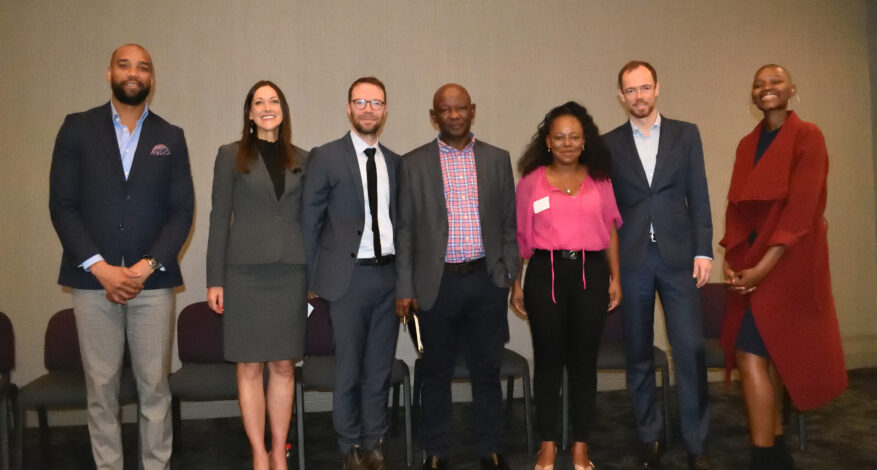
IRMA led a breakfast side event that incorporated opportunities for cross-sector sharing and featured a panel of Syrah Resources’ Agnaldo Laice, IRMA’s Kristi Disney Bruckner and Scott Sellwood, IRMA Board Member and IndustriALL Global Union’s Glen Mpufane, Anglo American’s Mahlogonolo Rangata, Mercedes Benz’s Johannes Danz, and Earthworks’ Vuyisile Ncube.

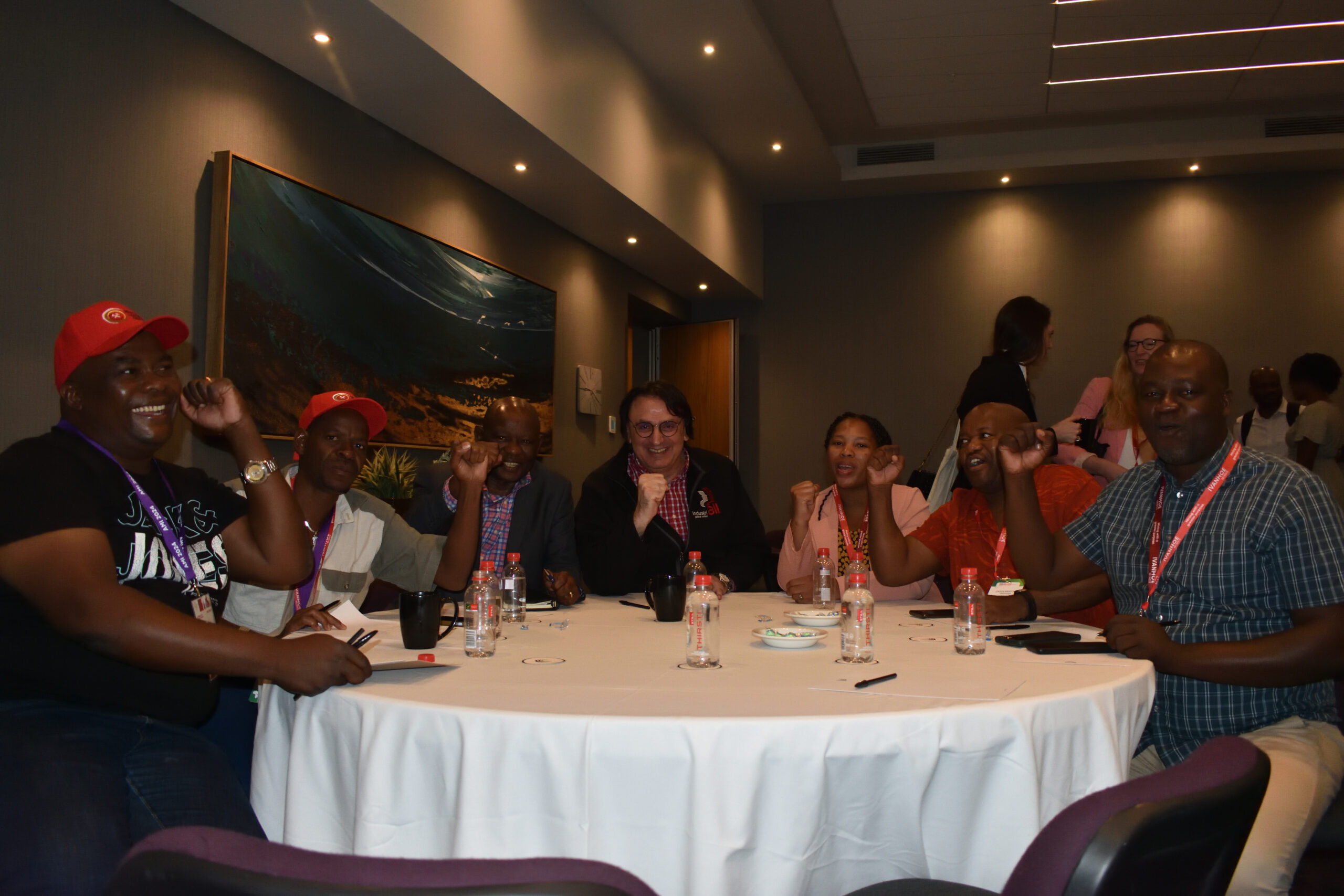
IndustriaLL Global Union members at IRMA breakfast. Credit: IndustriALL
IndustriaLL Global Union members at IRMA Mining Indaba breakfast.
Credit: IndustriALL

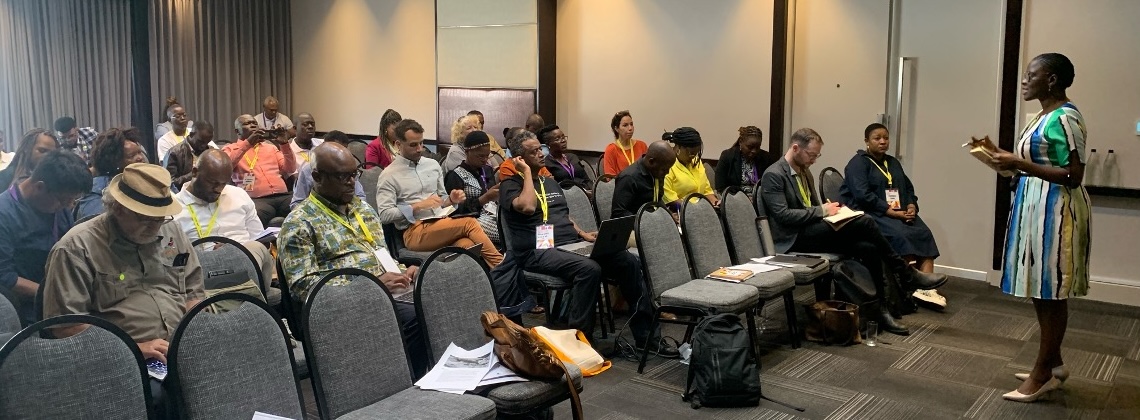
IRMA also partnered with IRMA-member Zimbabwe Environmental Law Association (ZELA) to host an interactive discussion at Alternative Mining Indaba on the role of standards and third-party assurance in promoting environmental and social governance. The discussion focused on how affected communities, NGOs, and organized labor have used the IRMA Standard for Responsible Mining and IRMA audit reports, with small group discussions on the types of tools and strategies that would help participants make use of IRMA to protect their rights.

Davidzo Muchawaya, IRMA Regional Lead, Africa, introducing IRMA at IRMA/ZELA Alternative Mining Indaba Session

This year, joining long-standing participation from mining companies, the presence of purchasing companies was more prominent at Indaba, including multiple members of the IRMA Buyer’s Group calling for more responsible mineral supply chains and engagement in IRMA.

IRMA attended a wide range of events and held meetings with government, company, investor, purchasing company, civil society, and labor representatives. Indaba and Alternative Mining Indaba continue to be important forums for sharing IRMA’s value and deepening our accountability across sectors. We look forward to engaging in these important forums again in 2025!

READ MORE