Why IRMA Prioritizes Government Engagement and Robust Legal Frameworks
IRMA’s Commitment to Rule of Law Since Our Inception
Since IRMA’s inception, key stakeholders and rights holders, particularly those in governing houses led by NGOs, labor unions, and affected communities, have emphasized that strong laws are needed to govern the mining sector, particularly to protect human rights, Indigenous rights, labor rights, and the environment at mine sites.
Voluntary initiatives can complement laws and their implementation, creating market incentives for mine sites to go beyond legal compliance, but they can never replace the critical role of governments to establish rules for all operators to follow, monitor implementation of those rules, and enforce compliance through appropriate incentives and penalties.
IRMA has affirmed this recognition of the primary role of government and rule of law throughout our development. We have learned a lot through the experience of other sectors, such as forestry, fisheries, and agriculture, to inform our practices, recognizing that where government bodies and voluntary standards work in partnership, this can create increased public engagement in oversight of business practices, incentives to go beyond legal compliance, and recognition of leading practices and innovation. Governments also have a key role setting expectations for imports and are powerful purchasers who can communicate standards that drive their commitment to responsible sourcing.
Chapter 1.1 of the IRMA Standard for Responsible Mining is a reflection of IRMA’s commitment to rule of law. The first requirement in this chapter is for the operating company to comply with all applicable host country laws in relation to the mining project. Sites undergo independent third-party assessment and reporting against this and all other applicable requirements in the IRMA Standard, providing added market support to protect environmental and social values alongside economic value.
Subsequent requirements in the IRMA Standard for Responsible Mining call on mine sites to go beyond domestic legal requirements, aiming to speed up practical implementation of best practices at the mine site level. These best practices can inform further improvements to legal frameworks and the value of meeting best practice expectations.
IRMA’s Approach to Engagement
IRMA tracks key emerging policies and changes to existing policies, with a focus on jurisdictions with IRMA third-party audits complete or underway. We share information about these and developments of global and regional importance in meetings of the IRMA Law and Policy Forum, available for IRMA Members, and in sector-specific meetings within and across IRMA Member sectors.
IRMA also hosts a Government Task Force where government leaders in their individual capacity–not as formal representatives of a State–participate in cross-jurisdictional discussions on topics relevant to responsible mineral value chains and inform IRMA Standards development to ensure relevance across jurisdictions.
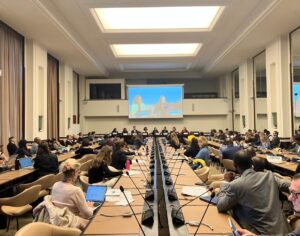
IRMA is engaged in multiple United Nations-level bodies, including through an MOU with the UN Environment Programme (UNEP) and as an accredited Observer to the UN Environment Assembly (UNEA) and the UN Framework Convention on Climate Change (UNFCCC) Conference of the Parties. While not an accredited Observer, we have also participated in the Convention on Biodiversity Conference of the Parties. IRMA collaborates in multiple UN-led efforts, including recently engaging as an expert in the UN Secretary-General’s Panel on Critical Energy Transition Minerals and collaborating in pilots with the UN Transparency Protocol.
IRMA is a Tool for Governments, Policymakers, and Advocates
Governments, policymakers, and advocates use the IRMA Standard for Responsible Mining, based on over a decade of global multi-stakeholder dialogue, as a benchmark for internationally recognized best practices and the IRMA system as an avenue to provide market recognition for responsible actors. Governments and policymakers increasingly work with IRMA to incentivize responsible supply chains and enhance trade competitiveness.
IRMA’s use as a best practice reference is supported by independent assessments as well as our incorporation of over 65 international frameworks in the IRMA Standard, identifying practical requirements for implementation at the mine site level.
IRMA uses the ISEAL Code of Good Practice for Sustainability Systems, a globally recognized framework, as a reference for the development, review, and revision of our Standards. IRMA is ISEAL Code Compliant, which means that IRMA’s adherence to the ISEAL Code has been independently verified.
IRMA has also been independently assessed as fully aligned with the WTO Principles for the Development of International Standards, Guides and Recommendations, including the principles of transparency, openness, impartiality and consensus, effectiveness and relevance, coherence, and development dimension, which requires taking into consideration and responding to constraints on engagement in developing countries. We also seek to align with the UN Economic Commission for Europe (UNECE) Guidelines on Developing Gender-Responsive Standards across our governance structure, documentation, and operational practices.
Learn more about IRMA’s engagement with governments through this fact sheet on How IRMA Benefits Governments and Policymakers and by following updates in the IRMA blog and newsletter. If you are interested in further discussing now best practices in IRMA can be used to improve the legal framework in your jurisdiction, please reach out to us at info@responsiblemining.net.