NGOs

The Australian Sustainable Finance TaxonomyThe Australian Sustainable Finance Taxonomy

Australian Sustainable Finance Institute

(AFSI) has created the Australian Sustainable Finance Taxonomy to provide a common language for green and transition finance in Australia, to support the allocation of capital towards activities that enable Australia’s net zero ambitions. AFSI is a nonprofit that works to align Australia’s financial system with a sustainable, resilient, and inclusive economy by directing capital towards environmental and social goals.

The Taxonomy references IRMA in two ways: first, as an international proxy for biodiversity and ecosystem protection; and second as a reference for First Nations and cultural heritage protection.

READ MORE
Newsweek oped thumbnailNewsweek oped thumbnail

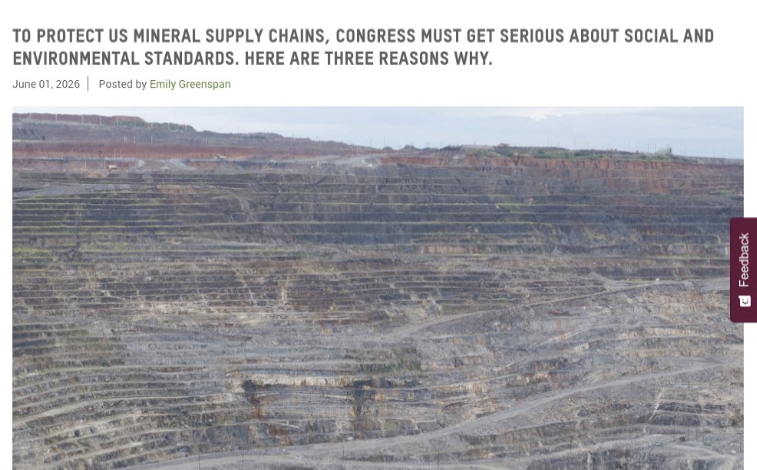
Earthworks and Human Rights Watch

authored an op-ed in Newsweek titled Global Demand for Minerals Requires New Mining Protections.

They recognize IRMA as “a voluntary initiative that has synthesized international human rights law and environmental standards into a single document defining responsible mining practices. The strength of [which] is its governance system which gives community representatives, labor unions, and civil society groups equal power, alongside mining companies and the private sector, to craft its standards.

READ MORE
Cover of Mighty Earth and Rainforest Foundation Norway cover for Biodiversity and Deforestation in Mining Standards BriefCover of Mighty Earth and Rainforest Foundation Norway cover for Biodiversity and Deforestation in Mining Standards Brief

Rainforest Foundation Norway and Mighty Earth

published a brief Biodiversity and Deforestation in Mining Standards.

In comparing the limitations of  IRMA, CopperMark/RMI and TSM to avoid deforestation and minimize impacts on critical ecosystems, they conclude “the IRMA Standard consistently rises above other mining standards for evaluating biodiversity impacts, due to its stronger requirements, multistakeholder governance and transparency, among other criteria. As global mining operations increase, third party auditing will be necessary for ensuring that mining across the world is conducted in a responsible way that upholds human rights and minimizes adverse environmental impacts.”

READ MORE

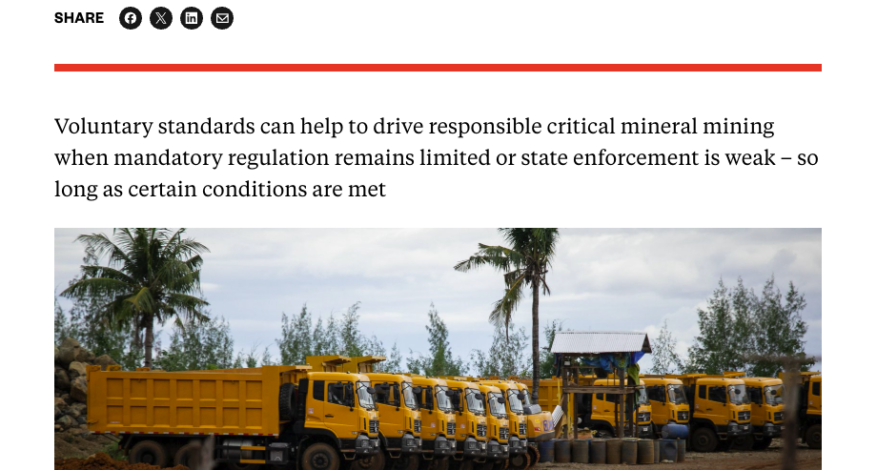
Public Citizen

and other organizations sent a letter to the ICMM, CopperMark, the Mining Association of Canada, and the World Gold Council expressing concerns over their Consolidated Mining Standard Initiative.

In doing so they “recognize that strong voluntary standards can help drive improved mining industry human rights and environmental performance if they have the level of transparency and rigor necessary to provide credible information,” and provides criteria that such a standard must meet.

As an example, the letter recognizes only IRMA by name: “There are existing standards, notably IRMA, that meet many of these criteria.”

READ MORE
Mighty Earth bauxite report cover thumbnailMighty Earth bauxite report cover thumbnail

Mighty Earth

released a new report “The Impact of the Bauxite Boom on People and the Planet.”

In the accompanying press release “Mighty Earth calls for all actors across the bauxite supply chain to join the Initiative for Responsible Mining (IRMA) and adopt its standards. IRMA is the only independent third-party program for assessing industrial scale mine sites for all mined materials. It is governed equally by the private sector, communities, civil society, and workers.”

READ MORE
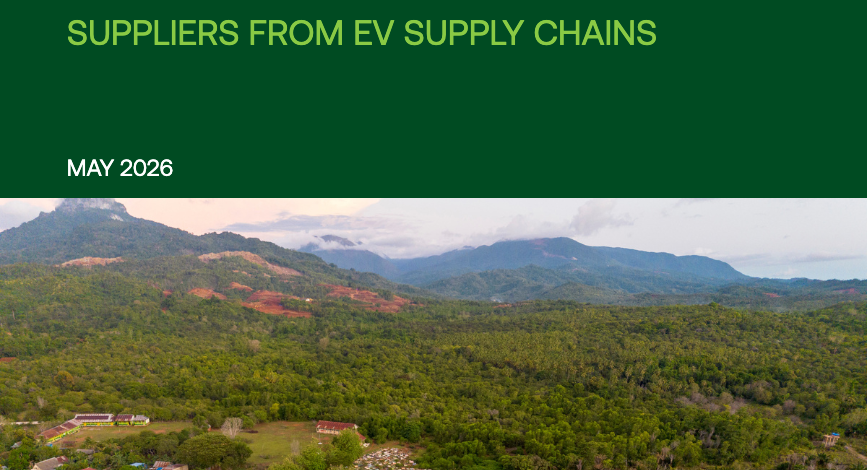
Short Circuits coverShort Circuits cover

Rainforest Foundation Norway and AidEnvironment

released the report “Short Circuits: Exploring the broken links of mineral supply chain policies in the electric vehicle industry.”

In looking at third-party assurance, the report highlights that “only the IRMA standard is contingent on FPIC.” With respect to mining and sensitive ecosystems, the report mentions “the IRMA mining standard expands those commitments [not to mine in legally protected areas] by establishing as a requirement that mining projects should not adversely affect IUCN protected area management categories I-III, and core areas of UNESCO Biosphere reserve.

READ MORE