From Mine to Market and Source to Store: Why IRMA’s Chain of Custody Standard Matters
Minerals power the modern world, from the batteries that drive electric vehicles to the metals in wind turbines, phones, and medical equipment. But as demand increases, so does the pressure to ensure these materials are sourced responsibly.
IRMA’s independent, community- and worker-centered mine-site audits address one part of this challenge: verifying responsible practices at the mine itself. Yet for many companies and consumers, a key question remains:
How do we know the minerals in a finished product actually came from an IRMA-assessed mine?
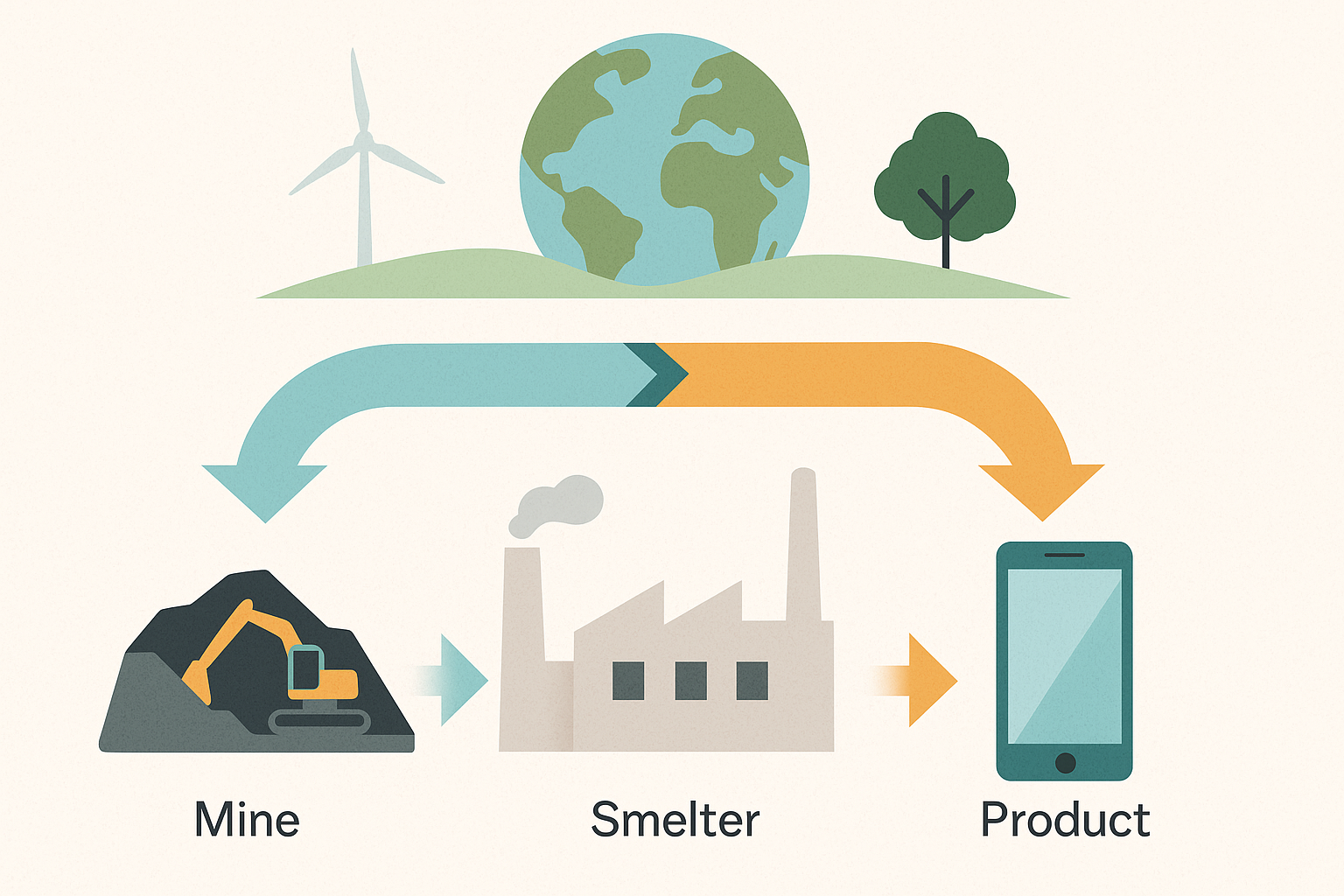
The answer lies in a chain of custody. IRMA’s Chain of Custody (CoC) Standard, launched in 2024, is designed to carry trust beyond the mine and into the complex networks of processors, refiners, manufacturers, and brands.
Why Chain of Custody Is Essential
Once minerals leave the mine, they often enter global systems where materials are blended, transformed, or routed through multiple facilities. A CoC standard closes this gap by enabling companies to make verifiable sourcing claims linked directly to IRMA-audited mines. As transparency becomes a regulatory expectation and a growing consumer demand, this link is more important than ever.
New EU rules, including the Critical Raw Materials Act and the 2025 mineral-supply-chain transparency platform, signal that traceability is rapidly shifting from a voluntary gesture to a regulatory requirement. Companies importing or using critical minerals will increasingly need credible systems to demonstrate where materials come from and how they manage associated risks.
Recent New York Times reporting also highlights the human cost of opaque supply chains, documenting how recycled battery lead has poisoned communities. It is a stark reminder that reliable chain-of-custody systems like IRMA’s are no longer optional but essential.
A Step Toward More Transparent Minerals
The IRMA CoC Standard outlines five models, a flexible structure that meets companies where they are while maintaining transparency and credibility:
Identity Preserved: Minerals stay physically separate and traceable from mine to final product.
Segregated: IRMA-assured materials from different mines can be mixed, but never combined with non-assured material.
Controlled Blending: Allows mixing with non-assured material while maintaining clear controls and limits.
Mass Balance: Tracks inputs and outputs over time, offering flexibility where physical separation is not possible.
Book & Claim: A credit-based model enabling support for responsible mining even when physical traceability is highly complex.
Together, these models give companies flexibility in how they track materials, and the pilots now underway are helping IRMA understand which approaches work best across different supply-chain contexts.
Next Steps for IRMA
IRMA has developed and published the Chain of Custody Standard, including guidance on assurance and on how the IRMA seal enables credible, transparent claims about responsibly sourced materials. Building on this foundation, IRMA has launched pilots across different mineral sectors and industries to test how the CoC models work in practice and what companies need for effective implementation. As these pilots progress, IRMA is now working to formalize the resulting data into a materials registry that will allow participating companies to make verified chain-of-custody claims with confidence.
Piloting the CoC Standard with mining companies, processors, and downstream buyers to test feasibility across different supply-chain contexts.
Integrating feedback from pilot participants, auditors, and technical experts to strengthen clarity and usability.
Creating tools and templates that support consistent data collection and transparent sourcing claims.
The chain of custody alone cannot solve every supply-chain challenge. But it plays a crucial role in linking responsible mining practices with the products people rely on every day. It supports stronger procurement decisions, clearer consumer communication, and more consistent accountability across the value chain. These efforts mark real progress toward knowing where your phone battery comes from—from mine to market, and source to store.
If your company would like to join the brands already piloting the IRMA CoC Standard and explore how it could work in your supply chain, I’d welcome a conversation! Feel free to reach out.
coc@responsiblemining.net