United Nations

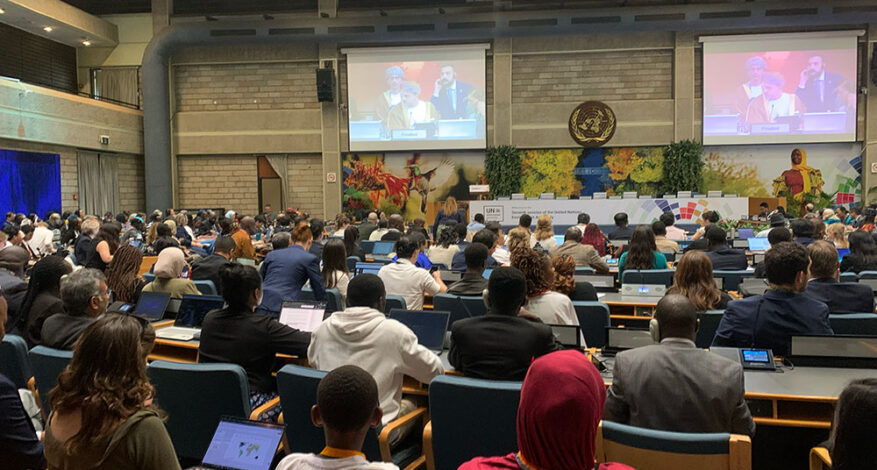
UNEA-7. Credit: IRMAUNEA-7. Credit: IRMABlog

IRMA at UNEA-7

In November 2025, IRMA was accredited to participate in the UN Environment Assembly (UNEA). Observer status grants IRMA access to UNEA and its subsidiary bodies, enabling IRMA to participate in environmental decision-making at the highest level.

While IRMA has engaged in prior UNEA sessions virtually, the seventh session of UNEA (UNEA-7), held from 8 to 12 December 2025 at the UN Environment Programme (UNEP) headquarters in Nairobi, was IRMA’s first opportunity to participate in person as an accredited Observer.

Represented by IRMA’s Law & Policy Director, Kristi Disney Bruckner, IRMA participated in multiple UNEA-7 plenary sessions, leadership dialogues, and side events, as well as the Launch of the UN Task Force on Critical Energy Transition Minerals and negotiations on the Resolution on strengthening international cooperation on the environmentally sound management of minerals and metals.

Representatives from Colombia and Oman provided a briefing on the draft resolution on minerals and metals for IRMA Members just prior to UNEA-7, providing a virtual opportunity for questions and input on the draft. The final resolution supports continuation of implementation efforts of prior minerals and metals-related UNEA resolutions and convenes dialogues among Member States, focal points, and relevant stakeholders and partners. The dialogues, which must have equitable participation among regions and of developing countries, will discuss:

  • Enhancing international cooperation on the sustainable management of minerals and metals
  • Resource recovery from mining waste and tailings through sustainable approaches, such as circularity
  • Best practices for the environmentally sound management of minerals and metals
  • Enhancing cooperation to strengthen technological, technical, financial and scientific capabilities related to management of environmental aspects of minerals and metals, in particular in developing countries

The resolution also requests a report to the 8th session of UNEA (UNEA-8) on progress achieved in implementation of this and prior resolutions on mining and metals.

IRMA contributes to implementation of the resolution by sharing best practices from IRMA Standards with governments, stakeholders and rights holders; participating in collaborations around mining waste and tailings management and opportunities to advance circularity; and helping strengthen capabilities across sectors regarding responsible management of mineral value chains. In collaboration with UNEP, IRMA will also contribute to work under prior UNEA resolutions, such as developing content to be disseminated through UNEP’s Digital Knowledge Hub on the Environmental Aspects of Minerals and Metals, created under the mandate of the 2024 Resolution 6/5 on Environmental Aspects of Minerals and Metals.

IRMA will continue to track developments under UNEA and related implementation efforts, bringing updates and opportunities for input to the attention of IRMA Members. UNEA-8 will be held from 6-10 December 2027 in Nairobi.

About UNEA
UNEA is the world’s highest-level decision-making body for matters related to the environment, with a universal membership of all 193 Member States. UNEA sets the global environmental agenda, provides overarching policy guidance, and defines policy responses to address emerging environmental challenges. It also undertakes policy review, dialogue, and the exchange of experiences, sets the strategic guidance on the future direction of UNEP, and fosters partnerships for achieving environmental goals and resource mobilization.

READ MORE
UNEP IRMA MOUUNEP IRMA MOUBlog

UNEP and IRMA announce collaboration to advance responsible mining practices

The United Nations Environment Programme (UNEP) and the Initiative for Responsible Mining Assurance (IRMA) have announced a collaboration on the environmental dimensions of responsible mining, focusing on the improvement of transparency and environmental performance in the mining sector.

As digital transformation and decarbonization efforts drive an unprecedented demand for minerals and metals, the extractive sector is under increasing pressure to minimize environmental impacts, such as deforestation, land degradation and pollution, while strengthening transparency,  environmental and social performance as well as  traceability.

This partnership brings together UNEP’s mandate as the leading global environmental authority with IRMA’s experience in promoting responsible mining and the sustainable use of minerals. IRMA’s comprehensive, multi-stakeholder system transparently assesses the performance of industrial-scale mine sites against a voluntary best practice mining standard.

Through a Memorandum of Understanding (MOU), the two organisations agreed to a strategic partnership focused on the exchange of expertise on responsible mining topics, including voluntary sustainability standards, multi-stakeholder governance models and the verification of standards claims.

The partnership will also foster dialogue among stakeholders and contribute to the identification of best practices and gaps in the sector. Research and data will be disseminated through platforms such as UNEP’s Digital Knowledge Hub on the Environmental Aspects of Minerals and Metals.

The partnership aims to contribute to the implementation of the guiding principles and actionable recommendations of the UN Secretary-General’s Panel on Critical Energy Transition Minerals.

It will also advance the work of the UN Task Force on Critical Energy Transition Minerals, launched on 10 December 2025 during the seventh session of the UN Environment Assembly (UNEA-7) to coordinate UN activities across all principles and actionable recommendations. The Task Force is chaired by UNEP, the United Nations Development Programme (UNDP), and the United Nations Trade and Development (UNCTAD).

“As the demand for critical minerals grows, it is imperative that extraction processes do not come at the cost of environmental or community well-being,” said Sheila Aggarwal-Khan, Director of the Industry and Economy Division at UNEP. “Partnering with IRMA allows us to strengthen and promote best practices in responsible mining, as well as assurance and verification. We look forward to working together to strengthen the knowledge base and governance frameworks necessary for a responsible mining sector.”

“IRMA provides an independent measure of social and environmental performance at the mine site that is credible across all mining-affected stakeholder and rightsholder sectors,” said Kristi Disney Bruckner, Policy Director of IRMA. “By connecting IRMA’s system with UNEP’s global mandate, we help support the implementation of the UNSG Panel’s recommendations and increase the likelihood that the materials required for the energy transition are sourced in a way that better protects both people and the planet.”

This MOU is non-exclusive and establishes a framework for cooperation and dialogue between the two organizations. It serves as a structural foundation for activities and projects that may be defined in separate agreements.

United Nations Environment Programme (UNEP)

UNEP is the leading global environmental authority that sets the global environmental agenda, promotes the coherent implementation of the environmental dimension of sustainable development within the United Nations system, and serves as an authoritative advocate for the global environment.

READ MORE
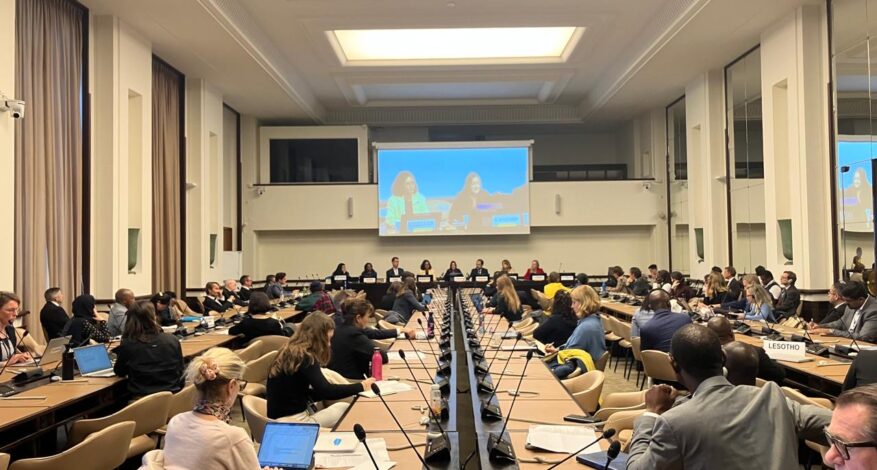
UNEP-IRMA Side Session. Photo Credit: Brendan SchwartzUNEP-IRMA Side Session. Photo Credit: Brendan SchwartzBlog

IRMA Engagement at IGF Annual General Meeting

This November IRMA participated in the Intergovernmental Forum on Mining, Minerals, Metals, and Sustainable Development (IGF) 21st Annual General Meeting (AGM) at the Palais des Nations in Geneva. IGF’s 86 Member Countries met with participants from around the world to discuss “Value Beyond Extraction: Rethinking Mining for a Resilient Future.”

The IGF AGM offers an opportunity for IRMA to gather with IRMA Members and AGM participants from around the globe and to contribute to discussions on key topics. This year IRMA’s contribution to the IGF AGM focused on organizing and co-facilitating a Partner-led Side Session with the UN Environment Programme (UNEP).

The UNEP-IRMA Side Session “Strategies for Strengthening Traceability and Circularity,” provided an overview of emerging strategies and partnerships for traceability and circularity, emphasizing opportunities to advance the General Principles and Actionable Recommendations from the UN Secretary-General’s Panel on Critical Energy Transition Minerals. The session outlined UNEP’s work on traceability and circularity, including the implementation of the UN Environment Assembly (UNEA) 6/5 Resolution on environmental aspects of minerals and metals; strategies from the African Union, G7, and G20; examples of approaches of voluntary standards; and a discussion of opportunities to build coherence to amplify positive impacts.

UNEP’s Charlotte Ndakorerwa opened the session with a summary of the UNEA Resolution 6/5, including development of a knowledge hub, and Colombia’s resolution for UNEA-7 on traceability and other aspects of minerals and metals. IRMA’s Law and Policy Director, Kristi Disney Bruckner, provided a brief overview of IRMA and examples of the many new initiatives in development, including the Future Minerals Forum Sustainability Framework, the UN Industrial Development Organization (UNIDO) Global Alliance for Responsible and Green Minerals, the G7 Critical Minerals Action Plan and recently launched Roadmap, International Organization for Standardization (ISO) standards development, emerging national standards, and others. “This is an opportunity moment to build partnerships and coherence to amplify the positive impacts of these initiatives,” she said, “including to advance the UN Secretary-General’s Panel on Critical Energy Transition Minerals Guiding Principles and Actionable Recommendations.”

Marit Kitaw of the UN Economic Commission for Africa (UNECA) and Former Interim Director of the African Minerals Development Centre (AMDC) provided an overview of the African Union’s Green Minerals Strategy. The strategy aims to retain value that historically has been lost with exports, focusing on infrastructure, skills, technology, sustainability, value addition, and governance. “We need win-win partnerships,” Marit said, noting that Africa is endowed with over 30% of the world’s critical minerals. “Win-win means for everyone.”

Parliamentarian Cecilia Nicolini, Former National Environment Secretary of Argentina, leading energy transition minerals discussions in Argentina and in MERCOSUR, shared development of a MERCOSUR Regional Strategic Minerals Plan, noting the need for regulatory harmonization and strengthening South-South relationships. “We can be more competitive in a sustainable world,” she said, with “a common voice in the international arena.”

Rodrigo Urquiza Caroca of Chile’s Ministry of Mining discussed Chile’s national strategies for energy transition minerals. Chile has built experience over more than 100 years, learning to balance environmental, social, and economic impacts and implement the International Labour Organization Indigenous and Tribal Peoples Convention (ILO 169). Over 14 meetings with communities over two years informed Chile’s National Lithium Strategy. The country is also learning from its relationships and agreements with bordering countries.

The panel also discussed the work of the G7. Daniel Hill, Deputy Director of Natural Resources Canada, provided an overview of the G7 Critical Minerals Action Plan and  Roadmap noting efforts on traceability, transparency, investment resiliency, innovation, anti-corruption, and performance-based criteria.

The work of civil society organizations is essential to inform and guide development of emerging frameworks. Erica Westenberg, Governance Programs Director at the Natural Resource Governance Institute (NRGI), shared experience collaborating with civil society to advance the objectives of the UN Secretary-General’s Panel on Critical Energy Transition Minerals. Erica noted that the UN Framework Convention on Climate Change has been silent on critical minerals and NRGI is working with others to change this to increase equity and justice in the minerals sector. Erica also discussed Colombia’s UNEA-7 resolution on minerals and metals, covering traceability and other topics that aim to advance the work of the UN Secretary-General’s Panel. In her remarks, Erica launched the Expert Group on Preventing Corruption in Transition Minerals report “From Mine to Market: Using Traceability to Fight Mineral Sector Corruption,” noting contributions from IRMA.

Inga Petersen, Executive Director of the Global Battery Alliance, shared GBA’s commitment to a multistakeholder approach to enhance traceability and circularity. “We need collaboration, now more than ever,” she said, noting that even with full recycling of batteries we will have more mining and need to scale social and environmental protections. “We need transparency to understand risks along the value chain,” she said, and “it can only be meaningful if it comes with accountability.” Inga shared an overview of GBA’s recently released Battery Benchmarks, inviting collaboration.

Discussion focused on the need to focus not only on producing countries but also on consumers to ask about responsible sourcing. Participants further discussed traceability, noting that while there is much progress to be made, this has been done in other high-risk and high-reward sectors, and we can learn from these efforts. The discussion also identified opportunities to focus more on value addition, end use of materials, and circularity.

Charlotte concluded the session, noting themes that emerged from the panel and discussion. “There is a need for alignment and interoperability,” she said. “We really need more partnership and collaboration at global and regional levels that are win-win.”

READ MORE
UN Secretary-General's Panel on Critical Energy Transition Minerals Panel bannerUN Secretary-General's Panel on Critical Energy Transition Minerals Panel bannerBlog

The UN Panel on Critical Energy Transition Minerals

IRMA Engagement in the UN Secretary-General’s Panel on Critical Energy Transition Minerals

IRMA is serving as a non-state actor panel member in the United Nations (UN) Secretary-General’s Panel on Critical Energy Transition Minerals.

The panel, co-chaired by Ambassador Nozipho Joyce Mxakato-Diseko of South Africa and Ms. Ditte Juul Jørgensen, Director-General for Energy of the European Commission, aims to “build trust between governments, local communities and industry, by addressing issues relating to equity, transparency, investment, sustainability and human rights” in the mining sector. The objectives of the panel are to:

  1. Support a just and equitable transition to renewable energies while harnessing critical energy transition minerals for sustainable development.
  2. Ensure countries and local communities endowed with these minerals fully benefit economically, including through local value addition, while safeguarding social and environmental protections for affected communities and ecosystems.
  3. Strengthen international cooperation including through the alignment and harmonization of existing norms, standards and initiatives and agree on areas for enhanced multilateral action.

The UN Secretary General announced formation of the panel at the UN Framework Convention on Climate Change Conference of the Parties (COP28) in Dubai and launched the panel on 26 April 2024. The panel will build on the work of IRMA and other existing standards as well as prior and ongoing UN initiatives to inform recommendations, including a set of voluntary principles, for the UN Secretary-General to share at the UN General Assembly this September.

IRMA welcomes your recommendations regarding our engagement in the panel, its objectives, and how to achieve these objectives. Please reach out to contact@responsiblemining.net to inform our engagement.

Useful Links:


READ MORE